
If you are checking the cast of Zero Day TV series, start with Robert De Niro as former President George Mullen, then place the rest of the ensemble around him: family, advisers, the current administration, Congress, media voices, and intelligence insiders. That order makes the show much easier to follow, especially if you are watching one episode at a time and keep mixing up who is helping George and who is pushing back.
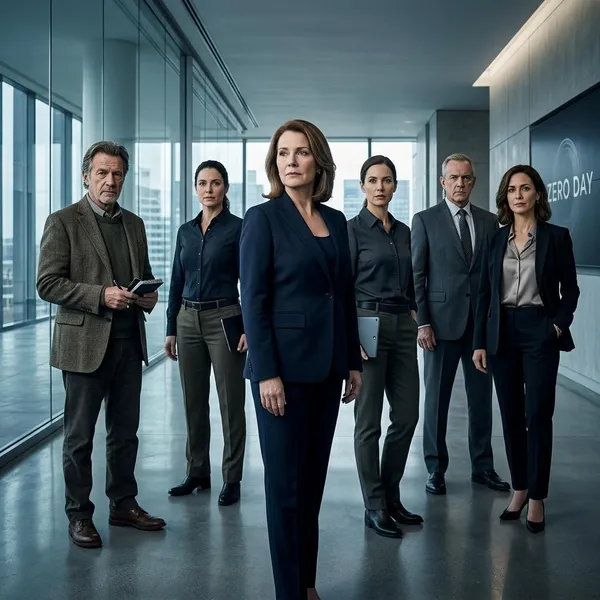
Zero Day main cast
The main cast of Zero Day is built around one political crisis: a devastating cyberattack and the investigation that follows. The quickest way to remember the cast is to put George Mullen at the center, then sort everyone else by whether they belongs to his private life, his commission, or the political system watching him.
Robert De Niro as George Mullen
Robert De Niro plays George Mullen, a former U.S. president asked to lead the Zero Day Commission after a national cyberattack. He is the character to identify first because most of the story either supports, tests, or challenges his authority.
For a casual viewer, George is the emotional anchor: a respected public figure under intense pressure. For someone watching more closely, he is also the character whose judgment is constantly being measured against old loyalties, political expectations, and the limits of what one person can know during a crisis.
Jesse Plemons as Roger Carlson
Jesse Plemons plays Roger Carlson, George Mullen's former aide and one of the people closest to his return to national politics. Roger is useful to track because he sits near the practical center of the operation: access, timing, coordination, and private conversations.
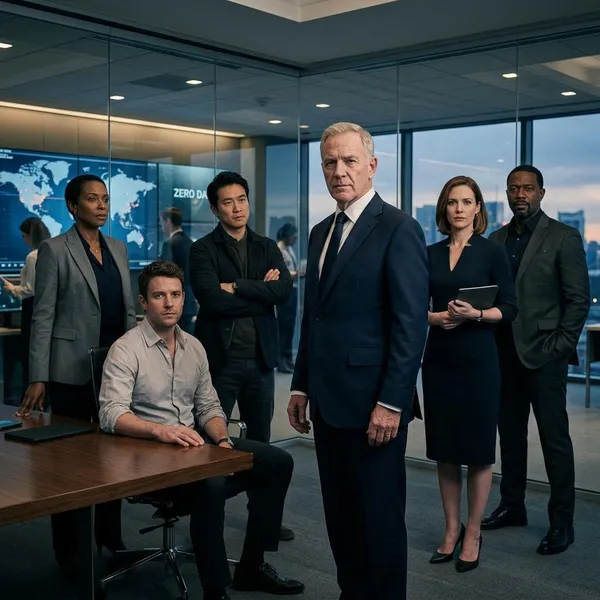
Lizzy Caplan as Alexandra Mullen
Lizzy Caplan plays Alexandra Mullen, George and Sheila's daughter and a congresswoman from New York. She is not just "the daughter character"; she belongs to both the Mullen family story and the political story.
That overlap matters. If you are watching for family tension, Alexandra shows how George's public life affects the people closest to him. If you are watching for the Washington angle, she also shows how a younger elected official may view her father's legacy from inside a divided system.
Connie Britton as Valerie Whitesell
Connie Britton plays Valerie Whitesell, George Mullen's former chief of staff. Valerie is one of the clearest "keep the machine running" characters: she understands political pressure, public messaging, and the cost of a badly handled decision.
Her scenes are worth watching when the story shifts from investigation to damage control. A former president can command attention, but someone like Valerie helps determine whether that attention turns into authority or chaos.
Joan Allen as Sheila Mullen
Joan Allen plays Sheila Mullen, George's wife and the former first lady. She also has her own public and professional standing, so her role is not limited to standing beside George while the plot moves around him.
Sheila gives the series a quieter pressure point: what happens at home when a public crisis pulls George back into the center of national power. Her connection to him is personal, but her judgment often feels more grounded than sentimental.
Angela Bassett as President Evelyn Mitchell
Angela Bassett plays President Evelyn Mitchell, the sitting U.S. president who appoints George to lead the commission. She gives George formal authority, but she also remains the person responsible for the country while the investigation unfolds.
That makes Mitchell more than a ceremonial figure. Her relationship with George can look cooperative in one scene and politically tense in the next, because both characters need public trust but do not always need the same outcome.
Matthew Modine as Richard Dreyer
Matthew Modine plays Richard Dreyer, the Speaker of the House. He represents congressional power, which means the crisis is not controlled only by the White House or the commission.
Richard is the kind of character to watch when a scene seems polite on the surface. In a political thriller, a congressional leader can support an investigation, slow it down, redirect attention, or use the moment to gain leverage.
Zero Day cast by story role
Once you know the headline names, the cast becomes easier to follow by story role. This is especially helpful if you are starting the series after seeing the trailer or returning after a gap between episodes, because the show moves across family rooms, government offices, media spaces, and intelligence circles.
The Mullen family
The Mullen family includes George Mullen, Sheila Mullen, and Alexandra Mullen. This group gives the series its private stakes: George is not only a former president making public decisions, but also a husband and father whose choices affect people with their own careers and principles.
The Zero Day Commission
The Zero Day Commission is the story's investigative engine. George leads it, while figures around him such as Roger Carlson, Valerie Whitesell, Carl Otieno, and Melissa Kornblau help turn the broad mandate into actual work.
- George: public authority and final responsibility.
- Roger: close access and operational instinct.
- Valerie: political discipline and crisis management.
- Carl and Melissa: investigative movement and detail work.
The White House and Congress
President Evelyn Mitchell and Speaker Richard Dreyer represent the formal power structure around the investigation. Mitchell needs a credible response to the cyberattack; Dreyer represents a separate branch of government with its own incentives and pressure points.
Alexandra also partly belongs in this lane because she serves in Congress while remaining George's daughter. That dual position creates a useful tension: she may understand the family cost of George's role while still having to think like an elected official.
Media and technology figures
Media and technology figures matter because a cyber crisis is also an information crisis. Dan Stevens plays Evan Green, one of the supporting characters viewers often look up because he sits outside George's closest circle yet can still affect how the public understands the investigation.
If you are watching casually, treat these characters as pressure amplifiers. They may not lead the commission, but they can challenge official explanations, stir public doubt, or expose a version of events that the political characters would rather control.
Intelligence and corporate insiders
Intelligence and corporate insiders widen the story beyond elected office. Characters in this group, including figures such as CIA Director Lasch and other institutional players, may have access to information that George, Mitchell, or Congress cannot easily discuss in public.
This is where the show can become more complicated, so the useful viewing habit is simple: notice who has information before they have permission to share it. In a conspiracy thriller, withheld knowledge can be as important as an open accusation.
How the Zero Day characters connect
The character map in Zero Day works best if you do not try to memorize every name at once. First ask how each person connects to George Mullen: family, trusted adviser, current political authority, investigator, public critic, or institutional insider.
Sheila and Alexandra form George's family circle
Sheila and Alexandra form the most personal circle around George. Sheila brings the perspective of a spouse with long shared history, while Alexandra brings the perspective of a daughter who also works inside the political world.
Their scenes are important because they reveal what public duty can damage privately. George may speak one way in a commission setting and another way with his family, and that difference tells you a lot about the pressure he is carrying.
Roger and Valerie support George's return
Roger Carlson and Valerie Whitesell support George's return from different angles. Roger is closer to the informal machinery around George, while Valerie understands the formal discipline needed when every decision can become a public story.
President Mitchell appoints George to lead the commission
President Mitchell gives George the authority to lead the Zero Day Commission. That appointment is practical, because George has public credibility, but it is also risky because it gives a former president a major role during the current president's crisis.
When Mitchell and George share a scene, watch for the balance between trust and control. She may need him, but she also has to manage the consequences of empowering him.
Carl and Melissa work on the investigation
Carl Otieno and Melissa Kornblau belong to the investigative side of the story. They help carry the plot from suspicion toward evidence, which makes them easy to underestimate if you focus only on the biggest political names.
- Watch their scenes for details: procedural characters often reveal the clue before the headline character reacts to it.
- Notice who listens to them: the response to evidence can be more revealing than the evidence itself.
Evan, Monica, and Robert challenge George's search
Evan, Monica, and Robert represent the kind of outside pressure that can complicate George's search for the truth. They may challenge him through public narratives, institutional interests, personal motives, or information that does not fit the commission's preferred direction.
This is the group to watch when the story feels less like a straight investigation and more like a fight over who gets believed. In a show about national fear and political control, truth is not only discovered; it is argued over, delayed, framed, and sometimes weaponized.
Conclusion
The easiest way to keep the Zero Day cast straight is to build the map outward from George Mullen: family explains the personal cost, advisers keep the commission moving, President Mitchell gives him authority, Congress adds pressure, and media, technology, intelligence, and corporate figures complicate the truth. Once you watch the characters by function instead of by name alone, the ensemble feels much less crowded and the political tension is easier to read.