
The tv series broadchurch season 2 is worth watching if you want the consequences of Season 1 rather than a repeat of its whodunit formula. It shifts the pressure into court, keeps Ellie and Hardy emotionally central, and adds the Sandbrook case from Hardy's past. If you mainly want one tight murder mystery, expect a slower and more divided season.
What is Broadchurch Season 2 about?
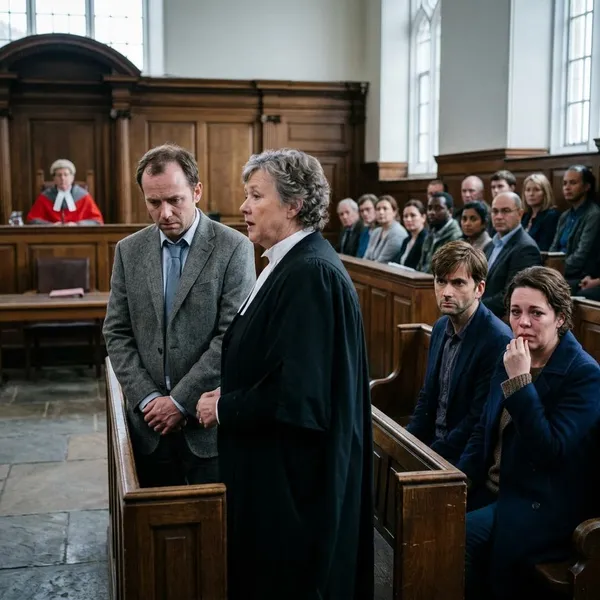
Broadchurch Season 2 picks up after the reveal of Danny Latimer's killer and asks a less comfortable question: what happens when the truth still has to survive lawyers, testimony, grief, and public doubt? The season runs on two tracks: Joe Miller's trial and Alec Hardy's unfinished Sandbrook investigation.
The first thing to know before watching is simple: do not start here if you have not seen Season 1. The emotional weight depends on knowing Danny's case, Ellie's betrayal, the Latimers' grief, and Hardy's reputation.
Joe Miller goes on trial
Joe Miller's trial becomes the season's main public battle. The painful twist is that knowing what happened is not the same as proving it cleanly in court, and the Latimer family has to hear private trauma turned into legal argument.
This is where some viewers split on the season. If you enjoy courtroom drama, the trial gives the story a colder, more procedural kind of tension. If you came only for detective work, these scenes may feel frustrating because they slow the pace and focus on credibility, strategy, and doubt.
The Latimer family faces renewed trauma
Beth and Mark Latimer are not allowed the quiet aftermath they might have hoped for. The trial reopens Danny's death in public, and Season 2 is sharpest when it shows how grief changes once other people start debating it as evidence.
Beth's story carries a lot of the season's emotional force because she is trying to protect her son's memory while being forced through a process she cannot control. Mark's path is messier: his grief comes out through guilt, anger, and decisions that are not always easy to support.
Ellie struggles with the consequences of Season 1
Ellie Miller has one of the strongest arcs because she is living inside the damage caused by someone closest to her. She is not simply "recovering"; she is trying to work, parent, and exist in a town that sees her through Joe's crime.
Her partnership with Hardy also becomes more grounded. They still irritate each other, but the trust between them feels earned, especially when the Sandbrook case pulls them into another painful investigation.
Hardy returns to the unresolved Sandbrook case
The Sandbrook case gives Alec Hardy more than a gloomy backstory. It explains why he is so obsessive, guarded, and physically worn down, and it adds a second mystery when the trial becomes heavy with legal procedure.
Two connected investigations drive the season
The trial and Sandbrook case are different in plot but connected by the same question: can truth survive pressure? One story tests truth in a courtroom; the other tests it through memory, fear, and old lies.
- Trial storyline: public, legal, emotionally punishing.
- Sandbrook storyline: private, investigative, tied to Hardy's guilt.
- Viewing tip: Season 2 works better when watched closely rather than casually in the background.
Broadchurch Season 2 cast and characters
The cast is the main reason the slower structure still holds together. Season 2 asks its actors to play exhaustion, suspicion, grief, shame, and professional control without turning everything into melodrama.
David Tennant as Alec Hardy
David Tennant plays Hardy as a man running on duty and guilt more than confidence. The Sandbrook material gives him personal stakes, while his scenes with Ellie keep him from becoming just another damaged detective archetype.
Olivia Colman as Ellie Miller
Olivia Colman gives Ellie the season's most human centre. She can be furious, embarrassed, capable, and compassionate within the same stretch of story, which makes her pain feel lived-in rather than written for effect.
If you are watching mainly for character work, Ellie is one of the clearest reasons not to skip Season 2. Her development matters for the rest of the series.
Jodie Whittaker as Beth Latimer
Jodie Whittaker makes Beth's grief feel active, not static. Beth is not only mourning Danny; she is fighting to keep his memory from being reduced to a courtroom tactic.
Andrew Buchan as Mark Latimer
Andrew Buchan gives Mark a heavy, unsettled presence. His grief is less controlled than Beth's, and the season uses that difference to show how the same loss can push family members in opposite directions.
Matthew Gravelle as Joe Miller
Matthew Gravelle's role is deliberately uncomfortable. Joe does not need constant screen time to affect the season because his trial forces everyone else back into pain they thought had at least been named.
Eve Myles as Claire Ripley
Eve Myles makes Claire Ripley hard to read in the best way. She seems frightened, manipulative, vulnerable, and evasive at different points, which keeps the Sandbrook mystery tense without relying only on plot twists.
James D'Arcy as Lee Ashworth
James D'Arcy brings a controlled menace to Lee Ashworth. The performance works because he never plays Lee as obviously one thing; guilt, resentment, and calculation all seem possible.
Charlotte Rampling as Jocelyn Knight
Charlotte Rampling adds authority as Jocelyn Knight, the barrister on the prosecution side. Her presence helps the courtroom scenes feel like a contest of experience, timing, and legal pressure rather than a simple search for moral truth.
How Season 2 differs from Season 1
Season 2 is not weaker just because it is different, but it is definitely less instantly gripping than Season 1 for many viewers. The first season had one central question; the second has aftermath, trial strategy, and a separate unresolved case.
| If you liked Season 1 for... | Season 2 may feel... |
|---|---|
| A tight murder mystery | Slower and more divided |
| Hardy and Ellie's partnership | Richer and more emotionally rewarding |
| Small-town suspicion | Broader, with more legal and past-case material |
| Character fallout | More patient and worthwhile |
More courtroom drama
The biggest tonal change is the courtroom focus. Instead of following clues toward a killer, the season spends more time showing how lawyers challenge testimony, reframe facts, and make already wounded people relive events under pressure.
Two major storylines instead of one
Season 1 moved with the force of a single investigation. Season 2 divides its attention between Joe's trial and Sandbrook, which makes the structure more ambitious but also less clean.
Greater focus on legal strategy
Legal strategy matters more than police discovery here. Witnesses are prepared, weak points are attacked, and emotional truth is repeatedly separated from what the court can use.
A slower and more complex structure
Season 2 asks for more patience than Season 1. It builds through accumulated pressure rather than constant shocks, so it is a better fit for a focused evening watch than a distracted background binge.
The middle episodes are where viewers most often feel the slowdown. The payoff works better if you track both the court details and the Sandbrook relationships instead of treating one storyline as filler.
More attention to past trauma
Season 2 is heavily interested in what trauma does after the first wave of shock. Ellie, Beth, Mark, Hardy, and even the wider town are living with consequences that cannot be solved by one arrest or one verdict.

Broadchurch Season 2 ending explained
The ending resolves the main Season 2 threads, but it does not offer the clean comfort of a simple victory. That fits the season's main idea: truth, justice, and healing do not always arrive together.
Spoiler note: the sections here discuss the outcome and meaning of the finale, so it is better to watch the season first if you want the final episodes untouched.
The outcome of Joe Miller's trial
Joe Miller's trial ends in a result that many viewers find infuriating because it exposes the gap between what the audience believes and what the court delivers. The point is not to make the legal system look neat; it is to show how procedure can leave victims feeling abandoned.
The emotional aftermath is just as important as the verdict. Broadchurch keeps the focus on the Latimers and Ellie, because they are the people who have to keep living with the consequences once the court process is over.
The truth behind the Sandbrook case
Season 2 does reveal the truth behind Sandbrook. The case turns out to be built around adult betrayal, concealment, and overlapping lies rather than one tidy piece of villainy.
Its real function is to release Hardy from the unresolved failure that has followed him since before Season 1. He does not become carefree, but he finally gets answers to a case that had been poisoning his life and reputation.
What happens to Ellie and Hardy
Ellie ends the season stronger, but not magically healed. She has begun to define herself outside Joe's crime, which is one of the season's most important emotional movements.
Hardy also changes through Sandbrook. His guilt does not disappear, yet the case gives him a measure of resolution, and his partnership with Ellie feels more equal by the finale.
How the Latimer family responds
The Latimers do not get a neat version of closure. Beth's response is steadier and more outward-facing, while Mark remains more damaged and uncertain, which feels painfully believable for two parents grieving the same child in different ways.
What the ending sets up for Season 3
The finale leaves enough emotional ground for Season 3 without making Season 2 feel unfinished. The main cases are dealt with, but Broadchurch remains a town shaped by what has happened.

Conclusion
Broadchurch Season 2 is best approached as a consequence season, not as a second attempt at the same mystery. Watch it if you care about Ellie, Hardy, the Latimers, and the uncomfortable space between truth and justice; lower your expectations if you only want the tight, addictive structure of Season 1. As a bridge to Season 3 and as a character-driven crime drama, it earns its place even when its slower pace tests your patience.