
Breaking Bad Season 1 is the part you should not skip: it explains why Walter White starts cooking meth, how Jesse Pinkman becomes tied to him, and why the show's moral slide feels believable instead of sudden. If you are starting the series, rewatching before Season 2, or checking whether the first season is worth your time, the key point is simple: these seven episodes set up almost every major emotional and criminal consequence that follows.
What is Breaking Bad Season 1 about?
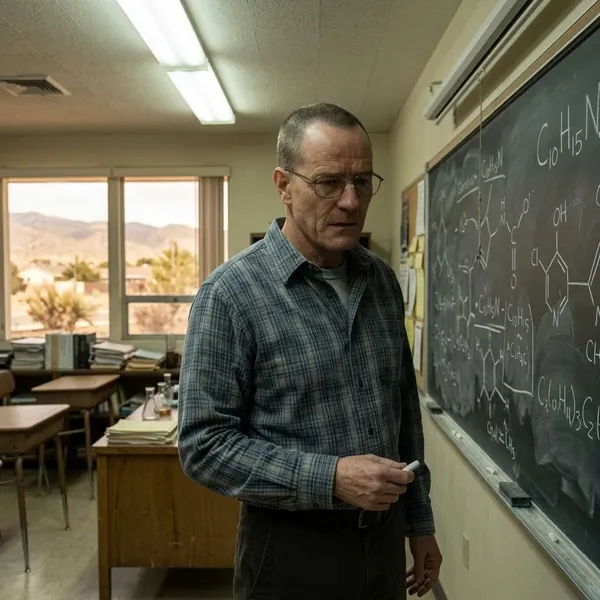
Breaking Bad Season 1 follows Walter White, a gifted but frustrated high school chemistry teacher, after he learns he has lung cancer. Facing medical costs, family pressure, and a bruised sense of pride, Walt decides to make money by producing meth with Jesse Pinkman, a former student who already knows the local drug scene.
Walt learns he has cancer
Walt's cancer diagnosis is the trigger for the entire season. Before it, he is already unhappy: underpaid, overlooked, working a second job, and struggling to feel respected in his own life. The diagnosis gives that frustration a deadline.
What makes the setup work is that the show does not present Walt as a cartoon villain from the beginning. His fear is understandable, especially with a pregnant wife and a son at home. The warning sign is the way he turns that fear into permission: once he decides the normal rules have failed him, he starts treating extreme choices as practical ones.
Walt recruits former student Jesse
Jesse Pinkman gives Walt something chemistry alone cannot provide: a way into the meth market. Walt brings technical skill; Jesse brings contacts, local knowledge, and enough street experience to make the plan possible.
- Walt needs access: he can make the product, but he cannot sell it safely on his own.
- Jesse needs quality: Walt's chemistry gives him a product that stands out.
- Both underestimate the risk: neither is prepared for how quickly the situation turns violent.
Their partnership already feels unstable in Season 1, which is exactly why it matters. It is not a smooth criminal team-up; it is a tense, funny, ugly arrangement built on need.
Their first meth cook turns deadly
The first cook in the RV is the season's clearest warning that this will not be a fantasy about easy money. Walt and Jesse produce a high-quality batch, but the moment other criminals get involved, the plan collapses into panic, violence, captivity, and cleanup.
Walt begins building a criminal identity
By the end of Season 1, Walt has not become the powerful figure he later turns into, but the early shape of that identity is visible. He lies more easily, reacts faster under pressure, and begins to understand that people underestimate him.
The important shift is internal. At first, Walt seems driven mainly by fear. As the season moves on, control starts to matter just as much as money, and that makes his choices more disturbing.
Who is in the Breaking Bad Season 1 cast?
The main cast is small enough that every character has a clear purpose. Bryan Cranston and Aaron Paul carry the central crime story, while Anna Gunn, Dean Norris, RJ Mitte, and Betsy Brandt keep the family side from feeling like background decoration.
Bryan Cranston as Walter White
Bryan Cranston plays Walter White as tired, resentful, frightened, and increasingly dangerous without rushing the transformation. In the pilot, Walt looks like a man who has spent years shrinking himself to fit a disappointing life.
Cranston's strongest choice is restraint. Walt does not suddenly become bold; he tests what he can get away with, then adjusts. That slow change is why Season 1 is still useful even if you already know where the character eventually goes.
Aaron Paul as Jesse Pinkman
Aaron Paul's Jesse could easily have been a disposable sidekick, but Season 1 quickly makes him more important than that. He is impulsive and often foolish, yet he reacts to danger with a rawness Walt tries to bury.
That contrast matters. Jesse gives the season its nervous energy and much of its conscience. When the consequences become ugly, he often looks more shaken than Walt, which tells the viewer a lot about both men.
Anna Gunn as Skyler White
Anna Gunn plays Skyler White as practical, observant, and increasingly unsettled by Walt's behavior. She is pregnant, dealing with Walt's diagnosis, and trying to hold the household together while he becomes harder to read.
Skyler's suspicion is built from ordinary details: unexplained absences, weak excuses, changes in mood, and emotional distance. That makes her role important for a viewer who cares about realism. Walt may be hiding a criminal life, but at home he still has to survive normal questions.
Dean Norris as Hank Schrader
Dean Norris brings confidence and humor to Hank Schrader, Walt's brother-in-law and a DEA agent. Hank can be loud and joking, but the show is careful not to make him useless.
His role creates a specific kind of pressure: Walt is not hiding from a distant police force, but from someone who sits at family gatherings and talks openly about meth investigations. That closeness turns casual scenes into suspense.
RJ Mitte as Walter White Jr.
RJ Mitte plays Walter White Jr., Walt and Skyler's teenage son. His presence gives weight to Walt's claim that everything is for the family, because the audience can see the person Walt says he is trying to protect.
The season does not need to overuse Walt Jr. to make him matter. A few grounded family scenes are enough to show what Walt risks damaging every time he chooses another lie.
Betsy Brandt as Marie Schrader
Betsy Brandt's Marie Schrader helps the White-Schrader family feel like a real social circle rather than a set of plot functions. As Skyler's sister and Hank's wife, she keeps the domestic world active around Walt's secret.
Her scenes also make the contrast sharper: baby showers, family visits, and everyday conversations continue while Walt is building a second life that could destroy all of it.

How do the characters change in Season 1?
Season 1 is short, but the character movement is clear. Walt becomes more controlling, Jesse becomes more emotionally tied to the operation, Skyler starts noticing the cracks, and Hank's work edges closer to Walt's hidden life.
Walt moves from fear to control
Walt begins the season reacting to disaster. Cancer, money, violence, and secrecy all seem bigger than he is. Gradually, he discovers that his intelligence can give him leverage in places where he has no physical power or criminal experience.
That is the point where the season becomes more than a survival story. A viewer deciding whether Walt is still sympathetic should watch this shift closely: the more control he gains, the less convincing his "no other choice" argument becomes.
Jesse becomes a real partner
Jesse starts as Walt's connection to the drug trade, but he becomes a genuine partner because he is tied to the same danger and the same secrets. He helps solve problems, absorbs consequences, and keeps returning even when the arrangement hurts him.
His value is not just practical. Jesse reacts emotionally where Walt rationalizes, and that makes him one of the best measures of how damaging the partnership has become.
Skyler grows more suspicious
Skyler does not need proof of the meth business to know Walt is lying. She notices the pattern first: strange timing, evasive answers, and a husband whose personality no longer matches his explanations.
- Low-risk scene: a family conversation feels normal until Walt gives an answer that is slightly too vague.
- Higher-risk moment: Walt disappears or changes plans without a believable reason.
- Long-term problem: each lie makes the next explanation harder to maintain.
Hank moves closer to Walt's secret
Hank's investigation does not point directly at Walt in Season 1, but it keeps narrowing the space around him. Every DEA conversation is uncomfortable because the audience knows Hank is chasing a case that connects to his own family.
The show uses this pressure carefully. Hank is not always in the center of the plot, yet his presence reminds viewers that Walt's criminal life is not happening in a separate world. It is already dangerously close to home.
Why is Breaking Bad Season 1 essential?
Season 1 is essential because it gives the rest of Breaking Bad its moral baseline. Later seasons become bigger and more complicated, but the first seven episodes show the first excuses, first lies, first acts of violence, and first signs that Walt is not only scared—he is tempted by power.
For a new viewer, this season is not optional background. For a returning viewer who wants a quick refresher before Season 2, focus on three things: Walt's mixed motives, the unstable Walt-Jesse bond, and the way Skyler and Hank create pressure from inside Walt's normal life.
It establishes Walt's true motivation
Walt says he is doing everything for his family, and Season 1 gives that claim enough truth to make it believable. He is sick, worried about money, and afraid of leaving Skyler, Walt Jr., and the baby without security.
But the season also makes room for a less noble reading. Walt is angry about being overlooked, and he enjoys moments where his intelligence gives him control. The mistake is taking his family explanation as the whole answer; Season 1 is already showing that his motive is mixed.
It builds the Walt and Jesse partnership
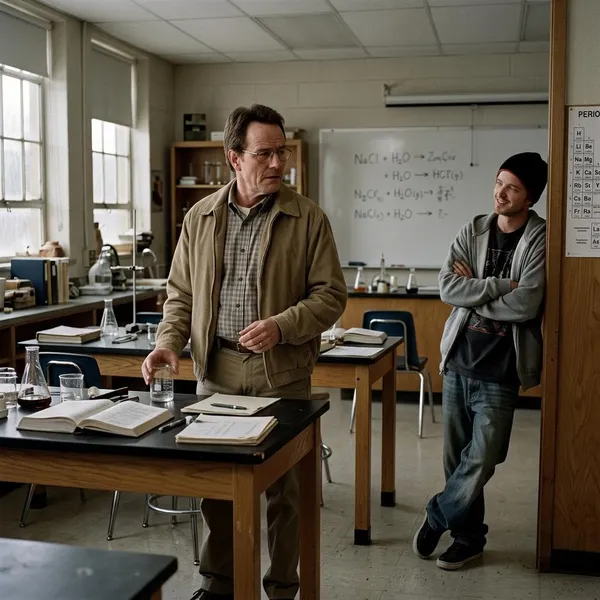
The Walt and Jesse partnership matters because it is never only business. They need each other, resent each other, panic together, and begin forming habits that will shape the rest of the series.
| What each one brings | Why it matters in Season 1 |
|---|---|
| Walt's chemistry knowledge | Turns the plan from amateur crime into something more dangerous and valuable. |
| Jesse's street connections | Gives Walt access, but also brings risks Walt does not understand. |
| Their shared secrets | Makes walking away harder after the first consequences hit. |
It introduces the show's moral conflict
The central conflict is not simply whether Walt will get caught. It is whether viewers can keep accepting his reasons as his actions become worse. Season 1 sets that trap very well: it begins with sympathy, then keeps asking how far sympathy should stretch.
Jesse, Skyler, and Hank each sharpen that question in a different way. Jesse shows the emotional fallout, Skyler shows the damage at home, and Hank represents the law sitting right across the dinner table.
It makes Walt's later choices more powerful
Later seasons carry more force because Season 1 lets viewers see the starting point. Walt's first lies are awkward. His first violent choices shake him. His first moments of control feel new enough that you can still see the old version of him underneath.
That gradual build is the reason a simple recap cannot replace watching the season. Knowing the plot tells you what happened; seeing Season 1 shows how Walt learned to live with each step.
Conclusion
Breaking Bad Season 1 is worth watching in full because it gives Walt's transformation a clear, uncomfortable beginning. The season is compact, but it does the important work: it makes his fear understandable, exposes the pride underneath it, and ties Jesse, Skyler, Hank, Walt Jr., and Marie into consequences that cannot be separated from the crime story.