
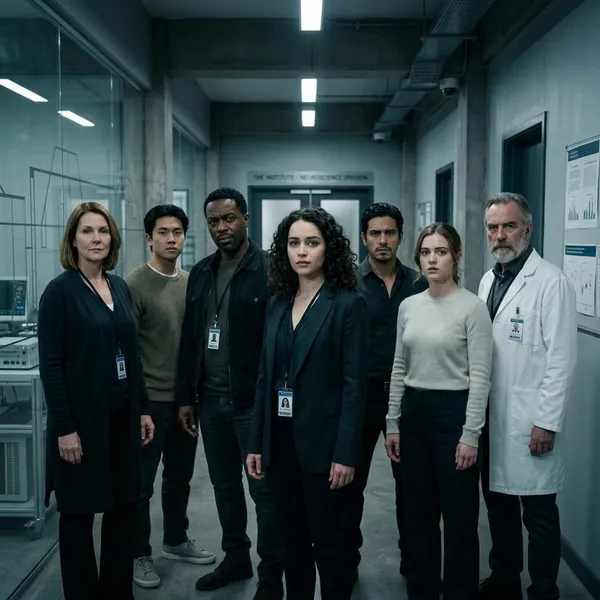
The cast of The Institute TV series is led by Joe Freeman as Luke Ellis, Ben Barnes as Tim Jamieson, and Mary-Louise Parker as Ms. Sigsby. If you are trying to place a face from the trailer or work out which Stephen King character matters most, start with those three names, then look at the child ensemble and the Institute staff around them.
Who Is in The Institute TV Series Cast?
The main cast mixes younger actors carrying the captive-children storyline with experienced adult performers handling the wider mystery. For a quick pre-watch check, Luke, Tim, and Ms. Sigsby are the three names to know first; Kalisha and Nicky matter once the story moves inside the facility.
| Actor | Role | Why the role matters |
|---|---|---|
| Joe Freeman | Luke Ellis | The gifted child at the center of the story |
| Ben Barnes | Tim Jamieson | The outside adult thread that pulls the mystery wider |
| Mary-Louise Parker | Ms. Sigsby | The controlled authority figure behind the Institute |
| Simone Miller | Kalisha | One of the key children Luke meets inside |
| Fionn Laird | Nicky Wilholm | A child character who helps build the group dynamic |
Who Are the Supporting Cast Members?
The supporting cast fills in the two sides of the story: the people who help the Institute function and the people connected to the outside world. If you are watching casually, these names may seem secondary at first, but they are the ones who make the conspiracy feel staffed, protected, and harder to expose.
Hannah Galway as Wendy Gullickson
Hannah Galway plays Wendy Gullickson, a character linked to the world beyond the facility. Her role is useful because a story this secretive needs people outside the main horror who can add context, pressure, or friction to Tim's side of the plot.
Julian Richings as Stackhouse
Julian Richings plays Stackhouse, a role associated with the Institute's darker internal machinery. Richings often brings a quiet unease to screen roles, so his casting is a good signal that Stackhouse may not need loud scenes to feel threatening.
For viewers who enjoy Stephen King adaptations for atmosphere, this is one of the supporting names worth noticing early.
Robert Joy as Dr. Hendricks
Robert Joy plays Dr. Hendricks, a figure tied to the medical or scientific side of the Institute. That type of character matters because the horror here is not only physical captivity; it is the way cruel systems justify themselves with procedure, expertise, and calm language.
Martin Roach as Chief Ashworth
Martin Roach plays Chief Ashworth. A local authority figure can change the texture of the story quickly: he may become a route toward answers, a source of delay, or a reminder that official systems do not always see what is happening in front of them.
Jason Diaz as Tony
Jason Diaz plays Tony, a supporting role that adds more immediate pressure around the Institute. Characters like Tony are often the ones who make danger feel close in a scene, because they are near the doors, corridors, rules, and daily control.
Who Are the Main Characters in The Institute?
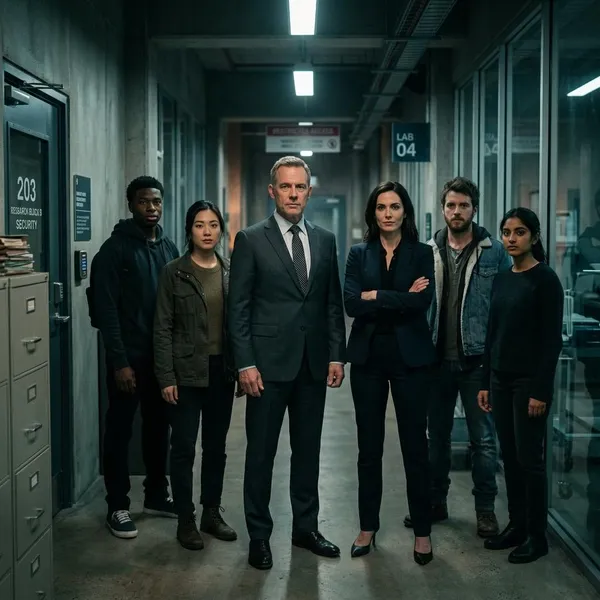
The main characters are Luke Ellis, Tim Jamieson, Ms. Sigsby, Kalisha, and the other kidnapped children inside the facility. A simple way to read the story is this: Luke gives the audience the trapped perspective, Tim gives the outside investigation, Sigsby gives the system a face, and the children show the human cost.
Luke Ellis and his psychic abilities
Luke's psychic abilities are the reason he is taken, but they should not be the only reason he is interesting. The character works best when his intelligence, caution, and emotional control feel just as important as the supernatural element.
- Watch his reactions: Luke often has to understand danger before he can fight it.
- Watch his relationships: the other children shape how he adapts inside the Institute.
Tim Jamieson and his investigation
Tim's investigation gives the series a second engine. Without him, the story could feel sealed inside the facility for too long; with him, there is a slow sense that the outside world might eventually collide with what is being hidden.
This is especially useful for viewers who prefer mystery structure over constant horror. Tim's scenes can offer clues, pacing changes, and a grounded counterweight to the children's experience.
Ms. Sigsby and her secret facility
Ms. Sigsby represents the Institute as a system, not just as a place. Her power comes from order: rules, staff, routines, and the confidence that the operation is justified.
Kalisha and the kidnapped children
Kalisha and the other kidnapped children are central to the emotional weight of the series. They show what daily survival looks like inside the Institute: who adapts, who resists, who protects others, and who starts to lose hope.
If you are watching mainly for the cast, pay attention to the group scenes rather than only the lead roles. Those moments often reveal whether the young ensemble can make the facility feel genuinely lived in.
How Does the Cast Compare to Stephen King's Book?
The TV cast appears to keep the main character map of Stephen King's novel: Luke remains the child at the center, Tim remains the adult moving toward the truth, and Ms. Sigsby remains the face of institutional control. The smarter comparison is not a name-by-name checklist alone, but whether each role keeps the same function in the story.
For a first-time viewer, casting mainly affects clarity: who should I trust, fear, or follow? For a book reader, the bigger question is fidelity: do the characters still feel like themselves even if the show adjusts age, screen time, or emphasis?
Characters from the original novel
Luke Ellis, Tim Jamieson, Ms. Sigsby, Kalisha, Nicky, Stackhouse, and Dr. Hendricks all connect the series to the original novel's core world. Their presence helps the adaptation feel recognizably like The Institute, especially because they cover the child, investigator, authority, and staff sides of the plot.
Changes to character ages
Some character ages may be adjusted for television, which is common in adaptations involving young roles. The practical question is whether the relationships still make sense on screen: Luke should feel young enough to be vulnerable, capable enough to be dangerous to the Institute, and believable beside the other children.
Age changes become a problem only if they weaken the character's purpose. A small shift that helps performance or group chemistry is usually less important than losing the emotional truth of the role.
New and expanded roles
Television often expands roles that were smaller on the page because episodes need more movement, more points of view, and clearer scene-to-scene tension. A supporting character connected to local authority, security, or the facility's medical side may get more screen time without changing the basic story.
Conclusion
The strongest way to judge this ensemble is to start with function, not fame: Joe Freeman has to make Luke worth fearing for, Ben Barnes has to keep the outside mystery moving, and Mary-Louise Parker has to make the Institute feel calmly dangerous. If those three parts land, the supporting adults and child actors have a much better chance of making the series feel like a tense Stephen King adaptation rather than just another secret-facility thriller.