
Bosch Season 2 is the point where the show starts to feel fully confident: the Tony Allen murder gives it a strong crime plot, while Bosch's family history and LAPD politics make the case feel more personal. If you are checking whether the harry bosch tv series season 2 is worth watching, the practical answer is yes—especially if you like slow-burn detective work, moral pressure, and a finale that answers the main case without making everything tidy.
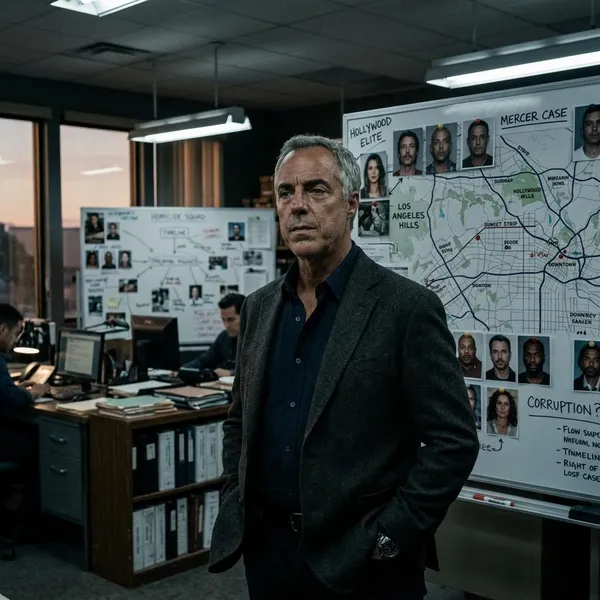
What happens in Bosch Season 2?
Season 2 follows Harry Bosch and Jerry Edgar as they investigate the murder of Tony Allen, a Hollywood attorney found dead in the trunk of a car. The case starts in Los Angeles, pulls the detectives toward Las Vegas, and gradually exposes links to organized crime, money, betrayal, and people who are used to staying protected.
Bosch investigates the murder of Tony Allen
Tony Allen's death is the central case of the season. The trunk detail immediately suggests planning and concealment, so Bosch does not treat it like a random killing or a simple domestic dispute. He and Edgar work the case through interviews, financial clues, witness pressure, and the victim's private connections.
The case leads from Los Angeles to Las Vegas
The Las Vegas thread expands the case without turning the season into a flashy road-trip thriller. It matters because Allen's world is not limited to Los Angeles; his money, relationships, and risks reach into places where business, gambling, and criminal influence overlap.
Organized crime complicates the investigation
Organized crime raises the stakes because it changes how people behave around the police. Witnesses become careful, records may not tell the whole story, and fear can matter as much as evidence.
- For Bosch and Edgar: every lead has to be checked against who benefits from silence.
- For the viewer: the case becomes less about one angry killer and more about a protected network.
- For the season's tone: the danger feels grounded rather than exaggerated.
Bosch searches for answers about his mother
Bosch's mother's murder is not just background material. It explains why he is so stubborn about victims who have been dismissed, buried, or made inconvenient. Season 2 pushes this thread forward with new information that makes the old case feel painfully present.
Internal pressure threatens the detectives
The detectives are not only fighting suspects. They are also working inside a department shaped by rank, public image, political caution, and career survival. That pressure affects how quickly they can move and how much room they have to follow uncomfortable leads.
Grace Billets often has to manage the gap between the detectives and the command structure, while Irvin Irving represents the more strategic, reputation-conscious side of the LAPD. That tension keeps the season from feeling like a simple "good detectives versus bad criminals" story.
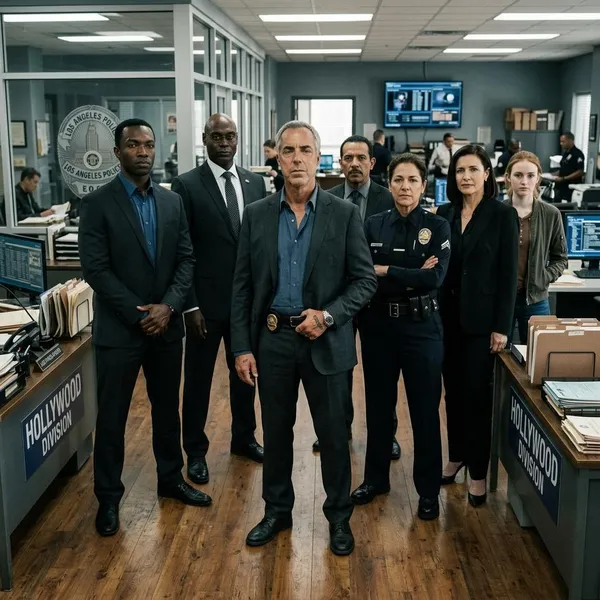
Bosch Season 2 cast and characters
The cast is one of the main reasons Season 2 works. The performances are restrained, which suits a show where a look across an interview table can matter more than a big speech. If you are deciding whether to keep watching after Season 1, the stronger use of the supporting cast is a good reason to continue.
Titus Welliver as Harry Bosch
Titus Welliver keeps Bosch controlled, observant, and difficult in a believable way. Season 2 gives him more to carry than a standard homicide plot: he has the Tony Allen case, his mother's murder, and a changing family situation with Eleanor and Maddie.
Jamie Hector as Jerry Edgar
Jamie Hector makes Jerry Edgar more than a partner who follows Bosch around. Edgar is socially sharper, steadier in certain rooms, and more willing to read the practical temperature of a situation.
Amy Aquino as Grace Billets
Amy Aquino gives Grace Billets the kind of authority that feels lived-in. Billets understands the detectives, but she also understands the department, which means she often has to turn pressure from above into workable choices on the ground.
Lance Reddick as Irvin Irving
Lance Reddick plays Irvin Irving with precision and control. Irving is not written as a cartoon obstacle; he is ambitious, politically aware, and constantly weighing how police work affects power, perception, and survival.
Sarah Clarke as Eleanor Wish
Sarah Clarke's Eleanor Wish brings intelligence and history into Bosch's life. Her scenes with Harry work because the show does not pretend their relationship can be made simple just because they still care about each other.
Madison Lintz as Maddie Bosch
Madison Lintz gives Maddie a calm presence that changes the rhythm of Bosch's scenes. Maddie is not there just to soften Harry; she shows what he is trying to protect and how awkwardly he sometimes handles love when it is not connected to a case file.
Jeri Ryan as Veronica Allen
Jeri Ryan makes Veronica Allen one of the season's most watchable question marks. As Tony Allen's widow, she is close to the victim, but her composure and control make it hard to read how much she knows.
Her value to the story is ambiguity. She can seem vulnerable, strategic, or both in the same scene, which keeps the investigation from settling too early into an obvious answer.
Brent Sexton as Carl Nash
Brent Sexton's Carl Nash belongs to Bosch's oldest wound rather than the headline Tony Allen case. That makes him feel dangerous in a different way: less like a seasonal suspect and more like a piece of buried history Bosch has been moving toward for years.
The main Season 2 storylines
Season 2 works because its storylines do different jobs. The Tony Allen case supplies the mystery, Veronica Allen keeps suspicion moving, Bosch and Edgar carry the detective work, Eleanor and Maddie reveal what Bosch is like away from a crime scene, Irving adds institutional pressure, and the mother storyline gives the season its emotional center.
The mystery surrounding Tony Allen's death
The mystery begins with a body in a trunk and grows into a case about hidden money, private arrangements, and people who may have more to lose than they admit. The season keeps returning to Allen's life rather than treating him as a disposable victim, which gives the investigation a stronger spine.
Veronica Allen's role in the investigation
Veronica Allen matters because she sits at the intersection of grief, wealth, image, and possible motive. Detectives have to question her as the widow, but the show keeps her interesting by making her difficult to categorize.
Bosch and Edgar's changing partnership
Bosch and Edgar's partnership becomes more textured in Season 2 because the case pushes them into higher-risk territory. Bosch is relentless and often rigid; Edgar is still committed, but he tends to read people and situations with a different kind of flexibility.
Eleanor and Maddie's return to Bosch's life
Eleanor and Maddie make the season feel less sealed inside the police department. Their return gives Bosch something he cannot solve through evidence, pressure, or a late-night drive across Los Angeles.
Irving's conflict with the police department
Irving's storyline shows how law enforcement decisions are shaped by more than evidence. Public perception, ambition, internal loyalty, and political timing all affect what gets supported and what becomes inconvenient.
New evidence about Bosch's mother
The new evidence about Bosch's mother gives Season 2 its most personal stakes. Harry is not chasing this because it is another open file; he is chasing it because the murder shaped his entire idea of justice.
Bosch Season 2 ending explained
The ending resolves the Tony Allen case and gives Bosch major answers about his mother, but it does not reset the show's emotional damage or department politics. If you have not finished the season, treat this section as spoiler territory; it is best read after the finale.

The truth behind Tony Allen's murder
Tony Allen's murder is ultimately tied to a larger criminal scheme, not just one private grudge. The finale makes clear that his death comes from the dangerous world he was connected to: money, secrecy, organized crime, and people trying to keep exposure under control.
How the main conspiracy is uncovered
The conspiracy comes apart through accumulation. Bosch and Edgar keep linking witness statements, timelines, financial interests, Los Angeles evidence, and Las Vegas connections until the larger structure becomes visible.
What happens to Carl Nash
Carl Nash's storyline brings Bosch closer to the truth about his mother's murder. His role matters because it connects the season's present-day pressure to the crime that has haunted Bosch since childhood.
Where Bosch and Eleanor stand
Bosch and Eleanor end the season more connected, but not cleanly repaired. They share history, loyalty, and Maddie, yet the show wisely avoids pretending that a difficult past can be fixed by a few intense events.
What Bosch learns about his mother
Bosch learns that his instinct to keep pursuing his mother's case was not misplaced. The new truth gives him confirmation, but it also forces him to face how power, violence, and indifference helped keep the case unresolved.
This is one of the season's strongest emotional moves. Bosch does not suddenly become healed; he becomes better informed, and for this character that is both a victory and a burden.
How the finale leads into Season 3
The finale closes the main Season 2 arcs while leaving consequences in place. Bosch's family ties, his department relationships, and the emotional aftermath of his mother's case all carry forward.
Where to watch Bosch Season 2
The safest place to look for Bosch Season 2 is the official streaming home for the original series, then confirm that the season is available in your country. This matters because there are multiple Bosch-related titles now, and streaming apps do not always make the viewing order obvious.

Check the official streaming home for Bosch
Start with the platform that originally carried Bosch, because it is usually the most reliable place to find the complete original run in order. Third-party search results can lag behind regional rights changes, so checking the official listing first saves time.
Select the original Bosch series
Choose the original Bosch series, not a later connected title. The quick check is to look for Titus Welliver as Harry Bosch and the original run that begins before the later sequel-era series.
Start with Season 1 for full context
Starting with Season 1 is the better choice if you care about Bosch's relationships, his working style, and the tension with the department. Season 2's murder case is followable by itself, but the quieter character moments have more impact in order.
Confirm availability in your country
Availability can vary by country, so check the local version of the streaming service rather than assuming a general search result applies to you. If Season 2 does not appear immediately, search within the original series page, check the season dropdown, and confirm whether a licensed local provider currently carries it.
Conclusion
Bosch Season 2 is worth watching because it finds the right balance between a strong central murder case and the personal history that makes Harry Bosch more than another TV detective. Start with Season 1 if you want the relationships to land properly, but stay with Season 2 for the Tony Allen investigation, the sharper cast dynamics, and a finale that gives answers without pretending justice is ever simple.