
If you are checking homeland tv series season 8, the main thing to know is that it is the final season and it goes straight back to Carrie, Saul, Russia, Afghanistan, and one last intelligence crisis. It is also a spoiler-heavy season once the helicopter crash happens, so viewers who only want a cast refresher should stop before the ending section.
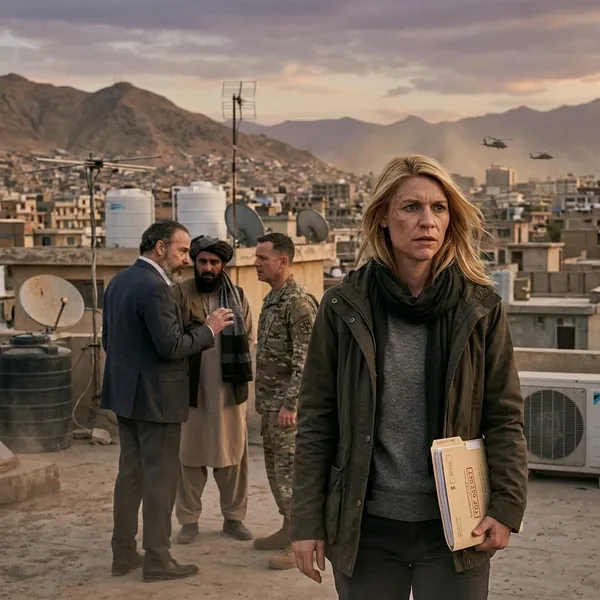
What happens in Homeland Season 8
Season 8 follows Carrie Mathison after her captivity in Russia, while Saul Berenson tries to protect a fragile peace deal with the Taliban. The season starts as a political negotiation story, then turns into a race to stop a possible war after a fatal helicopter crash changes everything.
Carrie returns after captivity in Russia
Carrie begins the season physically free but mentally shaken. After months in Russian custody, she has memory gaps and cannot fully prove what happened to her, which makes other officials question whether she may have been compromised.
That uncertainty is more than background trauma. It affects how people treat her in the field, how much Saul can risk by trusting her, and how viewers read her connection with Yevgeny Gromov. For longtime fans, this is Carrie at her most exposed: still brilliant, but no longer able to rely on everyone believing her instincts.
Saul works to secure peace with the Taliban
Saul's job is to keep a peace process alive in Afghanistan, where the United States, the Taliban, Pakistan, and intelligence agencies all want different things from the same negotiation. The season is strongest when it shows how quickly diplomacy can break if one side loses face or another side sees an advantage.
A helicopter crash threatens the peace process
The crash is the season's turning point. President Ralph Warner and Afghan President Daoud die in the incident, and the peace effort immediately becomes a crisis shaped by grief, suspicion, and political pressure.
The important detail is not only who dies, but how quickly people start deciding what the crash means before the facts are clear. If you are watching for the political thriller side of Homeland, this is where the final season really tightens.
The flight recorder becomes vital evidence
The flight recorder matters because it can prove whether the crash was caused by an attack or by something else. Without it, leaders are left acting on assumptions, and those assumptions could push the United States toward a much larger conflict.
- For Carrie, it is the proof she needs before the wrong story becomes official.
- For Saul, it is the difference between saving the peace process and watching it collapse.
- For Russia and Pakistan, it becomes leverage in a dangerous political moment.
Carrie risks everything to prevent a war
Carrie's final mission is not clean or heroic in the usual sense. She needs the truth about the crash, but getting that truth means dealing with people who understand exactly how desperate she is.
This is where the season becomes a real test of what kind of ending you want. If you prefer a neat victory, the final episodes may feel harsh. If you like Homeland for its moral pressure and impossible choices, Carrie's last arc feels very consistent with the show.
Homeland Season 8 cast
The final season keeps the focus on Carrie and Saul, but the supporting cast matters because every major plot turn depends on political influence, intelligence pressure, or regional power. If you are only trying to remember who is who before watching, start with Carrie, Saul, Yevgeny, Tasneem, Haqqani, and Hayes.
Claire Danes as Carrie Mathison
Claire Danes plays Carrie as damaged but still dangerously focused. Her memory loss, isolation, and need to prove herself give the season its emotional instability, while her field instincts keep pulling the story forward.
Mandy Patinkin as Saul Berenson
Mandy Patinkin gives Saul the tired authority of someone who has seen too many crises repeat themselves. He is the season's negotiator and moral anchor, but the finale tests whether his trust in Carrie can survive the kind of betrayal intelligence work sometimes demands.
Numan Acar as Haissam Haqqani
Haissam Haqqani is central to the peace process, which makes him more complicated than a standard enemy figure. His past is violent, but Saul still has to treat him as someone who may be necessary to stop more violence.
Nimrat Kaur as Tasneem Qureishi
Nimrat Kaur's Tasneem Qureishi is one of the season's sharpest political players. She understands leverage, timing, and national interest, and her scenes often show how much of the conflict is shaped away from the battlefield.
Costa Ronin as Yevgeny Gromov
Yevgeny is the character to watch if you are trying to understand Carrie's final choices. He can seem helpful, manipulative, protective, and calculating in the same stretch of story, which is exactly why his relationship with Carrie feels so dangerous.
Linus Roache as David Wellington
David Wellington connects the overseas crisis to the Washington response. His role is quieter than some of the field characters, but he helps show how incomplete information becomes policy once it reaches the White House.
Beau Bridges as Ralph Warner
Ralph Warner represents the fragile hope that the peace process might actually work. His death in the helicopter crash gives the season its sudden shift from negotiation to retaliation risk.
Hugh Dancy as John Zabel
John Zabel is useful because he shows a different kind of danger: the confident adviser who pushes a hard line before the evidence is settled. He is not the main villain of the season, but his influence helps make escalation feel believable.
Sam Trammell as Benjamin Hayes
Benjamin Hayes becomes president at the worst possible moment. The season uses him to show how insecurity, pressure, and bad advice can turn a crisis into something far more dangerous.

Homeland Season 8 ending
The ending reveals that the crash was not a Taliban attack, forces Carrie into a devastating betrayal of Saul, and then reframes her future as a secret source inside Russia. It is a bitter ending, but not a random one: the season chooses espionage logic over emotional comfort.
Carrie uncovers the truth about the crash
Carrie discovers that the helicopter was not shot down as part of a Taliban plot. The flight recorder proves the crash was caused by mechanical failure, which means the push toward retaliation is based on a false assumption.
Carrie betrays Saul to prevent a war
Carrie gives up the identity of Saul's deeply placed Russian asset so she can obtain the proof needed to stop escalation. It is a betrayal because Saul's source is not just valuable; she is the result of years of trust, risk, and intelligence work.
The scene works because it does not let Carrie off easily. The outcome may save lives, but the method damages the person who trusted her most.
Saul returns to intelligence work
Saul does not get a peaceful ending. He survives, absorbs the loss, and continues in the intelligence world because that is the work he has chosen, even when it costs him personally.
His final position is not a victory lap. It feels more like endurance, which suits him better than a clean retirement would have.
Carrie becomes Saul's source in Russia
The final reveal shows Carrie living in Russia with Yevgeny while secretly sending intelligence to Saul. She has, in effect, become a replacement for the asset she helped expose.
This is why the ending feels tragic but also oddly fitting. Carrie loses her old life and much of Saul's trust, yet the last note of the series is that their intelligence relationship continues in a darker, more hidden form.

Is Homeland Season 8 worth watching
Season 8 is worth watching if you want a focused final chapter for Carrie and Saul and do not mind a bleak, morally uncomfortable ending. It is less suitable if you mainly want fast action, easy closure, or a season that explains every past storyline from the whole series.
Strong focus on Carrie and Saul
The best reason to watch is the Carrie-Saul relationship. Their loyalty, disappointment, and professional dependence give the final episodes more force than the political plot would have on its own.
For longtime viewers, this focus is the payoff. The show does not try to give every character equal closure; it puts its energy where the series has always been strongest.
A tense return to international espionage
Season 8 leans into intelligence work, diplomacy, disputed evidence, and back-channel pressure. That makes it feel closer to the show's best spy-thriller instincts than some of the more scattered middle-season arcs.
- Watch it for tension, not constant action.
- Expect political pressure, not simple heroes and villains.
- Pay attention to evidence, because the crash investigation drives the season.
Clear payoff for long-running conflicts
The finale gives Carrie a final role that matches her strengths and flaws: brilliant, isolated, useful, and personally damaged. Saul's ending also fits the series because he remains tied to the work, even after the work takes something from him.
That does not mean every viewer will like the ending. If you wanted Carrie to be rewarded with peace, it may feel punishing. If you wanted the show to end with one last morally complicated intelligence trade, season 8 delivers.
Conclusion
Homeland season 8 works best as a serious final chapter for viewers invested in Carrie and Saul rather than as a casual stand-alone spy story. It is tense, bleak, and sometimes painful, but the ending makes sense for a series built on trust, betrayal, and the cost of intelligence work.