
If you are trying to match actors to characters, the house of cards tv series cast is easiest to understand in two groups: the original Frank-and-Claire era, and the later Claire-led era. Frank, Claire, Doug, Zoe, Peter, and Remy define the early seasons, while Mark Usher, Jane Davis, and the Shepherd family become more important as the show shifts toward its final power struggle.
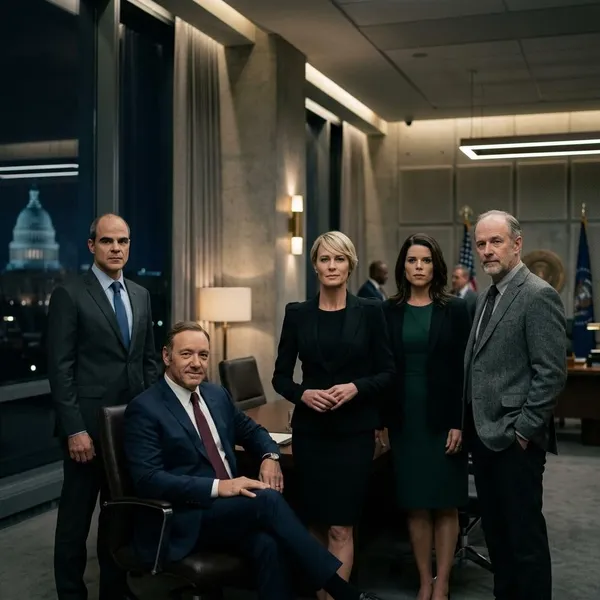
Main House of Cards cast
The main cast works best if you separate the characters by function. Frank and Claire drive the ambition, Doug handles the damage, Zoe and Peter show the human cost, and Remy opens up the world of lobbying and political access.
Kevin Spacey as Frank Underwood
Kevin Spacey played Francis "Frank" Underwood, the ruthless politician who dominates the early seasons. Frank begins as a powerful congressman and turns every slight, favor, secret, and alliance into a step toward greater control.
Robin Wright as Claire Underwood
Robin Wright played Claire Underwood, Frank's wife and political partner, but Claire never feels like a background character. Her calmness, restraint, and ability to read a room make her one of the most commanding figures in the series.
Claire becomes more central as the show develops. If you are rewatching before season six, her scenes are worth tracking closely because the later story depends on her gradual move from partner to independent power holder.
Michael Kelly as Doug Stamper
Michael Kelly played Doug Stamper, Frank's chief of staff, loyal fixer, and one of the show's most important supporting characters. Doug is useful because he does the work political leaders want hidden: pressure, cleanup, surveillance, and crisis control.
Kate Mara as Zoe Barnes
Kate Mara played Zoe Barnes, an ambitious reporter whose connection to Frank gives her access but also puts her in danger. Zoe's role is especially important in the early seasons because she shows how quickly politics and media can use each other.
She is the character to focus on if you are trying to follow how private information becomes public pressure. Her choices make the newsroom side of the story feel urgent rather than decorative.
Corey Stoll as Peter Russo
Corey Stoll played Peter Russo, a congressman with personal weaknesses that make him easy to manipulate. Peter is not built like Frank or Claire, and that is exactly why his storyline hits harder: he feels more fragile, more human, and less able to survive the game around him.
Mahershala Ali as Remy Danton
Mahershala Ali played Remy Danton, a polished political operator who moves between public politics and private influence. Remy adds another layer to the show because he is not just chasing office; he understands lobbying, leverage, and the quiet deals that shape decisions outside the spotlight.
If Frank represents raw ambition, Remy represents professional access. That contrast helps the early ensemble feel broader than one man's rise.
Later House of Cards cast additions
The later cast additions matter because the show stops being only about Frank's climb and starts looking at who can control power after the old structure begins to break. These characters are not all equal in screen weight, but they help define the colder, more Claire-centered final stretch.
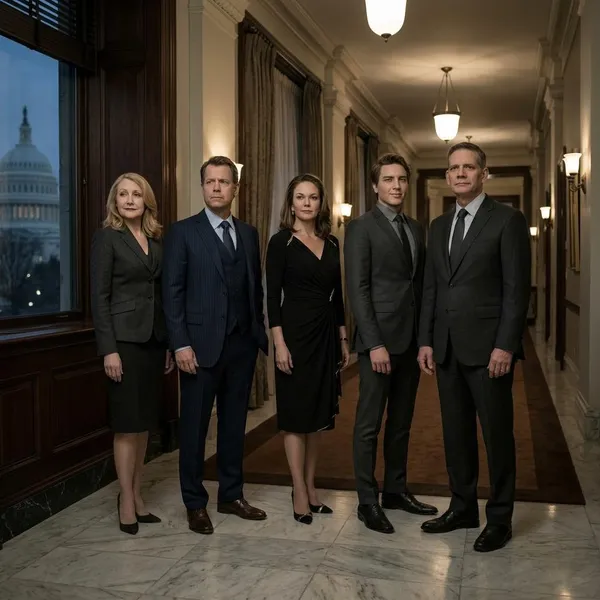
Campbell Scott as Mark Usher
Campbell Scott played Mark Usher, a smooth political strategist who becomes increasingly important in the later seasons. Mark is dangerous because he rarely looks desperate; he adapts, waits, and stays useful to whoever has power.
Patricia Clarkson as Jane Davis
Patricia Clarkson played Jane Davis, a highly connected government figure whose influence feels deliberately hard to pin down. She brings a different kind of threat to the series: less public, more bureaucratic, and often tied to information that other characters do not fully control.
Diane Lane as Annette Shepherd
Diane Lane played Annette Shepherd, one of the major final-season additions. Annette is wealthy, socially polished, and connected in ways that do not depend on holding office.
Her conflict with Claire works because it is not just a political rivalry. Claire has formal authority; Annette has family influence, money, and old networks. That gives season six a different kind of opponent from the earlier congressional and White House battles.
Greg Kinnear as Bill Shepherd
Greg Kinnear played Bill Shepherd, Annette's brother and another major force in the final season. Bill brings corporate pressure into the story, making the last season less about elections and more about how private wealth can push against public power.
Cody Fern as Duncan Shepherd
Cody Fern played Duncan Shepherd, the younger member of the Shepherd family. Duncan does not carry the same weight as Claire, Doug, or Annette, but he helps the Shepherds feel like a family system rather than a pair of isolated antagonists.
For viewers jumping straight to the final season, the practical thing to know is simple: the Shepherds are built as Claire's outside-pressure problem. They are not replacing Frank; they are there to test what Claire's presidency looks like without him.
How the main characters fit the story
The cast is easier to follow when you do not treat everyone as just "political players." Each group serves a different purpose: some characters chase power, some protect it, some expose it, and some try to profit from being close to it.
Frank and Claire as the political power couple
Frank and Claire Underwood begin as the show's central power couple, but their partnership is never simple romance. It is a political arrangement, a marriage, a strategy, and eventually a rivalry.
Early on, Frank often drives the visible plan while Claire expands their reach through nonprofits, diplomacy, and personal alliances. Later, the balance changes, and that shift is one of the biggest reasons the cast dynamic feels different after the first few seasons.
Doug as Frank's loyal fixer
Doug fits the story as the person who turns Frank's strategy into action. He is the one who handles uncomfortable details, contains scandals, manages people, and absorbs risk so Frank can stay above the mess.
Zoe and Tom as investigative journalists
Zoe Barnes and Tom Hammerschmidt represent two very different versions of journalism. Zoe is fast, hungry, and willing to get dangerously close to power; Tom is slower, more methodical, and focused on proving what others want hidden.
- Zoe's role: access, speed, risk, and the seduction of a big story.
- Tom's role: persistence, verification, and the long fight to make secrets public.
Remy and Jackie as political strategists
Remy Danton and Jackie Sharp make the political world feel less like a one-man chessboard. Remy brings lobbying and outside influence into the story, while Jackie shows how ambition works from inside Congress.
Neither character is blindly loyal in the way Doug is. They make calculations, adjust alliances, and protect their own futures, which gives the show a more realistic sense of how political relationships can shift when power changes hands.
The Shepherds as Claire's final rivals
The Shepherds are Claire's final-season rivals because they challenge her from outside the normal political lane. Annette, Bill, and Duncan combine wealth, family reputation, media pressure, and access to people who can shape outcomes behind closed doors.
That makes them useful antagonists for Claire rather than Frank. A Frank-led season usually turns on manipulation and revenge; a Claire-led final season needs rivals who can box her in socially, financially, and institutionally.
How the House of Cards cast changed
The cast changed most clearly in three phases: Frank's rise, Claire's expansion, and the final season without Frank. If you are deciding whether the later seasons feel like the same show, this is the main thing to check.
Early seasons led by Frank Underwood
The early seasons are built around Frank Underwood. Doug, Zoe, Peter, Remy, and even Claire are strongly connected to his plans, whether they are helping him, investigating him, being used by him, or learning how far he will go.
Later seasons focused more on Claire Underwood
As Claire gains more authority, the surrounding cast changes with her. The story becomes less about Frank pulling strings and more about Claire managing power, image, isolation, and enemies who understand her differently.
- Early viewing scenario: follow Frank's relationships first, because they explain the original momentum.
- Later viewing scenario: follow Claire's position first, because the conflicts are built around her control.
The final season continued without Frank Underwood
The final season continued without Frank Underwood after Kevin Spacey did not return. The show moved Claire into the lead position and used Doug, Mark Usher, Jane Davis, and the Shepherds to create the remaining conflict around her presidency.
That is the biggest cast break in the series. Some viewers see season six as a continuation of Claire's arc; others feel the absence of Frank changes the show's center too much. Both reactions make sense, because the final season is not just missing a character — it is working with a different power structure.
Conclusion
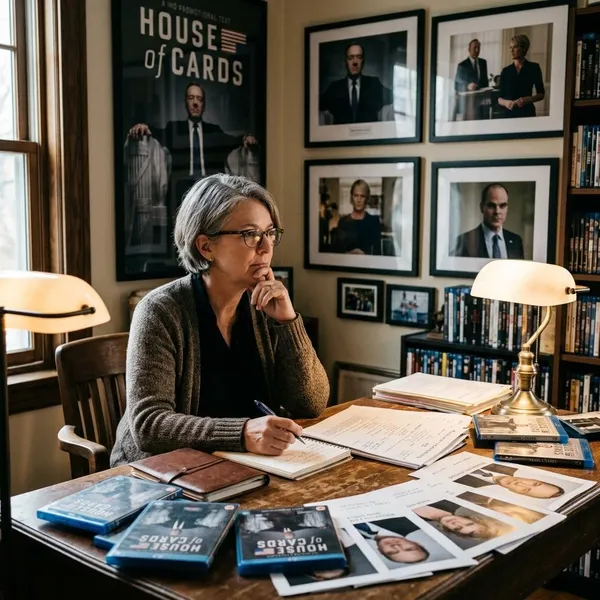
The best way to understand the cast is to treat House of Cards as a show that changes its center of gravity. Frank, Claire, Doug, Zoe, Peter, and Remy define the early identity, while Mark Usher, Jane Davis, and the Shepherds help reshape the later seasons around Claire. If you only remember one distinction, make it this: the early cast explains the rise to power, and the later cast explains what happens when that power has to be defended without Frank at the center.