
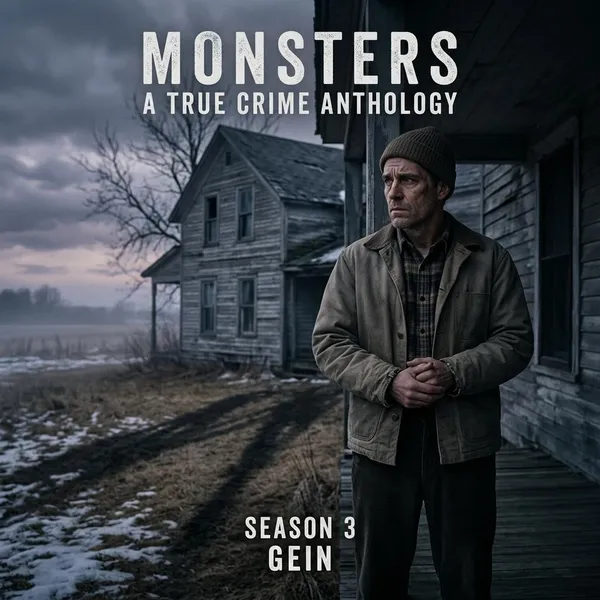
If you searched for monsters american tv series season 3, the key thing to know is that Season 3 is the Ed Gein chapter of the Monster anthology, not a continuation of the Menendez story. It works as a standalone season, with the main draw being the mix of true crime, family psychology, grave-robbing horror, and the way Gein's case fed into modern horror cinema.

What is Monster Season 3 about?
Monster Season 3 focuses on Ed Gein, the Wisconsin murderer and grave robber whose crimes became infamous in the 1950s. The season is not just about the investigation; it also looks at the damaged home life, isolation, and cultural aftershock that made Gein such a disturbing figure in American crime history.
- For true-crime viewers: the case itself is the center, including Gein's crimes and discovery.
- For horror fans: the season connects Gein to the later screen monsters his story helped inspire.
- For viewers who liked the Menendez season: expect a darker, more isolated story with less courtroom emphasis.
Ed Gein's crimes and grave robbing
Ed Gein became notorious after authorities found human remains and disturbing handmade objects in his Plainfield, Wisconsin farmhouse. His known crimes included murder and grave robbing, but the lasting shock came from how domestic and hidden everything seemed: an ordinary rural home masking something grotesque.
That is also the part a dramatized season has to handle carefully. If it only chases shock value, the story becomes lurid. If it shows the slow build of isolation, obsession, and discovery, the horror lands harder because it feels less like a monster movie and more like a real life that collapsed into something unthinkable.
His relationship with his mother
Augusta Gein is central to the season because Ed's attachment to his mother is one of the most discussed parts of his story. She is usually described as controlling, severe, and morally rigid, and that influence helps explain why the season leans into psychological horror rather than simple crime reconstruction.
His influence on modern horror
Gein's case influenced elements later associated with Psycho, The Texas Chain Saw Massacre, and The Silence of the Lambs. Those works are not straight biographies of Gein, but they borrowed pieces of the fear around him: the isolated house, the dead mother fixation, the body horror, and the idea that something monstrous can sit behind a plain face.
That makes Season 3 different from a normal killer profile. A viewer coming from horror history may care less about every procedural detail and more about how a real case became part of the genre's imagination.
Monster Season 3 cast and characters
The cast suggests that Season 3 is built around two tracks: the Gein family story and the cultural legacy that followed. Charlie Hunnam and Laurie Metcalf carry the psychological core, while Tom Hollander and Olivia Williams point toward the Hollywood side of the season.
Charlie Hunnam as Ed Gein
Charlie Hunnam plays Ed Gein, which requires a quieter kind of menace than a typical serial-killer performance. Gein is frightening because he could appear awkward, passive, and ordinary while hiding extreme obsession.
If the role works, it should avoid turning him into a theatrical villain. The more unsettling version is someone whose stillness, dependence, and private fantasy life make the viewer uncomfortable before the worst facts are even shown.
Laurie Metcalf as Augusta Gein
Laurie Metcalf as Augusta Gein may be the season's most important supporting performance. Augusta needs to feel powerful without becoming cartoonish, because her influence over Ed is emotional, religious, and psychological rather than simply loud.
Suzanna Son as Adeline Watkins
Suzanna Son plays Adeline Watkins, a character who appears to widen the story beyond the most familiar historical names. If the season uses her as a fictionalized or composite figure, her purpose is likely to connect Gein's private world with themes of visibility, ambition, and performance.
That kind of role can be useful when it does not pretend every scene is a documentary record. The viewer should watch for what Adeline reveals thematically, not only whether she matches a familiar true-crime timeline.
Tom Hollander as Alfred Hitchcock
Tom Hollander as Alfred Hitchcock makes the horror-cinema angle explicit. Hitchcock matters here because Psycho is one of the major films often discussed in relation to Gein's cultural influence.
This role also gives the season a sharper question: what happens when real violence becomes entertainment? If you are more interested in the making of horror myths than in police details, the Hitchcock material may be one of the most revealing parts of the season.
Olivia Williams as Alma Reville
Olivia Williams plays Alma Reville, Hitchcock's wife and creative collaborator. Her inclusion suggests the Hollywood thread may not be limited to a famous-director cameo.
Alma can give that part of the story a more practical edge: adaptation is not magic, it is a series of choices about what to show, what to soften, and what to turn into suspense. That matters in a season built around the uneasy path from real crime to screen horror.
Vicky Krieps as Ilse Koch
Vicky Krieps as Ilse Koch is one of the more striking casting choices because Koch belongs to a different historical context entirely. Her presence suggests the season may compare different public images of monstrosity rather than staying only inside Gein's biography.
How Monster Season 3 fits the anthology
Monster Season 3 is the third standalone story in the anthology. It follows the Dahmer and Menendez seasons in release order, but it does not continue their plots or bring back their characters.
It is the third standalone story
Season 3 is designed as its own chapter, with its own case, cast, period, and atmosphere. That means you can choose it because Ed Gein interests you, not because you need to follow a franchise timeline.
It follows the Dahmer and Menendez seasons
Release-order context still matters. The Dahmer season was tied strongly to predation, neglect, and institutional failure, while the Menendez story leaned into family trauma, abuse claims, media attention, and courtroom drama.
The Gein season shifts the mood again. It is more rural, more gothic, and more directly linked to horror mythology, so viewers expecting another courtroom-heavy chapter may need to adjust their expectations.
It shares themes rather than characters
The continuity comes through themes: damaged families, secrecy, public fascination, violence, and the way society decides who gets called a monster. The Gein chapter uses those ideas differently because his case became part of horror culture as well as criminal history.
It can be watched without earlier seasons
Yes, you can watch it without seeing the Dahmer or Menendez seasons. Earlier seasons may help you understand the anthology's tone, but Season 3 should provide its own context from the start.
If you are choosing only one season, pick by subject matter. Viewers drawn to horror history may find the Gein season more immediately interesting than the earlier chapters, while viewers who prefer legal drama may connect more with Menendez.
What makes the Ed Gein season different?
The Ed Gein season stands apart because it sits between true crime and horror origin story. Many crime dramas end with arrest, trial, or public reckoning. Gein's story continued in another form, feeding images and character types that horror filmmakers returned to for decades.
That makes the season more layered, but also potentially more uncomfortable. If you are watching for a clean factual recap, the Hollywood and symbolism threads may feel unusual. If you are watching to understand why Gein's case never disappeared from pop culture, those threads are the point.
It explores the roots of modern horror
The season explores how certain horror ideas became attached to Gein: the isolated house, the controlling mother, hidden depravity, and a body-horror element that later films reshaped into fiction. It is not just "true crime with scary lighting"; it is a look at why this case became so adaptable.
It connects true crime with Hollywood
The Hitchcock and Alma Reville material gives the season a built-in bridge from crime to cinema. That connection is useful because Gein's legacy is not only what he did, but what other people made from the fear around him.
It moves across different time periods
The season appears to move across more than one period, which fits the subject. Gein's childhood and family life explain the psychological foundation, the 1950s case provides the criminal center, and the later Hollywood material shows the cultural afterlife.
That structure should help viewers avoid a common mistake: treating Gein as only a set of shocking crime-scene facts. The timeline matters because the season is interested in cause, discovery, and legacy.
It blends crime drama with psychological horror
Crime drama gives the season its factual spine: crimes, evidence, discovery, and consequence. Psychological horror gives it the dread: obsession, repression, isolation, and the feeling that the home itself has become unsafe.
For a casual viewer, that means the season may feel slower and more oppressive than a standard thriller. For someone drawn to mood-heavy horror, that may be exactly what makes it work.
Conclusion
Monster Season 3 is best approached as a standalone Ed Gein story with a horror-history angle, not as a direct follow-up to Menendez or Dahmer. If you want courtroom drama, this may not be the closest fit; if you want a darker season about isolation, family control, grave robbing, and the strange route from real crime to screen mythology, it is probably the anthology's most distinctive entry so far.