
If you are deciding whether to watch or rewatch scandal tv series season 6, the short answer is yes if you care about the final season: Season 6 explains Mellie's rise, the Vargas assassination fallout, and Olivia's move into a much darker kind of power. For first-time viewers, treat the early plot sections as safer and save the ending section until after the finale, because the season depends heavily on delayed reveals.
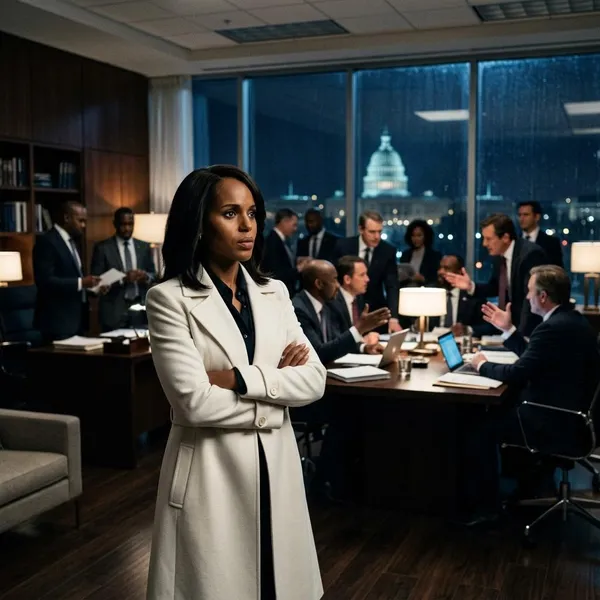
What happens in Scandal Season 6
Season 6 begins with the presidential election and quickly turns into a murder mystery. Francisco "Frankie" Vargas is shot before he can take office, leaving Washington in a crisis over who should lead the country and who can be trusted to investigate the killing.
The presidential election ends in tragedy
The season opens on election night, with Mellie Grant and Frankie Vargas waiting for the result. Instead of a normal transition, Vargas is assassinated, and the victory that should settle the race creates a dangerous power vacuum.
For a casual viewer, this is the point where Season 6 becomes less about campaign drama and more about succession, public panic, and backroom control. The murder is not just a shock twist; it changes the entire question of who gets to rule.
Olivia investigates the Vargas assassination
Olivia treats the case as both a crime and a political emergency. She follows the evidence, but the season keeps making one thing clear: in this version of Washington, evidence can be planted, pressure can be manufactured, and a believable suspect may still be the wrong answer.
Cyrus becomes the main suspect
Cyrus Beene becomes the most visible suspect because the accusation fits what people already believe about him. He is ambitious, ruthless, and experienced enough to look guilty even before the facts are settled.
That is what makes the arc work. If you have watched earlier seasons, you know Cyrus is capable of terrible choices, but Season 6 asks whether his reputation is being used against him. His downfall is both political punishment and personal horror.
Mellie fights for the presidency
Mellie's story is not a clean "winner takes office" arc. She has to fight for legitimacy after an election result that has been poisoned by violence, suspicion, and manipulation.
Hidden forces manipulate the transfer of power
The most important thing to notice is that the visible election is only half the story. Secret operators push events from behind the scenes, and the season becomes a warning about how fragile official power can be when private forces control fear, information, and timing.
For rewatchers, this is where Season 6 is strongest: small choices that look like strategy at first often turn out to be part of a larger trap.
The main story arcs
The season is easier to follow if you separate the mystery from the character damage it causes. The assassination is the engine, but the real payoff comes from watching Olivia, Cyrus, Mellie, Abby, Rowan, and Fitz respond when the normal rules stop protecting them.
The investigation into Frankie Vargas's death
The Vargas investigation keeps changing direction. Early clues suggest one answer, later evidence complicates it, and the final explanation shows that the murder is tied to a larger attempt to shape the presidency.
If you are watching for the first time, do not treat the first convincing suspect as the final answer. Season 6 is built around misdirection, and the emotional tension comes from how easily truth can be buried under a story that sounds politically useful.
Cyrus's arrest and fight for survival
Cyrus's arrest strips him of the thing he usually depends on: access. He cannot simply walk into the room, control the conversation, and bend the narrative in his favor.
His arc works best if you read it in two ways at once. He may be dangerous, but he is also being crushed by a machine that understands exactly how to make him look disposable.
Olivia and Rowan's dangerous power struggle
Olivia and Rowan's conflict gives the season its moral edge. Rowan believes power belongs to the person willing to do the ugliest thing in the room; Olivia wants to beat that logic without fully becoming it.
- When Olivia investigates, she still looks like the fixer chasing truth.
- When Olivia controls outcomes, she starts looking closer to Rowan than she wants to admit.
Abby's secret involvement in the conspiracy
Abby's role is painful because it does not feel like a simple villain turn. Her mistakes grow out of ambition, insecurity, and the belief that she can manage a situation that is already bigger than she understands.
That makes her storyline a useful warning inside the season: in Scandal, people rarely fall all at once. They usually start with one compromise they think they can contain.
Mellie's path to the White House
Mellie reaches the presidency, but the route matters as much as the result. Her win is historic inside the show's world, yet it is surrounded by death, bargaining, and a constant threat that someone else is deciding what her presidency will mean.
Fitz's final days as president
Fitz spends the season in an awkward position: still powerful, but already becoming part of the past. His final days are less about chasing office and more about legacy, Olivia, Mellie, and the damage left behind by years of political warfare.
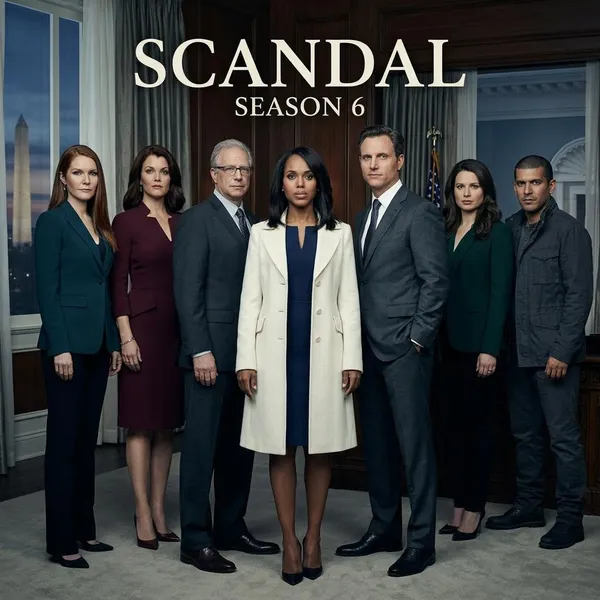
Scandal Season 6 cast and characters
The cast carries a season that could easily become too tangled. The plot depends on suspicion and reversals, but the performances keep the stakes personal: guilt, fear, loyalty, ambition, and exhaustion all show up in the way characters speak to each other.
Kerry Washington as Olivia Pope
Kerry Washington plays Olivia as brilliant, controlled, and increasingly hard to read. Season 6 asks her to move from crisis solver to power broker, and Washington makes that shift feel tempting rather than sudden.
Bellamy Young as Mellie Grant
Bellamy Young gives Mellie the right mix of hunger and fatigue. Mellie wants the presidency, but Young never lets the achievement feel easy; every step forward carries the weight of being judged, used, or underestimated.
Tony Goldwyn as Fitzgerald Grant
Tony Goldwyn's Fitz feels more reflective here than in the campaign-heavy parts of the show. He is still president, but the season uses him to mark the end of one era and the emotional mess it leaves behind.
Jeff Perry as Cyrus Beene
Jeff Perry gets some of the season's sharpest material. Cyrus is frightening when he has power and strangely vulnerable when he loses it, which keeps his guilt or innocence from feeling too easy.
Scott Foley as Jake Ballard
Scott Foley keeps Jake controlled on the surface, which suits a season full of hidden pressure. Jake often looks calm, but his loyalties, marriage, and connection to covert power make him one of the harder characters to read cleanly.
Joe Morton as Rowan Pope
Joe Morton makes Rowan feel like more than a threat. He is a philosophy of power in human form: cold, precise, and convinced that everyone else is naïve if they think morality survives real control.
Darby Stanchfield as Abby Whelan
Darby Stanchfield gives Abby's arc enough nuance that it does not play as simple betrayal. Abby wants influence, makes dangerous choices, and then has to face how badly she misjudged the people using her.
Guillermo Diaz as Huck
Guillermo Diaz keeps Huck emotionally raw, which is useful in a season where so many characters hide behind strategy. Huck brings danger, loyalty, and pain into the same room, often at the same time.
Katie Lowes as Quinn Perkins
Katie Lowes makes Quinn feel practical in the middle of chaos. While others spiral into secrecy or power games, Quinn often brings a more direct sense of what is dangerous right now and what has to be handled next.
Scandal Season 6 ending explained
The ending resolves the main assassination conspiracy, but it does not make Washington feel safe. Mellie becomes president, the truth around Vargas's death comes into focus, and Olivia ends the season with more power than ever, which is exactly why the finale feels uneasy.
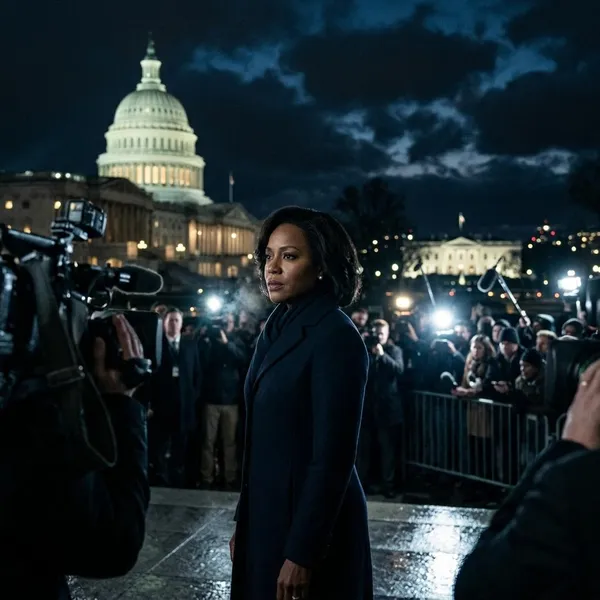
Who takes control of the presidency
Mellie Grant becomes president. Her inauguration gives the season its public resolution, but the victory is not presented as clean comfort because she takes office after a crisis shaped by murder, coercion, and hidden influence.
That distinction matters. Mellie gets the office she fought for, but she inherits a presidency already marked by manipulation.
What happens to the assassination conspirators
The conspiracy is exposed as larger than a single shooter or a simple political grudge. Theodore Peus and Samantha Ruland are part of the machinery behind the crisis, and the story ultimately reveals Luna Vargas's role in the plot around Frankie's death.
The finale does not treat justice as neat or comforting. Luna is forced out of the future she tried to steal, and the threat is contained, but the season leaves a bitter aftertaste because the system came dangerously close to being captured.
Olivia's rise to a new position of power
Olivia ends Season 6 closer to the center of government power. She becomes Mellie's chief of staff and also steps into command of B613, which makes her influence far more direct than ordinary political advising.
Rowan's warning about Olivia's choices
Rowan's warning lands because he recognizes what Olivia is becoming. He has spent years teaching her that power is brutal, and by the finale she is no longer only resisting that lesson.
The uncomfortable question is not whether Olivia has beaten Rowan. It is whether she has learned too much from him.
How the finale sets up Season 7
Season 7 begins from the consequences of Olivia's new position, Mellie's presidency, and Fitz's departure from the center of power. The Vargas mystery may be resolved, but the final season's real conflict is already visible: Olivia has to decide what kind of person she becomes when nobody can easily stop her.
Conclusion
Season 6 is worth watching if you want the political bridge between the earlier White House drama and the darker final season. It is not the easiest season to enter casually, but it gives crucial answers about Vargas, Mellie, Cyrus, and Olivia, and its best payoff is the uneasy feeling that winning power may be the most dangerous turn of all.