
Shameless Season 1 is the right place to start if you want the Gallagher family to make sense later. The first season introduces Fiona's impossible caretaker role, Frank's damage, Lip and Ian's private struggles, and the mix of comedy and pain that defines the show. If you are checking whether shameless tv series season 1 is worth watching, the short answer is yes—unless you prefer clean, low-conflict family drama.
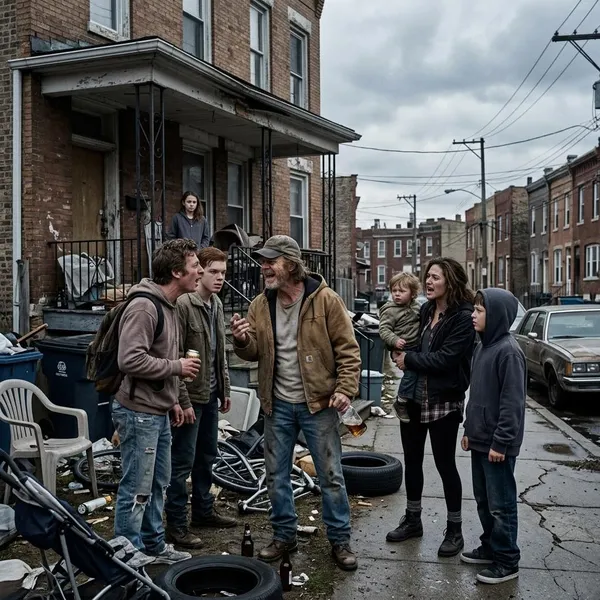
What happens in Shameless Season 1?
Season 1 follows the Gallagher children on Chicago's South Side as they keep their household running with almost no reliable adult help. The story is not built around one single mystery or villain; it works because small emergencies keep stacking up until survival itself becomes the plot.
Fiona keeps the family together
Fiona is the real adult in the Gallagher house. She works, handles bills, gets the younger kids moving, cleans up Frank's messes, and tries to keep the family from falling into complete disorder.
The important detail is that Fiona is not written as endlessly noble. She wants romance, freedom, and a life that is not always shaped by other people's crises. That tension makes her arc work: she loves her siblings, but the responsibility is also stealing her own young adulthood.
Frank creates constant trouble
Frank is less a parent than a recurring crisis. He drinks, lies, disappears, uses people's sympathy, and treats the family's limited resources as something he can take from whenever he needs it.
What makes him so damaging is the repetition. One Frank disaster might be survivable; a lifetime of them explains why the children are so guarded, fast-thinking, and tired.
Lip and Ian hide personal struggles
Lip is clearly gifted, but Season 1 already shows the danger in his attitude toward opportunity. He is smart enough to escape some of his circumstances, yet angry and suspicious enough to sabotage himself before anyone else can.
Ian's struggle is quieter and more private. He is dealing with sexuality, secrecy, and attachment in a home where emotional safety is limited. His relationship with Kash and the early tension around Mickey show how risky it can feel for him to be seen clearly.
Debbie and Carl face life without stable parents
Debbie and Carl show the childhood version of Gallagher damage. Debbie wants affection and security so badly that she sometimes reaches for them in unhealthy ways, while Carl turns neglect into aggression, impulsiveness, and trouble.
If Fiona shows what forced responsibility looks like, Debbie and Carl show what happens when children grow up before anyone has taught them what safety should feel like.
Steve enters Fiona's chaotic world
Steve arrives as temptation: charm, money, attention, and the possibility that Fiona could be cared for instead of always doing the caring. That is why his relationship with Fiona feels exciting at first.
His problem is that he brings secrets with him. For someone like Fiona, who already lives around instability, Steve is both escape route and warning sign. The season is careful not to make him a simple rescue fantasy.
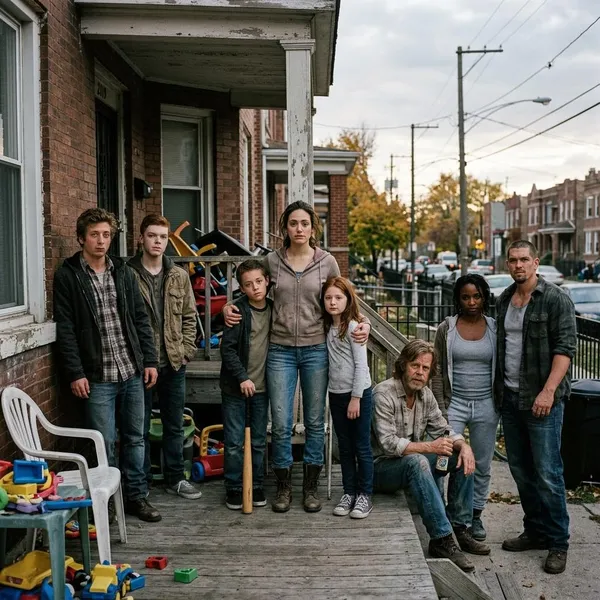
Shameless Season 1 cast and character arcs
The first season works because the cast feels like a family from the start. The characters fight, scheme, protect each other, and cross lines, but the performances keep those contradictions believable.
Emmy Rossum as Fiona Gallagher
Emmy Rossum plays Fiona with the right mix of competence and frustration. Fiona can run a household under pressure, but Rossum keeps reminding viewers that she should not have had to become this capable so young.
Her best scenes often sit between duty and desire. When Fiona wants Steve, a night out, or even a moment of privacy, the question is never only "does she deserve it?" It is also "who pays for it if she steps away?"
William H. Macy as Frank Gallagher
William H. Macy makes Frank watchable without making him harmless. He gives Frank humor, panic, intelligence, and theatrical self-pity, but the damage remains visible.
That balance matters. Frank can be funny in one scene and emotionally poisonous in the next, which is exactly why the family's relationship with him feels so complicated.
Jeremy Allen White as Lip Gallagher
Jeremy Allen White gives Lip a restless edge from the beginning. Lip is quick, observant, and often right, but he also uses intelligence like armor.
His arc is useful for viewers who expect a simple "smart kid gets out" story. Season 1 pushes against that idea. Talent helps, but it does not erase pride, poverty, family pressure, or the fear of wanting something and failing anyway.
Cameron Monaghan as Ian Gallagher
Cameron Monaghan keeps Ian guarded rather than melodramatic, which fits the character. Ian is carrying a lot, but he has learned to protect himself through silence and control.
Justin Chatwin as Steve
Justin Chatwin makes Steve charming enough that Fiona's attraction makes sense. He also leaves just enough unease around the character that the audience can feel something is being held back.
Steve matters because he tests Fiona's judgment. Is he a real chance at something better, or just another unstable person asking her to gamble with her already fragile life?
Joan Cusack as Sheila Jackson
Joan Cusack turns Sheila into much more than comic relief. Sheila is eccentric and funny, but she is also lonely, anxious, and easier to hurt than she first appears.
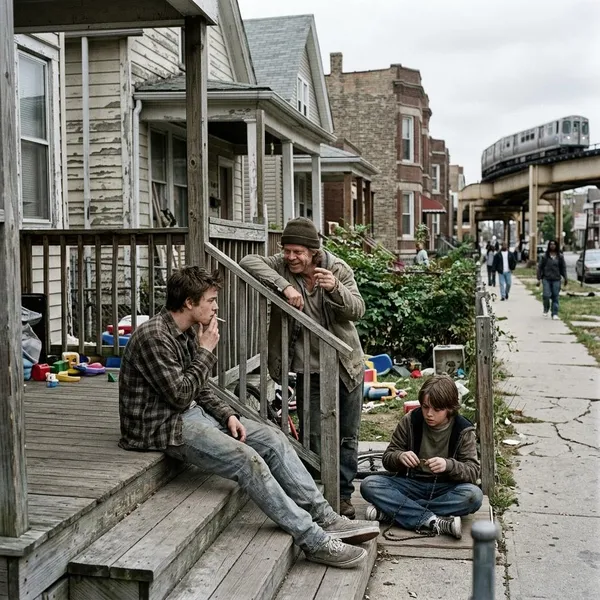
How the Gallagher story develops
The Gallagher story develops through pressure, not neat plot mechanics. Each episode adds another bill, lie, relationship problem, or emotional wound, and the family keeps adjusting because stopping is not an option.
- Episodes 1–4: the household rules, Fiona's role, Frank's unreliability, and Steve's arrival are established.
- Episodes 5–8: Lip, Ian, Sheila, Debbie, Carl, and Fiona's relationship with Steve become more complicated.
- Episodes 9–12: old family wounds surface, Monica returns, and the season ends with unresolved emotional consequences.
Fiona takes on the parent role
Fiona's parent role is not occasional help; it is the operating system of the house. Food, school, work, discipline, and crisis control all run through her.
That is why Steve's attention hits so hard. For someone who spends most days being needed, being wanted feels like a break. The problem is that Fiona does not have the freedom to make romantic decisions as if nobody else depends on her.
Frank repeatedly exploits the family
Frank's pattern is predictable: he appears when he needs something, uses guilt or charm to get it, and leaves others to deal with the damage. His role as "father" becomes one more tool he can use.
The show is especially sharp about the small betrayals. Frank does not need to destroy the family in one dramatic act; he weakens them by taking time, money, trust, and emotional energy they cannot spare.
Lip begins to waste his potential
Lip's early story is frustrating because the potential is obvious. He has the mind to do more, but he often treats opportunity as a trap or an insult.
A practical way to read Lip in Season 1 is this: he is not lazy, and he is not simply rebellious. He has grown up in a world where long-term promises often look fake. That does not excuse every choice, but it explains why success feels less straightforward for him than it might from the outside.
Ian struggles with love and identity
Ian's storyline carries a different kind of danger. He is not only trying to understand who he loves; he is trying to judge who can know the truth without making his life worse.
That makes his relationships tense even when they are tender. Secrecy may protect him in the short term, but it also limits the kind of love and honesty he can ask for.
Steve's secrets threaten his relationship
Steve's lies are not just plot twists. They matter because Fiona's life has very little room for another unreliable person.
Monica's return reopens old wounds
Monica's return changes the final stretch of the season because her absence has shaped the house as much as Frank's presence has. Fiona had to become the parent partly because Monica was not there.
The ending does not close the Gallagher story neatly. It leaves Fiona, Steve, Frank, Monica, and the children in emotionally unstable places, which feels right for this show. The point is not a clean cliffhanger shock; it is the sense that old damage has been stirred up and will keep affecting everyone.
Main themes in Shameless Season 1
The main themes are poverty, neglect, loyalty, unstable love, and dark humor. They are not treated like classroom topics; they show up in what the characters eat, steal, hide, forgive, and joke about.
Poverty and daily survival
Poverty in Season 1 is practical before it is symbolic. A missed shift, unpaid bill, broken plan, or drunk parent can throw the whole household off balance.
The Gallaghers are resourceful, but the show does not confuse resourcefulness with safety. Being good at surviving a crisis is not the same as having a stable life.
Neglect and forced independence
The Gallagher kids act older than they are because they have been forced to. Fiona becomes responsible, Lip becomes defensive, Ian becomes private, Debbie searches for security, and Carl tests limits that nobody consistently enforces.
That makes Season 1 a useful watch for anyone who wants to understand the show beyond its wildest scenes. The outrageous behavior often comes from a very ordinary wound: nobody dependable was in charge.
Family loyalty under pressure
The family's loyalty is real, but it is not gentle. They protect one another, mock one another, lie to one another, and still come back because shared survival has made separation difficult.
This is where the season avoids easy judgment. Loyalty helps the Gallaghers endure, but it also traps Fiona especially. Loving the family and being consumed by the family can look almost the same from the outside.
Love mixed with instability
Love in Season 1 rarely arrives clean. Fiona and Steve have chemistry but weak trust, Sheila and Frank blur comfort with dependency, and Ian's relationships are shaped by secrecy and fear.
The show's sharper point is that love alone does not fix instability. For casual viewers, that may feel harsh. For viewers who like complicated relationship drama, it is one of the reasons the season stays interesting.
Dark humor around painful realities
The comedy is dark because the situations are dark. The Gallaghers joke, insult, and escalate partly because pausing to feel everything would be too much.
This tone is the main reason Season 1 is not for everyone. It can be funny and uncomfortable in the same minute. If that mix bothers you, the show will probably feel exhausting; if it clicks, the first season is hard to stop watching.
Conclusion
Shameless Season 1 is messy, sharp, funny, and often uncomfortable in exactly the way it needs to be. Watch it from the beginning if you want the later seasons to have emotional weight, but skip it if mature content, addiction, neglect, and chaotic family conflict are not something you want in your TV time.