
If you are checking tv series the closer season 7 before watching or rewatching, the key point is simple: this is Brenda Leigh Johnson's exit season and the setup for Major Crimes. The murder cases still matter, but the season is really about whether Brenda's methods can survive a lawsuit, an internal review, a department leak, and the return of Philip Stroh.
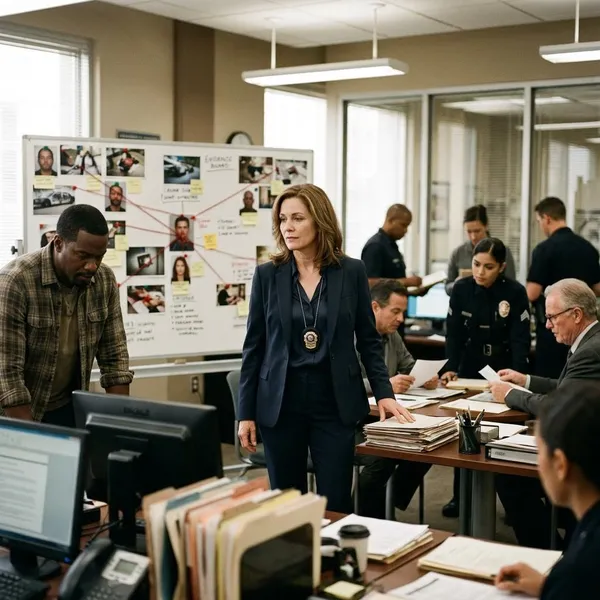
What happens in The Closer Season 7?
Season 7 follows Brenda as she keeps leading Major Crimes while the ground shifts underneath her. If you are watching mainly for the ending, the most important threads to track are the Baylor lawsuit, Sharon Raydor's investigation, the internal leak, Brenda's strained home life, and Philip Stroh's return.
The Baylor lawsuit threatens Brenda's career
The Baylor lawsuit turns one of Brenda's past decisions into a professional crisis. Instead of being judged only by whether she closes a case, she is forced to face legal questions about method, responsibility, and departmental liability.
This is one of the season's clearest warnings about Brenda's style: results can protect her for only so long. Once lawyers, city officials, and command staff are involved, instinct and interrogation skill are no longer enough.
Sharon Raydor investigates the Major Crimes unit
Sharon Raydor's investigation puts the squad's habits under a microscope. She is not just there to annoy Brenda; she represents a stricter, more procedure-minded version of leadership.
The contrast between Brenda and Raydor is useful because it prepares the handoff. Brenda pushes hard for confessions. Raydor thinks about whether the case, the paperwork, and the chain of command can survive scrutiny.
Someone inside the department leaks information
The leak storyline makes the season feel less secure than earlier years. Major Crimes is used to chasing suspects outside the department, but now private information is moving through the wrong channels.
- For Brenda: the leak threatens her legal position and her control of the situation.
- For the squad: it damages trust inside a team that usually depends on loyalty.
- For viewers: it adds a mystery that is not solved by one interrogation room showdown.
Brenda struggles with changes in her family
Brenda's marriage to Fritz does not suddenly fall apart, but Season 7 shows how much pressure she brings home. The lawsuit, the review, and the fear of losing control make her more defensive and less emotionally available.
Philip Stroh returns for the final case
Philip Stroh's return gives the final stretch a sharper threat than the department politics can provide. He is dangerous because he is controlled, patient, and hard to corner.
If you are deciding which parts are essential before starting Major Crimes, do not skip the Stroh material. His story is one of the strongest links between the end of The Closer and the beginning of the spin-off.
The main story arcs
The final season works because the arcs press on Brenda from different directions. The Baylor lawsuit questions her past, Raydor questions the unit's culture, the leak questions loyalty, Pope becomes less reliable as a shield, and Stroh brings back a personal danger that cannot be handled through politics.
Brenda's fight against the Baylor lawsuit
Brenda's fight is not a dramatic courtroom battle every week; it is a slow squeeze. The lawsuit forces her to answer for choices that once looked like hard but effective policing.
The practical importance is that it makes her future uncertain before the finale even arrives. By the time the last case begins, Brenda is already professionally worn down.
Raydor's investigation into the squad
Raydor's review is aimed at more than one incident. It challenges the way Major Crimes has operated under Brenda: fast, personal, instinctive, and often willing to push close to the line.
That makes Raydor credible as a future leader. She is not trying to become Brenda; she is showing that the unit may need a different kind of command to survive.
The search for the department leak
The leak arc is important because it changes the emotional temperature of the office. A squad built on quick information-sharing suddenly has to worry about what can be repeated, recorded, or used against Brenda.
Brenda's changing relationship with Pope
Will Pope becomes a less dependable buffer in Season 7. He still has history with Brenda, but he is also dealing with departmental politics, public risk, and his own position.
That shift matters because Brenda has often benefited from having someone above her who could absorb pressure. When Pope's support becomes conditional, she has fewer places to hide.
The final pursuit of Philip Stroh
The final pursuit of Stroh gives the season its darkest momentum. Unlike many suspects Brenda faces, Stroh does not easily break under pressure, which limits one of her greatest strengths.
For viewers who want a clean ending, this arc can feel deliberately frustrating. For franchise continuity, it is effective: the danger remains strong enough to make Major Crimes feel necessary rather than optional.
The emotional decline of Brenda's family life
Brenda's family life declines quietly rather than explosively. Fritz still loves her, but support is not the same as endless patience.
The point is not that Brenda chooses work over marriage in one obvious moment. It is that constant pressure leaves less room for honesty, rest, and ordinary married life.
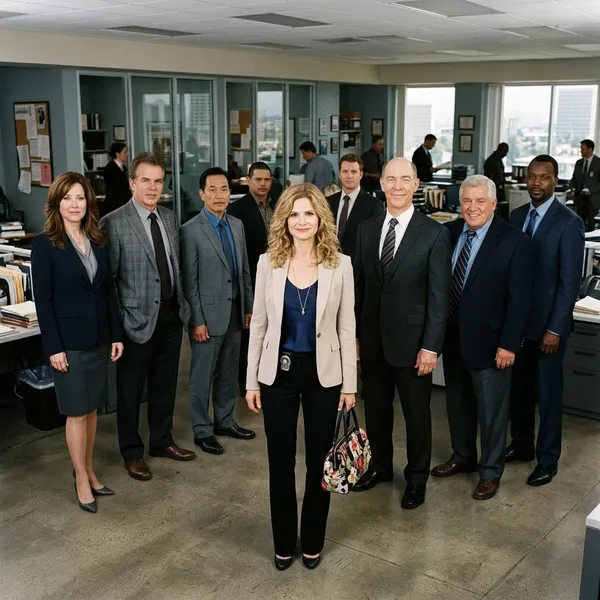
The Closer Season 7 cast and characters
The cast gives Season 7 enough weight to handle both the procedural cases and the larger transition. Kyra Sedgwick remains the center, but Mary McDonnell becomes increasingly important because Sharon Raydor has to feel like a believable successor, not a last-minute replacement.
If you are rewatching for character development, focus less on new guest cases and more on how the regulars respond to pressure. The same squad chemistry is still there, but the mood is more guarded.
Kyra Sedgwick as Brenda Leigh Johnson
Kyra Sedgwick keeps Brenda sharp, funny, stubborn, and intimidating, while letting more fatigue show than in earlier seasons. That balance is why the ending works: Brenda is still capable, but she no longer seems untouchable.
Jon Tenney as Fritz Howard
Jon Tenney gives Fritz a calm presence without making him passive. His frustration with Brenda feels believable because it comes from love, not from a sudden change in character.
J. K. Simmons as Will Pope
J. K. Simmons plays Pope as a man balancing loyalty, ambition, and institutional survival. In Season 7, that balance becomes more uncomfortable because Brenda needs protection at the same time Pope needs distance.
Mary McDonnell as Sharon Raydor
Mary McDonnell makes Raydor controlled rather than cold. She can challenge Brenda without turning into a simple antagonist, which is essential for the move into Major Crimes.
Her performance also changes how viewers read oversight. Raydor may be frustrating from Brenda's point of view, but she is rarely careless or foolish.
Corey Reynolds as David Gabriel
Corey Reynolds gives David Gabriel a thoughtful steadiness that matters more as the season becomes tense. His role is especially important because loyalty, trust, and the leak storyline all put pressure on how viewers see him.
G. W. Bailey as Louie Provenza
G. W. Bailey keeps Provenza funny without making him disposable. In a heavy final season, Provenza's old-school irritation and dry reactions help the show still feel like The Closer.
Tony Denison as Andy Flynn
Tony Denison's Andy Flynn brings warmth and familiarity to the squad. His partnership with Provenza also gives the season some breathing room, which helps because the main arcs are unusually serious.
Michael Paul Chan as Mike Tao
Michael Paul Chan's Mike Tao remains one of the show's quiet anchors. He keeps the investigative work grounded with technical skill, calm delivery, and just enough dry humor to cut through the tension.
Raymond Cruz as Julio Sanchez
Raymond Cruz gives Sanchez intensity and moral force. He helps keep the cases from feeling purely procedural, because his reactions often make the consequences feel immediate.
Billy Burke as Philip Stroh
Billy Burke makes Stroh memorable by playing him with restraint. He is not frightening because he is loud; he is frightening because he stays controlled when most suspects would panic.
How The Closer leads into Major Crimes
Season 7 leads into Major Crimes by changing command, not by throwing away the world of the original show. Brenda exits, Raydor moves into position, much of the squad remains, and the Stroh threat gives the new series unfinished business from day one.
For someone deciding whether to watch Major Crimes after the finale, the answer depends on what you liked most. If you watched only for Brenda's personality, the spin-off feels different. If you liked the squad, the cases, Raydor, and the LAPD setting, the transition is smooth.
Sharon Raydor takes command of the unit
Sharon Raydor takes command after Brenda's departure, and Season 7 spends enough time preparing that move. Her leadership is more controlled, more procedural, and more focused on cases that can survive beyond the confession.
Most of the original squad returns
Most of the familiar squad continues into Major Crimes, which keeps the spin-off from feeling like a completely separate show. Brenda's absence is huge, but the workplace, habits, humor, and team history remain recognizable.
Rusty Beck continues into the spin-off
Rusty Beck becomes far more important in Major Crimes than he is in most of The Closer. His connection to Raydor gives the spin-off a more personal emotional thread alongside the police cases.
The investigative approach changes
The biggest storytelling change is the move away from Brenda's confession-driven style. Raydor's version of Major Crimes puts more weight on building prosecutable cases, managing procedure, and making the team function under a different kind of authority.
Major Crimes begins immediately after the finale
Major Crimes begins right after the events of The Closer finale in practical story terms. There is no long reset, which helps viewers carry their interest in the squad, Raydor, Rusty, and Stroh straight into the new series.
Conclusion
Season 7 is worth watching as more than Brenda's farewell because it shows why her exit changes the whole unit. The strongest way to read the ending is not as a total shutdown, but as a handoff: Brenda reaches the limit of what her style can carry, while Raydor, the squad, Rusty, and the Stroh threat move the franchise into its next chapter.