
Vikings Season 6 is the final chapter of Ragnar Lothbrok's family story, and it is built around endings: Bjorn trying to hold Norway together, Ivar finding a new route back to power, Ubbe searching west, and Wessex becoming the place where old ambitions finally run out. If you mainly want the fate of Ragnar's sons, expect a season that is more tragic and reflective than a simple victory lap.
What is Vikings Season 6 about?
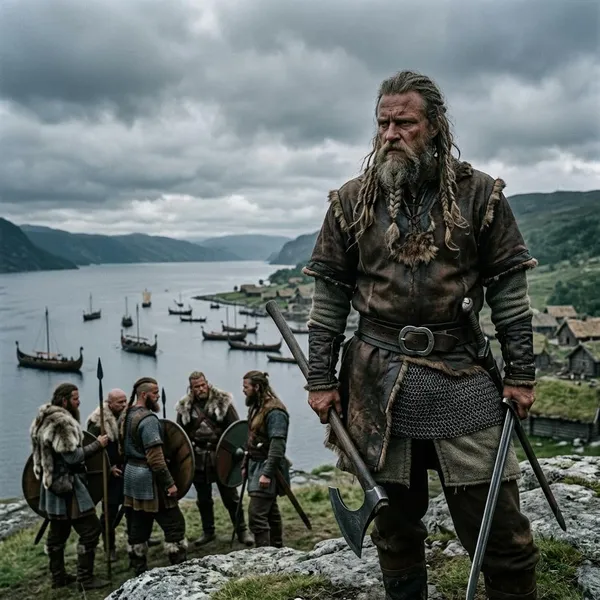
Season 6 follows the last major turns in the lives of Bjorn, Ivar, Ubbe, and Hvitserk after years of family conflict, raids, betrayals, and political collapse. The season is split into two halves, and the tone changes with it: the first half leans heavily into Norway, Kattegat, and the Rus invasion, while the second half pushes the story toward Wessex and the final fates of the brothers.
Bjorn's struggle to rule Norway
Bjorn begins Season 6 with the reputation of a legendary warrior, but ruling exposes weaknesses that battlefield courage cannot solve. He has to protect Kattegat, manage rival claims, answer Harald Finehair's ambitions, and face the pressure of becoming the kind of king people expect Ragnar's son to be.
His arc works because the season keeps testing the gap between image and reality. Bjorn looks like the obvious heroic ruler, yet Norway is too divided for simple heroism to fix. His story becomes less about building a stable kingdom and more about whether a leader can still inspire people when the political ground has already shifted under him.
Ivar's alliance with the Rus
Ivar's exile does not make him harmless. In the Rus court, he finds Prince Oleg, a ruler whose cruelty and instability give Ivar both an opportunity and a warning. Their alliance gives Ivar access to an army and a path back toward Scandinavia, but it also places him inside a power structure where he is not fully in control.
Ubbe's voyage west
Ubbe's storyline is the clearest alternative to the endless cycle of revenge. Instead of chasing another crown, he follows rumors, searches for Floki, and looks for land where survival might matter more than conquest.
This is the thread to pay closest attention to if you prefer the exploration side of Vikings. The voyage is not treated as an easy adventure: food, weather, trust, and uncertainty all matter. Ubbe's path feels closer to Ragnar's curiosity than to Ivar's hunger for domination, which is why his ending gives the final season some much-needed hope.
The return to war in Wessex
Wessex brings the story back to one of the show's oldest battlegrounds, but the meaning has changed. Earlier raids carried the thrill of discovery and expansion; by Season 6, England feels like a place of reckoning.
For viewers watching mainly for the finale, Wessex is where several arcs finally land. Alfred's world is stronger than the one Ragnar first entered, and the Vikings who return there are no longer young men shaping history from the outside. They are older, damaged, and running into the limits of their own legends.
Vikings Season 6 cast and characters
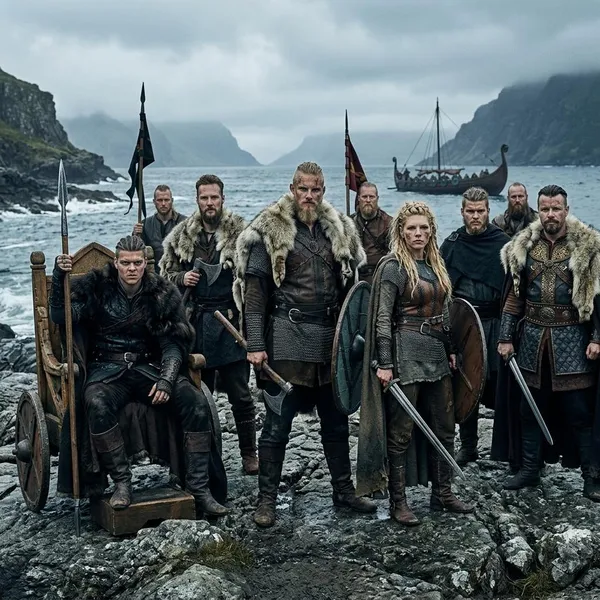
The final season depends heavily on the actors who carry Ragnar's legacy after many of the earliest central figures are gone. The strongest performances are not just the loudest ones; the season needs grief, exhaustion, spiritual confusion, and quiet change as much as battle energy.
Alexander Ludwig as Bjorn Ironside
Alexander Ludwig plays Bjorn as a man trying to live up to a legend without simply becoming Ragnar again. His Bjorn is physically commanding, but Season 6 adds weariness and doubt, especially when leadership becomes more complicated than winning a fight.
That matters most in Bjorn's later episodes, where the character's symbolic power becomes almost as important as his actions. Ludwig makes him feel both human and mythic, which is exactly the balance his final arc needs.
Alex Høgh Andersen as Ivar the Boneless
Alex Høgh Andersen keeps Ivar dangerous without making him one-note. In the Rus storyline, Ivar has to calculate, wait, and survive around people who may be as ruthless as he is.
- Best use of the performance: scenes where Ivar is thinking faster than he is speaking.
- Biggest shift: he becomes more exposed without being neatly redeemed.
- Why it matters: his final moments work because the season has shown fear beneath the performance of power.
Jordan Patrick Smith as Ubbe
Jordan Patrick Smith gives Ubbe a calmer kind of strength. He does not have Bjorn's public grandeur or Ivar's volatility, but that restraint helps his journey stand apart.
Marco Ilsø as Hvitserk
Marco Ilsø's Hvitserk is unstable, guilty, and spiritually exhausted for much of Season 6. His performance makes the character's worst moments feel like the result of long collapse rather than a sudden plot turn.
That is especially important after Lagertha's death. Hvitserk's story can be frustrating to watch, but the confusion is part of the point: he is a man without a stable identity, and the ending takes that loss of self seriously.
Katheryn Winnick as Lagertha
Katheryn Winnick has less screen time in Season 6 than in earlier seasons, but Lagertha still carries enormous emotional weight. Her scenes are about age, memory, and the cost of surviving a violent life for so long.
Her final storyline works because it does not treat her as simply weakened. She is tired and changed, but still unmistakably Lagertha. That makes her death feel like a major farewell to the original soul of the series.
Peter Franzén as Harald Finehair
Peter Franzén plays Harald as charming, ambitious, wounded, and impossible to fully trust. He is not just a rival for Bjorn; he represents a version of Viking greatness that can never stop reaching for more.
His later role in Wessex makes sense because Harald has always been drawn toward glory even when it costs him peace. The performance keeps him watchable because his ambition feels both grand and sad.
Danila Kozlovsky as Prince Oleg
Danila Kozlovsky gives Prince Oleg a theatrical menace that fits the Rus arc. Oleg is not frightening because he is loud all the time; he is frightening because he can seem amused, controlled, and violent in the same scene.
He also gives Ivar a useful mirror. Around Oleg, Ivar is forced to recognize a style of power that resembles his own but is not under his command.
Gustaf Skarsgård as Floki
Gustaf Skarsgård's Floki remains important even before he physically returns. His absence gives Ubbe's journey emotional direction, and his memory keeps alive the show's stranger, more spiritual side.
When Floki reappears, the season wisely keeps the moment quiet. It is less about shock and more about endurance: after all the wars and broken faith, someone from the old world is still there, changed but not erased.
Vikings Season 6 ending explained
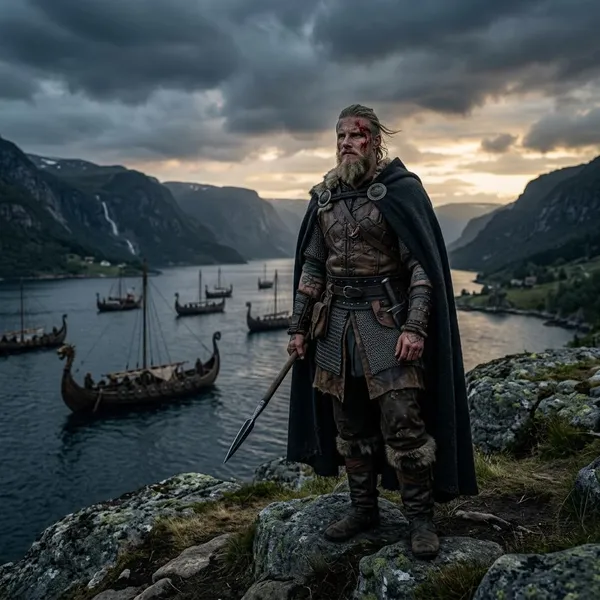
The ending of Season 6 closes the saga by splitting its characters into three kinds of fate: death, transformation, and continuation. Bjorn, Ivar, and Harald are tied to the old heroic world of war and reputation. Hvitserk survives by becoming someone else. Ubbe and Floki give the series a softer final note, one based on discovery rather than conquest.
Bjorn's last stand
Bjorn's last stand turns him from a wounded king into a symbol. Even after suffering devastating injuries, his appearance on horseback helps rally resistance against the Rus and makes his enemies hesitate.
The point is not that Bjorn suddenly becomes physically unbeatable again. The power of the scene is symbolic: his reputation is strong enough to affect a battle even when his body is failing. His death marks the end of the show's most traditional heroic line from Ragnar to Bjorn.
Ivar's death in battle
Ivar dies in the final battle in Wessex. The scene is smaller and more intimate than many viewers might expect, which is why it stands out.
After years of presenting himself as chosen, feared, and almost untouchable, Ivar dies afraid and human. The season does not erase his cruelty, but it does strip away the illusion that willpower can make him larger than death.
Harald's fate in Wessex
Harald also dies in Wessex, and his ending fits the life he has spent chasing. He wanted kingship, glory, love, and remembrance, often in ways that made peace impossible.
His death is not framed as clean triumph. It feels like the natural end for a man who could not stop pursuing greatness even when the world had moved beyond the dream he was chasing.
Hvitserk's conversion to Christianity
Hvitserk survives and is baptized as a Christian, taking the name Athelstan. That name is not accidental; it reaches back to one of the show's oldest spiritual conflicts.
- As faith: it suggests Hvitserk has found a new way to live.
- As surrender: it shows him letting go of the Viking identity that broke him.
- As survival: it gives him a future, but not a victorious one.
Ubbe and Floki's reunion
Ubbe and Floki's reunion is one of the gentlest endings in the series. After so much death, the scene feels deliberately quiet: two survivors meeting at the edge of a different world.
For viewers who cared more about exploration than royal politics, this is the emotional payoff. Ubbe does not end by taking a throne. He ends by reaching a place where a new kind of life might be possible.
Kattegat's new ruler
Kattegat ends under Ingrid's rule. It can feel surprising at first because the show has spent so long around Ragnar's family, but that is part of the message.
The old names no longer decide everything. Power moves to someone who survives the collapse around her, and Kattegat continues without freezing itself around Ragnar, Lagertha, Bjorn, or Harald. The saga ends, but the place does not.
Where to watch Vikings Season 6
Where you can watch Vikings Season 6 depends on your country, because streaming rights change. The safest first check is to search for the original 2013 Vikings series, not Vikings: Valhalla, and confirm that Season 6 includes all 20 episodes.
Some platforms list the final season as one complete season, while others split it into Part 1 and Part 2. That matters if you are planning a full rewatch or only want the ending, because buying or renting the wrong half can leave you stopping before the final battle.
- Subscription streaming: convenient if the full season is included in your region.
- Digital purchase: better if you want permanent access or rewatch specific final episodes.
- Rental or on-demand: useful for a one-time watch, but check whether both parts are included.
Conclusion
Season 6 is most satisfying when you watch it as the closing of several different legacies, not as one neat victory or defeat. Bjorn and Ivar get the grand tragic endings, Hvitserk gets a strange second life, and Ubbe carries the part of the show that still believes in discovery. If you are returning after a long break, start from the beginning of the season rather than jumping straight to the finale; the final deaths and reunions land much harder when the slow collapse is fresh.