
If you are trying to place a face from Victoria, start with the three central names: Jenna Coleman as Queen Victoria, Tom Hughes as Prince Albert, and Rufus Sewell as Lord Melbourne. The wider victoria tv series cast then splits quite neatly into royal relatives, political figures, and the palace household, which makes the large ensemble much easier to follow.
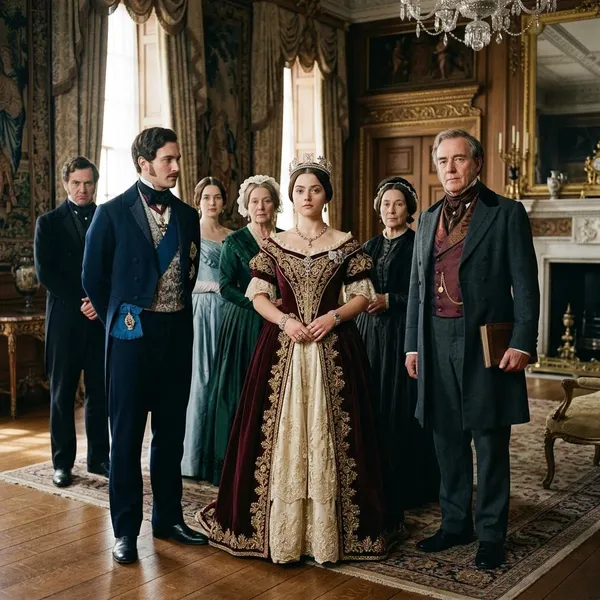
Victoria lead actors
The lead cast carries the emotional shape of the series. If you are a first-time viewer, these are the names to know before worrying about every courtier or minister, because most early storylines move through Victoria's private decisions, her political education, and the people who influence her most closely.
Jenna Coleman as Queen Victoria
Jenna Coleman plays Queen Victoria from the moment she becomes a young monarch still learning how much power she really has. Her performance works because she does not play Victoria as either a helpless girl or a finished royal icon; she gives her impatience, intelligence, pride, and uncertainty at the same time.
For viewers coming from historical dramas rather than biographies, Coleman is the anchor. She makes the palace politics feel personal, especially when Victoria is resisting pressure from her mother, advisers, and later even people she loves.
Tom Hughes as Prince Albert
Tom Hughes plays Prince Albert, Victoria's husband and one of the most important figures after the first part of the series. His Albert is controlled, serious, and ambitious, which gives the marriage more tension than a simple romantic pairing.
The useful thing to notice is the contrast between Albert's disciplined outlook and Victoria's more instinctive style. If you are rewatching, their scenes often show the bigger question behind the romance: who gets influence when love, marriage, duty, and public life all overlap?
Rufus Sewell as Lord Melbourne
Rufus Sewell plays Lord Melbourne, Victoria's first prime minister and early political mentor. He brings warmth and calm authority to the role, which helps explain why Victoria relies on him so heavily at the start.
Melbourne is especially important in Season 1 because he sits between political adviser and emotional support. Sewell keeps that connection careful rather than melodramatic, so the character remains memorable even after the story shifts toward Albert and family life.
Victoria royal and political cast
The royal and political characters are the ones to focus on when you want to understand the pressure around Victoria rather than just the romance. They represent family control, succession worries, government limits, and the older political world that the young queen has to navigate.
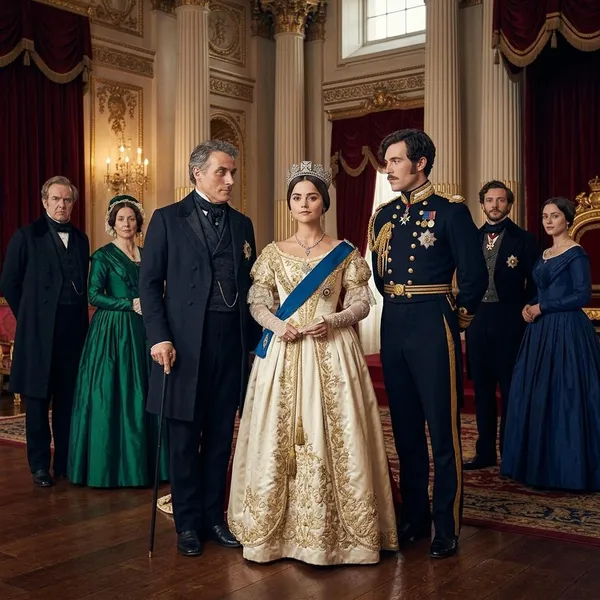
Catherine Flemming as the Duchess of Kent
Catherine Flemming plays the Duchess of Kent, Victoria's mother. She is not simply there to be unpleasant; the character mixes concern, insecurity, ambition, and poor judgment, which makes Victoria's need for independence feel much more personal.
Her scenes are useful for understanding why Victoria pushes so hard against being managed. The conflict is not only about royal authority, but also about a daughter trying to set boundaries after years of control.
David Oakes as Prince Ernest
David Oakes plays Prince Ernest, Albert's brother. He brings a looser, more playful energy to the royal family scenes, which makes him stand out beside Albert's formality.
Ernest is worth remembering because he helps reveal Albert by contrast. Where Albert often carries duty like a weight, Ernest seems more impulsive and socially easy, though not without his own complications.
Alex Jennings as King Leopold
Alex Jennings plays King Leopold, Victoria's uncle and a polished royal strategist. He often appears supportive, but his support usually comes with dynastic calculations attached.
If a scene with Leopold feels friendly and slightly manipulative at the same time, that is the point. Jennings gives him the manner of someone who understands that royal marriages and family loyalties can be political tools.
Peter Firth as the Duke of Cumberland
Peter Firth plays the Duke of Cumberland, one of the more threatening royal figures around Victoria's early reign. He gives the role a hard, controlled presence rather than turning him into a cartoon villain.
The character matters most because he reminds viewers that Victoria's accession is not just ceremony and gowns. For a young queen, family ambition and succession politics can feel like real dangers, not background history.
Paul Rhys as Sir John Conroy
Paul Rhys plays Sir John Conroy, the adviser tied to the restrictive system surrounding Victoria before she became queen. His Conroy is calm, forceful, and manipulative, which makes him uncomfortable to watch in a believable way.
Conroy is one of the clearest early antagonists. If you are trying to understand why Victoria is so defensive about control, his presence explains a lot.
Nigel Lindsay as Sir Robert Peel
Nigel Lindsay plays Sir Robert Peel, a political figure who brings a different kind of conflict into the series. He is not a palace manipulator; he represents government, party politics, and the limits placed on royal preference.
That makes Peel useful in a more practical sense. He shows Victoria learning that disagreement is not always betrayal, and that a monarch's personal wishes cannot simply override political reality.
Peter Bowles as the Duke of Wellington
Peter Bowles plays the Duke of Wellington, an elder statesman whose authority comes from reputation and experience. His role is smaller than some, but he gives the political world around Victoria more weight.
For viewers who prefer the court drama, Wellington may not be the flashiest character. Still, he helps the series feel bigger than the palace by connecting Victoria's reign to a wider national stage.
Victoria palace and court cast
The palace and court cast gives the series its lived-in feeling. These characters are useful to track if you enjoy the "upstairs and downstairs" side of period drama: servants, attendants, household managers, chefs, companions, and aristocratic insiders all show how the palace works day to day.
- Watching for the first time: learn Skerrett, Lehzen, Penge, and Francatelli first; they explain much of the household life.
- Rewatching for court politics: pay closer attention to Lord Alfred, Lady Emma, Harriet, and the Duchess of Buccleuch.
- Trying to identify a character quickly: ask whether the person serves Victoria privately, manages the household, or belongs to aristocratic society.
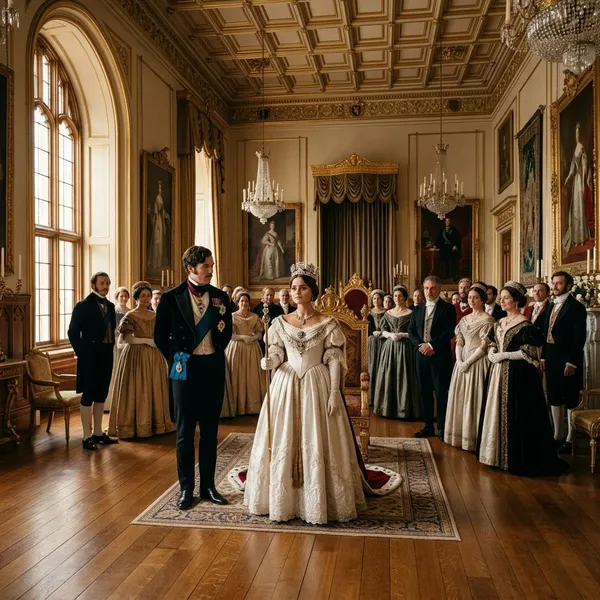
Nell Hudson as Nancy Skerrett
Nell Hudson plays Nancy Skerrett, one of Victoria's most important attendants. Skerrett is loyal, observant, and practical, which makes her more than background staff.
Her storylines also give the palace a human scale. Through Skerrett, the series shows that royal service can offer closeness and opportunity, but also real risk when reputation, romance, or secrecy are involved.
Ferdinand Kingsley as Charles Francatelli
Ferdinand Kingsley plays Charles Francatelli, the royal chef. He brings pride, ambition, and professional precision to the palace world, showing that status inside the household is not only about noble birth.
Francatelli is a good character to watch if you like practical period detail. Kitchens, menus, service standards, and workplace hierarchy all become part of the drama through him.
Adrian Schiller as Penge
Adrian Schiller plays Penge, the palace steward. He is strict, formal, and often difficult, but he also shows why a royal household depends on rules, routine, and people willing to enforce them.
Tommy Knight as Archibald Brodie
Tommy Knight plays Archibald Brodie, a young footman linked closely to Skerrett's storyline. He brings a quieter, more ordinary point of view into a setting usually dominated by royalty and rank.
Brodie's scenes work best when the series is showing the cost of private choices inside a public household. For staff, even a personal relationship can become a career problem.
Daniela Holtz as Baroness Lehzen
Daniela Holtz plays Baroness Lehzen, Victoria's former governess and one of her fiercest protectors. Lehzen's loyalty is absolute, but that loyalty becomes complicated once Victoria's marriage and responsibilities begin to change the household balance.
She is especially important early on because she represents the support system Victoria trusted before becoming fully independent. The tension comes when old protection starts to feel like another kind of control.
Jordan Waller as Lord Alfred Paget
Jordan Waller plays Lord Alfred Paget, a court figure with charm, wit, and a strong sense of social code. He often lightens a scene, but he also shows how influence at court can move through conversation, access, and personal familiarity.
Anna Wilson-Jones as Lady Emma Portman
Anna Wilson-Jones plays Lady Emma Portman, part of the queen's aristocratic circle. Her role helps fill out the quieter social world around Victoria, where etiquette, friendship, and reputation matter even without formal political office.
Margaret Clunie as Harriet, Duchess of Sutherland
Margaret Clunie plays Harriet, Duchess of Sutherland, one of Victoria's trusted aristocratic allies. Harriet matters because she connects personal loyalty with public symbolism: supporting the queen at court is never just a private friendship.
Her scenes are a reminder that noblewomen in Victoria's circle could shape comfort, access, and perception. That kind of influence is subtle, but the series treats it as meaningful.
Diana Rigg as the Duchess of Buccleuch
Diana Rigg plays the Duchess of Buccleuch, a senior court figure whose presence adds instant authority. She brings experience and sharp observation to the palace, often cutting through younger characters' uncertainty without needing to dominate the room.
For many viewers, Rigg is one of the easiest later-season additions to remember. Her performance gives the court a firmer, older voice just when the series needs more perspective around Victoria's growing role as queen, wife, and mother.
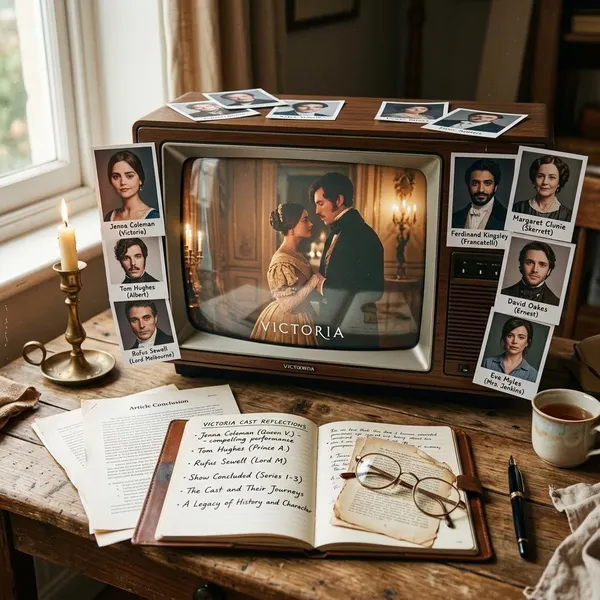
Conclusion
The easiest way to remember the cast is to group the characters by what they do for the story: Coleman, Hughes, and Sewell carry the emotional core; the royal and political figures create pressure; and the palace household makes the world feel lived in. If you only need the main names, start with the leads, but if you are rewatching, the supporting cast is where many of the show's best smaller details sit.