
If you came away from the finale trying to separate the crime plot from the emotional ending, the core answer is simple: Vince dies because he believes Jake will never be free while he is alive. A clear black rabbit ending explained starts with that choice, then works backward through Gen's kidnapping, Jake's betrayal, the robbery fallout, and the brothers' childhood secret.
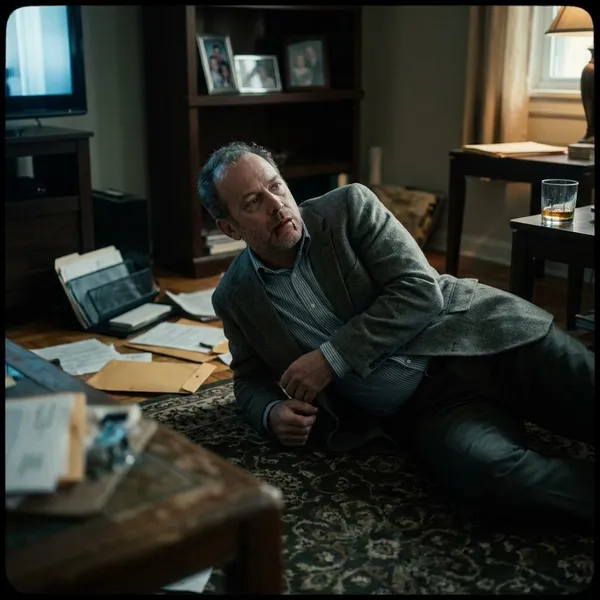
What happens at the end of Black Rabbit?
The ending brings every pressure point together at once: Vince is wanted, Wes is dead, Mancuso wants control, Gen becomes leverage, and Jake can no longer manage the disaster with charm or connections. If you are only trying to follow the final sequence, the most important order is this:
- Mancuso kidnaps Gen to force Vince out of hiding.
- Jake gives up Vince's location so Gen can live.
- Vince escapes and reunites with Jake.
- The brothers return to Black Rabbit.
- Vince calls the police, takes responsibility, and jumps from the roof.
For viewers focused on the crime story, the ending is about closing the robbery fallout. For viewers focused on Jake and Vince, it is about two brothers falling into the same roles they have had since childhood: Jake tries to save, Vince decides he is the thing Jake needs saving from.
Mancuso kidnaps Gen to find Vince
Mancuso takes Gen because money is no longer the only issue. Vince's debt, the robbery, Junior's actions, and Wes' death have turned the conflict into revenge and control. Gen is useful to Mancuso because she is innocent, vulnerable, and impossible for Jake and Vince to ignore.
That matters because the finale stops treating Vince's chaos as something contained inside his own life. Once Gen is taken, the damage reaches the next generation. Jake's first priority is no longer saving his business or hiding the truth; it is getting his niece back alive.
Jake trades Vince's location for Gen's life
Jake's decision is a betrayal, but not a cold one. He gives Mancuso Vince's location because Gen is in immediate danger and every other option has collapsed. It is the kind of choice Jake keeps making throughout the series: protect someone now, then deal with the moral cost later.
Vince escapes and reunites with Jake
Vince survives long enough to find Jake again, and their reunion pushes the finale past the gangster plot. Vince admits he killed their abusive father when they were young. Jake then reveals that he already knew.
That confession explains why both men are so locked into their adult patterns. Vince has carried the act as proof that he is dangerous, even though it came from a childhood shaped by abuse. Jake has built his life around control, status, and rescue because he learned early that chaos had to be managed before it destroyed the family.
The brothers return to Black Rabbit
Black Rabbit is not just a dramatic location for the final scene. It is Jake's dream, his public image, his moral compromise, and the place where Vince's instability kept breaking through the polished surface.
Vince calls the police and jumps from the roof
Vince calls the police before jumping because he wants the official blame to stop with him. His confession is meant to protect Jake from the robbery fallout and from further punishment tied to Wes' death.
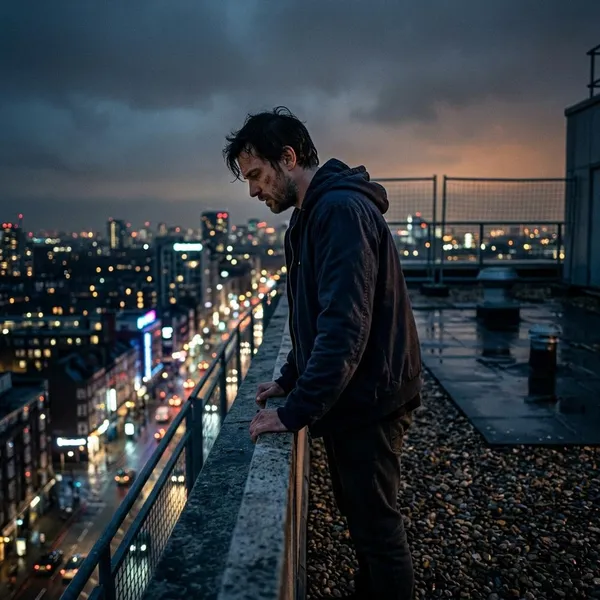
Why does Vince jump from the roof?
Vince jumps because he believes his survival keeps hurting Jake. By the time he reaches the roof, he sees himself as the common thread in the debt, the robbery, Gen's kidnapping, Jake's collapse, and the danger around Black Rabbit.
The key thing to understand is that Vince's choice is not healthy redemption. It is trauma-shaped logic. He wants to love Jake well for once, but the only version of love he can imagine is disappearing so Jake can no longer protect him.
He sees himself as a danger to Jake
Vince sees himself as dangerous in several ways at once: legally, financially, emotionally, and physically. Jake's restaurant falls apart, his relationships fracture, and his life becomes more dangerous whenever Vince's problems return. Not all of that is Vince's fault, but Vince has reached the point where nuance no longer matters to him.
He wants to take the blame for the robbery
Taking the blame gives Vince a practical reason to call the police. Wes is dead, the robbery cannot be treated as a private mess anymore, and Jake could still be pulled deeper into the fallout.
Vince tries to make the story simpler: he becomes the guilty one, Jake becomes the person left behind. It is not the whole truth, but it is the cleanest version Vince can offer in his final moments.
He believes Jake will never stop protecting him
This is probably the strongest emotional reason for the jump. Jake has protected Vince through anger, humiliation, danger, and betrayal. Vince knows that a promise to stay away would not be enough, because Jake would still come if Vince needed him.
- If Vince lives: Jake stays tied to another rescue mission.
- If Vince runs: Jake keeps worrying, covering, or bargaining.
- If Vince dies: Vince believes the pattern finally ends.
His death becomes his final act of love
Vince's death is loving in intention, not in outcome. He is trying to give Jake release, but he leaves Jake with shock and permanent loss instead of peace.
That is why the ending lands harder than a simple sacrifice. Vince has just heard that Jake knew the truth about their father and still loved him. A healthier version of redemption might have meant living with that love and facing consequences. Vince cannot believe in that version of himself, so he chooses absence.
What happens after Vince dies?
After Vince dies, the immediate danger eases, but the ending does not reset anyone's life. Mancuso stops short of killing Jake, Anna's evidence reaches the police, Jules is arrested, Roxie builds something new, and Jake leaves the identity he built around Black Rabbit.
Mancuso spares Jake after seeing his grief
Mancuso lets Jake live because Vince's death changes the situation. Junior is already dead, Vince is gone, and Jake is visibly broken. Killing Jake would not recover the debt or restore control; it would only extend a revenge cycle that has already taken too much.
That does not make Mancuso merciful in a warm sense. It makes him calculating enough to recognize when more violence has no useful return.
Jake gives Anna's evidence to the police
Jake turning over Anna's evidence is one of his clearest moral shifts. Earlier, he tries to protect the world around Black Rabbit: its reputation, its access, its powerful people, and his place inside it.
Handing over the evidence means he finally stops managing the image and lets the truth damage the institution. It comes too late to save Anna, but it keeps her story from being buried under status and silence.
Jules is arrested for assaulting Anna
Jules is arrested for assaulting Anna, giving the finale one of its few direct forms of accountability. The arrest does not undo Anna's death, but it does break the protection that surrounded him.
Anna's plot is important because it shows that Black Rabbit's corruption was never only about Vince's debt or Jake's ambition. The same glamorous world that made Jake feel powerful also made it easier for abuse to be hidden.
Roxie opens a new restaurant in Anna's name
Roxie opens a restaurant called Anna's, which gives the ending a small but real sense of renewal. She does not try to revive Black Rabbit or pretend the past can be polished into something clean.
Her future feels healthier because it is built away from the brothers' cycle of secrecy and crisis. If Black Rabbit represented ambition mixed with denial, Anna's represents memory without the same corruption attached to it.
Jake leaves Black Rabbit and becomes a bartender
Jake is working as a bartender in the final scene. That detail matters because it strips away the status he spent the series chasing. He is no longer the owner trying to impress investors, manage scandals, or keep a glamorous machine running.
For someone watching Jake's arc mainly as a fall from power, the final scene looks like a loss. For someone watching it as a release from performance, it looks quieter but healthier. Jake has less, but he is no longer pretending that success can outrun trauma.
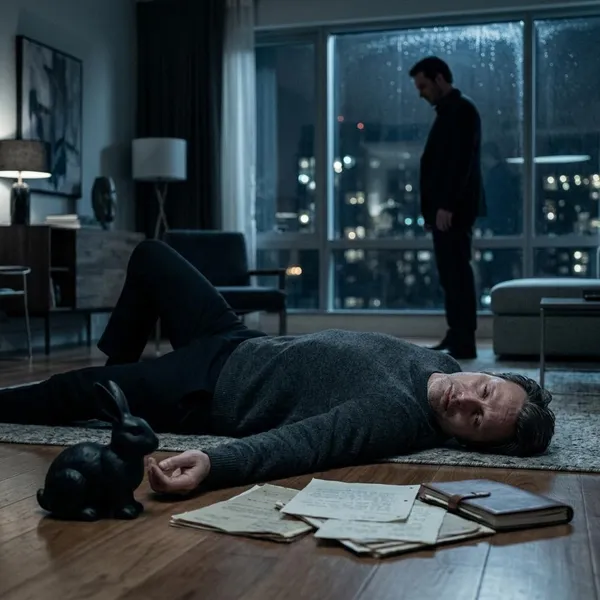
What does the Black Rabbit ending mean?
The ending means that freedom comes only after terrible loss, and even then it is incomplete. Vince mistakes self-destruction for redemption. Jake loses the life he wanted, but that loss gives him a chance to live without the constant performance of success.
Vince mistakes self-destruction for redemption
Vince believes that removing himself will fix what he has broken. The show lets us understand why he thinks that, but it does not ask us to celebrate it. His death may stop certain threats, yet it also leaves Jake with another trauma rather than true peace.
That distinction is the heart of the ending. Vince's intention is love; his method is shaped by shame.
Jake finally lets go of status and ambition
Jake's final life is smaller, but it is also less false. He loses the restaurant, the elite circle, and the version of himself that needed to be seen as important.
That makes his bartender job more than a practical detail. It shows that Jake has stepped outside the system that rewarded denial. He is not "fixed," but he is no longer building his whole identity around control.
Their childhood trauma shapes both brothers
The father revelation is not just a late twist. It explains the emotional machinery that has been running all season. Vince becomes chaotic because he sees himself as stained and dangerous. Jake becomes controlling because he learned to survive by containing disaster.
In everyday terms, it is the difference between two bad survival strategies. One brother keeps setting fires in his own life; the other keeps running into the fire and calling it loyalty. The finale breaks that pattern, but only in the harshest possible way.
Loss gives Jake a chance to live differently
Jake's ending is not happy, but it is not empty either. He has lost Vince and Black Rabbit, yet he is no longer trapped inside the same lie about who he has to be.
The final image suggests a harder kind of survival: ordinary work, presence with his son, and a life that does not depend on impressing people. It is not the future Jake wanted, but it may be the first one that is honest.

Conclusion
Vince dies because he believes Jake's life can only begin once his own ends, which makes the finale both an act of love and a terrible misunderstanding of redemption. Jake survives by losing almost everything that once defined him, and the final scene leaves him with something less impressive but more truthful: a life no longer built around saving Vince, protecting Black Rabbit, or pretending status can heal old damage.