
Dream dies because his mercy toward Orpheus breaks a law even the Endless cannot ignore. Once the Furies have a rightful claim, the ending stops being about whether Morpheus is powerful enough to fight back and becomes about whether keeping him alive would destroy the Dreaming with him.
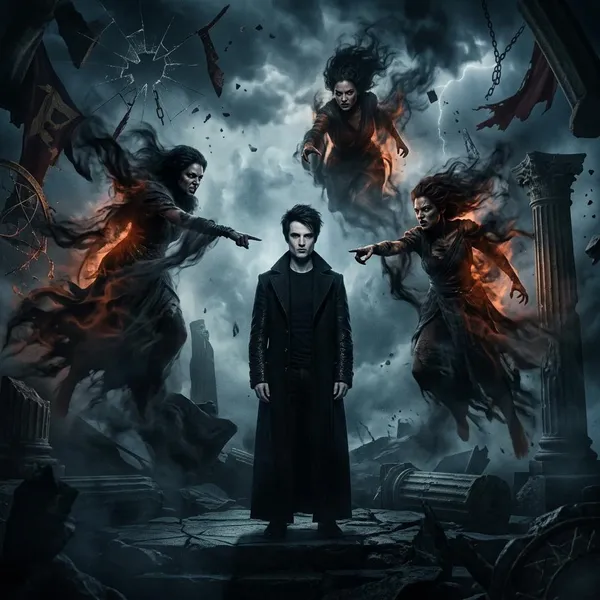
Why do the Furies come after Dream?
The simplest way to read the ending is as a chain reaction: Dream kills his son, that act counts as family bloodshed, and the Furies are allowed to punish him for it. His motive matters emotionally, but it does not cancel the rule he has broken.
Dream ends Orpheus's suffering
Orpheus has been trapped in a cruel half-life for ages, and Dream finally gives him the death he has been asking for. That makes the act compassionate, not murderous in the ordinary sense, but it is still Dream taking the life of his own child.
This is the painful part show-only viewers can easily miss: the scene is not written as Dream becoming colder. It is one of the rare moments where he becomes more human, and that growth is exactly what places him under judgment.
Killing family breaks an ancient law
The Furies do not judge Dream by his intention. They exist to punish kin-slaying, and once Orpheus dies by his father's hand, they have the kind of claim they need.
- Mercy does not erase the act: Dream still ends a family member's life.
- Power does not exempt him: being one of the Endless does not put him above older laws.
- Guilt matters too: Dream understands almost immediately that this price was always waiting for him.
The Kindly Ones demand Dream's life
The Furies and the Kindly Ones are the same force here: ancient avengers who punish family bloodshed. Their name sounds gentle because myth often softens the names of terrifying beings, not because they are merciful.
Lyta becomes their human doorway. She believes Dream has taken Daniel from her, and in that grief she becomes vulnerable to powers that want much more than a mother's justice. A useful way to separate blame is this: Lyta is responsible for what she calls down, but she is also being used by beings who understand the scale of the damage far better than she does.
Why Dream accepts death
Dream accepts death because continuing to resist would make the Dreaming pay for his survival. The ending is not a simple magical defeat. It is Morpheus recognizing that the old version of himself has become part of the damage.
For a casual viewer, this may look like surrender. For someone following Dream's longer arc, it is closer to a final act of responsibility: he stops treating his own continuation as the most important thing in the room.
He knew killing Orpheus had a price
Dream may not know every detail of how the punishment will arrive, but he knows killing Orpheus cannot pass cleanly. His behavior afterward feels less like panic and more like someone preparing for a consequence he already accepts.
That is why his final conversations have such a quiet weight. He is not only mourning Orpheus; he is looking back at a pattern of pride, distance, and rigid duty. The Orpheus choice exposes the cost of that pattern in a way he can no longer avoid.
Fighting would keep destroying the Dreaming
The practical problem is brutal: the longer Dream fights, the more the Dreaming is torn apart. Saving Morpheus would not automatically save his realm.
- Dream gives the Furies a lawful claim by killing Orpheus.
- Lyta's grief helps bring that vengeance into motion.
- The Dreaming becomes the battlefield.
- Dream sees that resistance protects himself first and his realm second.
- He chooses an ending that lets the Dreaming survive.
He chooses his realm over himself
Morpheus does choose death, but not because he suddenly stops caring. He cares enough to stop making his subjects carry the cost of his punishment.
This is where the ending works best as tragedy rather than shock value. A more stubborn Dream might have kept fighting just to prove he could. The Dream at the end understands that winning another confrontation would not fix what has broken.

Why Daniel becomes the new Dream
Daniel becomes the new Dream because the office of Dream cannot simply vanish. Morpheus can die, but dreams still need a ruler, and Daniel has been tied to the Dreaming long before the finale makes that role visible.
This is one of the biggest differences between watching the ending as a character death and watching it as a transformation. Morpheus is gone, but the function he embodied continues in a new form.
Daniel was conceived in the Dreaming
Daniel is not a random child chosen at the last second. Because he was conceived in the Dreaming, he has a connection to that realm that ordinary humans do not have.
That origin matters especially if you are watching without the comics as background. Daniel's rise is not meant to feel like a replacement twist. The story has marked him as someone who belongs partly to human life and partly to Dream's world, which makes him a believable bridge between the two.
Loki burns away his human form
Loki's kidnapping of Daniel helps push the transformation forward by destroying the ordinary human life Daniel might have had. For Lyta, that looks like the loss of her son, and her rage comes from a real wound, not a minor misunderstanding.
The cruel twist is that Daniel is not simply dead in the way Lyta fears. His human form is burned away, and what remains is something capable of becoming Dream. The ending asks the viewer to hold both truths at once: Lyta's loss is real, and Daniel's rebirth is real too.
Morpheus's death completes his transformation
Daniel cannot fully become the new Dream while Morpheus still holds the role. Once Morpheus dies, the power and responsibility of Dream pass into Daniel.
- He continues the office: the Dreaming is not left without a center.
- He is not Morpheus copied over: Daniel carries a different emotional history.
- He changes the tone of what comes next: the new Dream may be less trapped by Morpheus's pride and isolation.
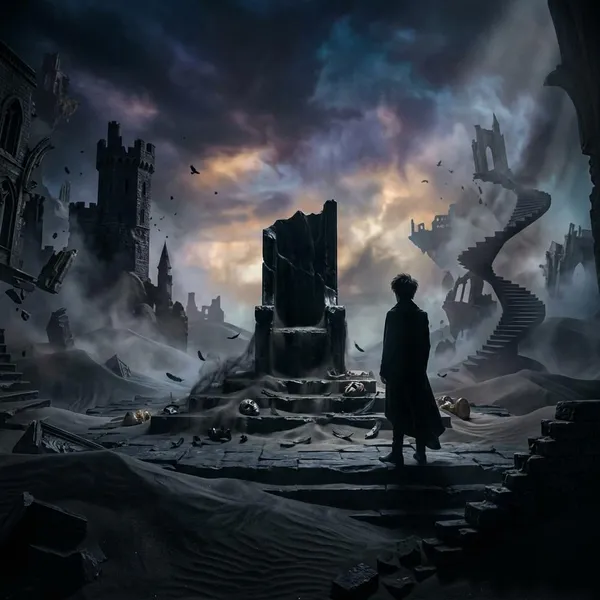
What the ending means for the Dreaming
The Dreaming survives, but it does not simply return to normal. Morpheus's death leaves grief behind, Daniel's rule brings uncertainty, and the realm has to adjust to a leader who is both the same office and a different person.
Two viewing situations make the ending land differently. If you mainly followed Morpheus, it feels like a devastating final punishment. If you were watching the Dreaming as a living realm with Lucienne, Matthew, and its other inhabitants, Daniel's arrival is the reason the ending does not collapse into despair.
The realm survives under a new ruler
Daniel's arrival means the Dreaming still has a lord. That is the key practical outcome of the finale: Morpheus dies, but the realm is not abandoned.
The hopeful note is quiet rather than triumphant. Daniel does not erase the damage, and he does not make Morpheus's death painless. He simply proves that the Dreaming can continue without being locked forever inside Morpheus's old limitations.
Lucienne and Matthew face a difficult change
Lucienne and Matthew have to accept a distinction that is easy to understand but hard to live with: Daniel is Dream, but he is not the Morpheus they knew.
Lucienne's challenge is duty mixed with grief. Matthew's is more emotional and immediate, which makes him useful for the audience; he reacts less like a cosmic servant and more like someone who has lost a difficult friend. Their response keeps the ending from feeling like a clean administrative handover.
The Endless continue without Morpheus
The Endless continue because they are larger than any single version of themselves. Morpheus's story ends, but Dream as a cosmic function does not.
That is also why the ending stays close to the spirit of the comics. The point is not just that a major character dies. The point is that change finally reaches even a being who seemed permanent, and the universe keeps moving after him.
- For the Dreaming: survival comes with a new emotional center.
- For the Endless: Daniel changes the family dynamic without breaking the family's existence.
- For Lyta: the truth does not undo her grief, but it complicates her guilt.
- For viewers: the ending is meant to feel final for Morpheus, not final for the world.
Conclusion
The ending works because it refuses to make Dream's death either a simple punishment or a clean redemption. Morpheus pays for killing Orpheus, but he also makes one final choice that protects the Dreaming from further ruin. Daniel's arrival does not make the loss smaller; it makes the loss bearable, because something better can begin without pretending nothing was lost.