
The way home ending explained is mostly about emotional closure, not a perfectly locked time-travel answer. The finale resolves the big family threads Casey's identity, Del and Colton's goodbye, Kat and Elliot's future, and Jacob's place in two lives while leaving the pond mysterious enough to still feel magical.
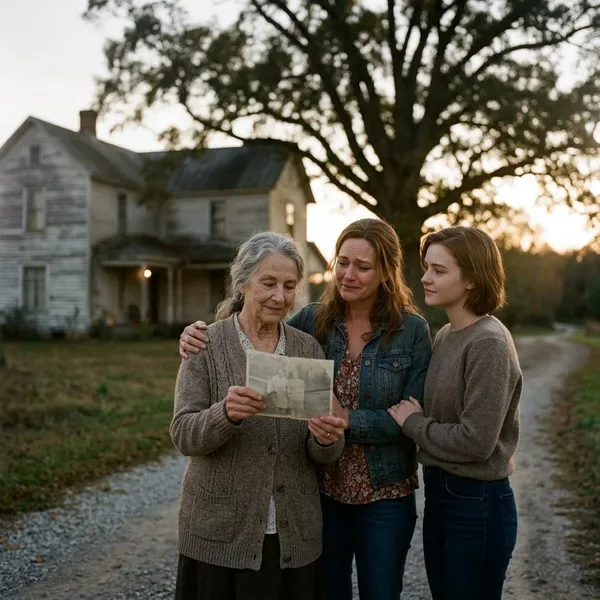
How The Way Home ends
The finale works best if you separate the literal ending from the emotional meaning. On the plot level, Elliot survives, Kat accepts his proposal, Casey's family connection is confirmed, Jacob and Abby marry by the pond, and Kat and Alice take one more jump. On the emotional level, the Landrys stop trying to force the past into a cleaner shape and start living with what they now understand.
Elliot survives and returns home
Elliot lives, which keeps the finale from becoming another cycle of Landry grief. His return matters because he has often been the person who understands both the ordinary world and the emotional cost of the pond.
If Elliot had died, the ending would have pushed Kat back into loss just when the story is trying to move her forward. Letting him survive gives the finale a warmer direction: not every painful pattern has to repeat.
Kat accepts Elliot's proposal
Kat says yes to Elliot, and the proposal feels less like a sudden romantic twist than a decision to stop waiting for perfect timing. Their relationship has always been shaped by missed chances, old wounds, and the pull of the past.
Casey's true identity is revealed
Casey is revealed as the future child of Jacob and Abby Goodwin. The ring clue is the important detail: Alice recognizes the ring Casey wore and gives it to Jacob, which connects Casey back to that future family line.
This reveal is not just a "who are they?" answer. It shows that the old Landry-Goodwin divide does not define the future forever. If you are rewatching the finale, Casey's scenes land differently once you see them as proof of reconciliation rather than just mystery-box behavior.
Jacob and Abby marry by the pond
Jacob and Abby's wedding turns the pond into something gentler than a place of disappearance. For much of the series, the pond has been tied to confusion, fear, and loss. A wedding beside it reframes that same place as part of the family's repair.
- For Jacob, the wedding means he is building a life instead of only being the lost boy.
- For the Landrys and Goodwins, it creates a shared future where there used to be inherited resentment.
- For the viewer, it confirms that the finale is more interested in healing than in one last shocking twist.
Kat and Alice take one final jump
Kat and Alice's last pond jump is the finale's open door. It is not a standard cliffhanger where the story feels unfinished; it is a final image of trust between mother and daughter.
How the finale closes each family story
The family endings are not all the same kind of closure. Del receives a goodbye, Jacob receives acceptance, Kat and Elliot receive commitment, and Alice receives possibility. That matters because the show does not treat healing as one neat reward handed to everyone equally.

Del gets one last moment with Colton
Del does see Colton again, but the scene does not mean his death is undone. It gives Del the kind of goodbye grief rarely allows: direct, tender, and emotionally clear.
That distinction is easy to miss. If you watch the finale mainly for timeline answers, the moment can look like a supernatural loophole. If you watch it through Del's story, it is really about release. She cannot get the years back, but she can stop carrying the same unanswered ache.
Jacob makes peace with his two lives
Jacob's ending works because the finale does not make him choose one identity and erase the other. He was a Landry child who disappeared, but he also lived a real life elsewhere with people who mattered to him.
His peace comes from accepting both truths. That makes his wedding feel more mature than a simple "he came home, so everything is fixed" ending. He is not returning to the exact life that was interrupted; he is creating a new one from everything he survived.
Kat and Elliot choose a future together
Kat and Elliot's ending is about active choice. Love was never the only question between them; timing, fear, guilt, and family trauma kept getting in the way.
The proposal closes that loop without pretending their history was simple. Kat is no longer only pulled backward by what she lost, and Elliot is no longer only waiting for life to arrange itself around him. They choose each other while knowing the past will always be part of them.
Alice begins a new chapter of her own
Alice ends the series with more agency than she had at the start. She is no longer just reacting to Kat's secrets or Del's grief; she understands the pond's gift and its cost.
For younger-viewer or coming-of-age readings of the finale, Alice is the clearest sign that the story is not frozen. She has inherited a complicated family history, but she is not trapped by it. Her final jump with Kat suggests curiosity, courage, and a future she will help shape.
What the final pond jump means
The final pond jump means the Landry story continues beyond what the finale shows. The episode closes the main emotional arcs, then leaves the pond as a living mystery rather than a solved device.
Kat and Alice remain connected through time
The last leap shows how far Kat and Alice have come as mother and daughter. At the start, their relationship was full of distance and half-truths. By the end, they can face the unknown together.
The most important detail is not where the pond sends them. It is that they jump side by side. Their bond has become stronger than the fear and secrecy that once shaped their family.
Their journey continues beyond the finale
The journey continues emotionally, even if the screen cuts away. The finale gives enough closure to feel complete, but it does not suggest Kat and Alice have learned every lesson the pond can offer.
- If you wanted a closed ending, the major family questions are answered.
- If you wanted more mystery, the final jump leaves room for imagination.
- If you wanted character growth, Kat and Alice enter the unknown with trust instead of panic.
The unseen destination keeps the magic alive
Not showing the destination is a deliberate choice. The pond has never behaved like a simple machine where the characters press a button and choose a year. It responds in mysterious, emotionally charged ways.
Leaving that final location unseen protects the show's tone. A named date or specific event would turn the last moment into a puzzle answer. The blank space lets viewers imagine another lesson, reunion, warning, or future connection.
Every ending becomes a new beginning
The finale turns goodbye into movement. Del's goodbye to Colton, Jacob's new marriage, Kat and Elliot's engagement, and Alice's open future all point in the same direction: endings hurt, but they can also make room for a different life.
What The Way Home ending really means
The ending really means that family history can be faced without being controlled. The pond gives the Landrys access to moments they never expected to see, but it does not hand them a clean reset. They gain understanding, not ownership over time.
Family history can be healed
Family history is healed in the finale, but it is not erased. Jacob's disappearance still happened. Colton's death still matters. The lost years do not vanish just because the characters understand more than they once did.
The healing comes from changing what those events mean in the present. Del can carry love with less unanswered pain. Jacob can belong to two parts of his life. The Landry-Goodwin future can become something other than a continuation of old conflict.
Time offers closure rather than control
Time travel in the finale is not a power the characters master. It is closer to a doorway into truth. The pond gives them moments of connection, but it does not let them redesign every painful outcome.
That is why Del's scene with Colton matters so much. The value is not that the timeline changes; the value is that she receives a goodbye she was denied. The show chooses emotional closure over a rules-heavy explanation.
Love connects every generation
Love is the thread holding the finale together: Del and Colton, Kat and Alice, Kat and Elliot, Jacob and Abby, and Casey as the future result of two family lines joining. The ending keeps widening the idea of family instead of narrowing it to one romance or one twist.
That multi-generational connection is the reason the finale can leave some mystery and still feel complete. The characters may be separated by years, death, secrecy, or misunderstanding, but love keeps shaping what comes next.
The future remains unwritten
The future remains unwritten, and the finale treats that as a gift. Earlier in the series, uncertainty often felt dangerous because it came with disappearance, grief, or secrets. By the end, uncertainty feels different because the family is facing it with more honesty.
For viewers who wanted one final fixed answer, that openness may feel risky. But for this story, a sealed ending would almost work against the point. The Landrys have not solved time; they have learned how to live with it.

Conclusion
The finale lands because it gives the characters what they needed more than what a mystery checklist might demand. Casey's reveal, Del's goodbye, Jacob's wedding, Kat and Elliot's engagement, and the final pond jump all point to the same practical reading: the past cannot be perfectly repaired, but it can finally be understood well enough for the future to feel open.