
The ending is easiest to understand if you separate the finale into two answers: Arisu wins because he refuses to quit Mira's game, and Borderland is revealed as a shared space between life and death for victims of the Tokyo meteor disaster. The final Joker card does not undo that reveal, but it does stop the ending from feeling completely safe or closed.
What happens in the Queen of Hearts game?
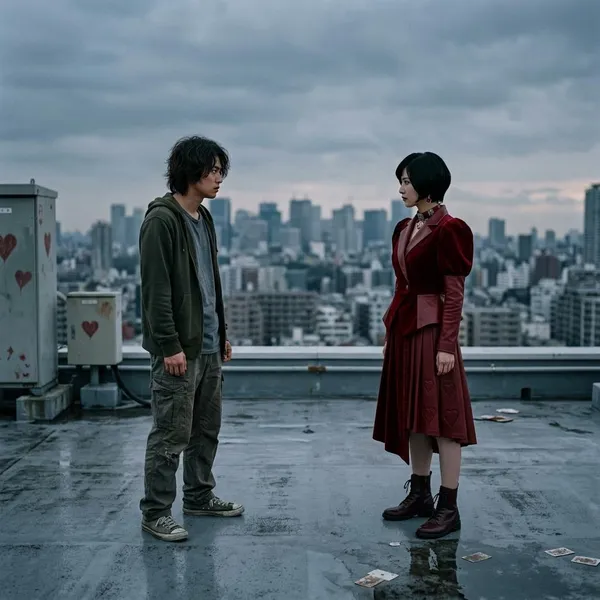
The Queen of Hearts game looks calm compared with the King of Spades fight, but it is the most dangerous test for Arisu personally. The point is not whether he can play croquet well. The point is whether Mira can make him doubt reality so badly that he gives up before the game is finished.
Mira challenges Arisu and Usagi to croquet
Mira sets up a three-round croquet match, and the rules sound almost too simple after everything the players have survived. Arisu does not have to beat her on points. He has to stay in the game and finish it.
That simplicity is the trap. After the bloodshed of the face-card games, a peaceful lawn and a polite opponent make Arisu lower his guard. Usagi being there matters too: she gives Arisu someone real to hold onto, but she also gives Mira another emotional pressure point.
She uses false stories to break Arisu
Mira keeps offering different explanations for Borderland because she wants Arisu to stop trusting his own mind. She suggests ideas such as a future simulation, an experiment, and finally a hospital scenario where Arisu is only a patient dealing with trauma.
The fake hospital version hurts him most because it targets the guilt he has carried since Karube and Chota died. For a viewer trying to sort truth from lies, the practical rule is simple: if the explanation comes from Mira during the game, treat it as manipulation first and lore second.
- Virtual reality: believable enough to distract him.
- Experiment theory: another way to make Borderland feel controlled by outsiders.
- Clinic illusion: the cruelest lie because it turns his grief into proof that nothing is real.
Usagi helps Arisu reject the illusion
Usagi does not defeat Mira with a clever theory. She pulls Arisu back by forcing him to feel the reality of their connection, their pain, and the choice still in front of him.
That is why the scene works emotionally even before the full Borderland reveal arrives. Arisu does not need a perfect explanation of the universe before choosing to live. He only needs one real reason not to surrender, and Usagi becomes that anchor.
Arisu wins by finishing without quitting
Arisu wins because the win condition is completion, not scoring more than Mira. Mira can win the croquet rounds and still lose the game if Arisu refuses to quit.
After he finishes, Mira is killed by the Borderland laser system, confirming that the Queen of Hearts game was still part of the same world and rules. The cleared game then opens the final choice: accept permanent residency in Borderland or refuse it and return to the real world.
What is Borderland?
Borderland is the space between life and death. It is not just a dream, and it is not only Arisu's private hallucination. The surviving players were all caught in the same meteor disaster, and Borderland is where their near-death struggle takes shape.
It exists between life and death
The show presents Borderland as a threshold, not a normal alternate city. People enter it when their lives are suspended between survival and death, and the games dramatize that suspended state.
This is why the ending avoids the weakest version of an "it was all a dream" twist. The events may be surreal, but the outcomes still matter. Dying in Borderland lines up with failing to return from that near-death state.
The meteor victims enter it together
The players are connected by the meteor strike in Tokyo. They were not randomly selected from across the world; they were caught in the same catastrophe and entered Borderland during the same life-or-death window.
This also explains why Borderland is shared. Arisu, Usagi, Chishiya, Ann, Aguni, Niragi, and the others experience the same realm because their real bodies are all fighting through the same disaster aftermath.
The games reflect their fight to survive
The card suits are a useful way to read what Borderland is testing. They are not just game categories; they turn different kinds of survival pressure into rules.
- Spades: physical endurance, speed, violence, and pain tolerance.
- Diamonds: logic, calculation, and calm thinking under pressure.
- Clubs: teamwork, trust, leadership, and shared risk.
- Hearts: guilt, betrayal, attachment, fear, and emotional collapse.
Returning means waking in the real world
Refusing permanent residency means choosing to return to life. The survivors who reject the offer wake up in the real world, injured but alive.
The choice matters because the show does not treat survival as purely automatic. Arisu and the others still have to turn away from Borderland, even after it has become the place where their fear, grief, and instincts were most intense.
What the hospital reveal changes
The hospital reveal changes the meaning of the whole series without erasing it. The players were victims of a real meteor strike, and the people who survived Borderland are the people who manage to wake up after that disaster.
For viewers deciding whether the finale is a cheat or a real answer, the key detail is consequence. The survivors do not return untouched. Their injuries, missing memories, and strange emotional recognition all show that Borderland left a mark.
The meteor strike connects every player
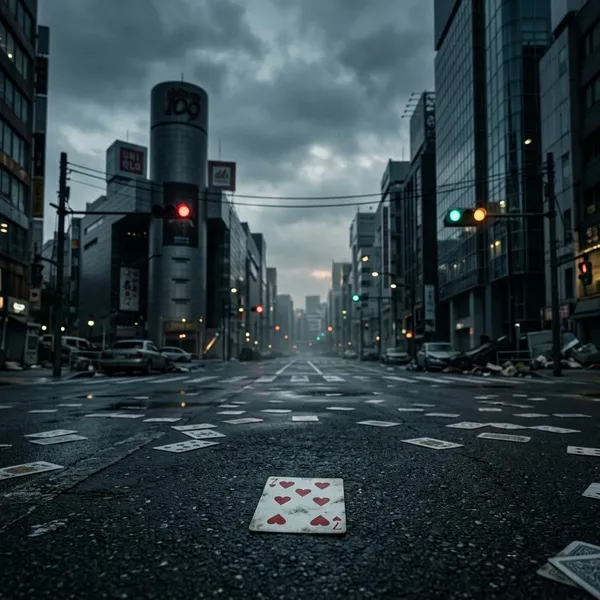
The meteor strike is the real-world event that ties the cast together. News reports and hospital scenes reveal that the characters were all caught in the same disaster around Shibuya.
That makes the deaths in Borderland feel more final, not less. Karube, Chota, Tatta, and the others were not just eliminated from a game world; they were victims whose struggle to return ended there.
Their injuries match their time in Borderland
The survivors' bodies reflect what they went through. Heiya's severe leg injury, Niragi's condition, Ann's critical state, and the emergency treatment around several characters all connect the game world to real physical trauma.
Their conscious memories disappear
The survivors do not wake up with clear, reportable memories of the games. Arisu and Usagi do not sit down and compare every arena, and Chishiya does not calmly explain the rules to the hospital staff.
That memory loss fits the threshold idea. Borderland is not treated like a normal trip they can bring back intact. It is closer to a near-death experience: powerful, shaping, but difficult to access directly once ordinary life resumes.
Their emotional bonds remain
What remains is not a clean memory but a feeling. Arisu and Usagi recognize something in each other even though they cannot name it, which gives their hospital meeting its quiet force.
The same idea applies more broadly. Chishiya seems changed, Heiya and Aguni still carry a sense of connection, and the survivors feel slightly rearranged by something they cannot explain. If the memory loss is the bitter part of the ending, these emotional traces are the hopeful part.
What the Joker card means
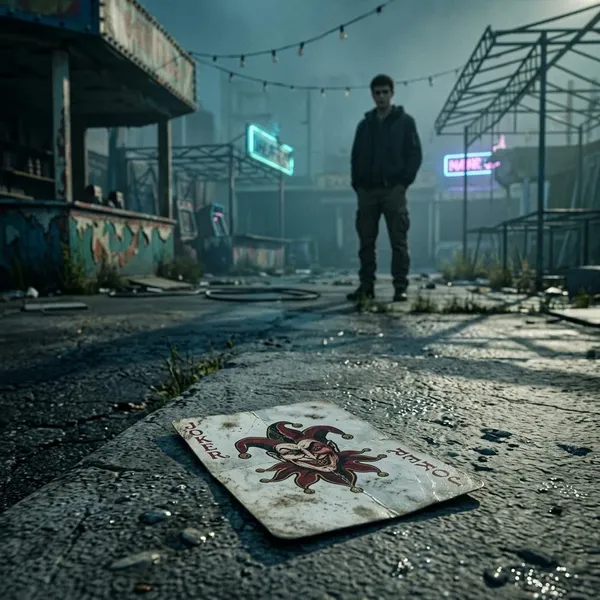
The Joker card is the ending's deliberate loose thread. After the hospital scenes make the world feel normal again, the camera leaves one card behind, and that image tells the viewer not to file Borderland away as fully explained.
The safest reading is that the main mystery has been answered, but the highest layer has not. We know how the players entered Borderland. We do not know everything about what controls it.
Borderland may hold another layer
The Joker sits outside the normal card suits, which makes it a perfect final symbol for a story built around numbered cards and face cards. The ordinary deck has been cleared, but one card remains beyond the system.
That can point to a deeper force behind Borderland, a figure connected to death, or simply a rule the survivors never got to understand. The show does not force one answer, and that uncertainty is intentional.
The survivors may not be fully free
The Joker may also mean that leaving Borderland does not completely sever its influence. That does not have to mean Arisu and Usagi are secretly still inside another game. It may mean that crossing the border between life and death changes a person permanently.
There is also a storytelling reason for the image: it leaves room for another season or another layer of conflict. For a casual viewer, it works as a creepy final note. For someone watching with sequel expectations, it works as a door left slightly open.
The show gives the Joker a less certain meaning than the manga
The Netflix version leaves the Joker more ambiguous than the manga. In the manga, the Joker is more closely associated with a ferryman-like role between life and death, so its meaning feels more defined.
Conclusion
Arisu survives the finale because he keeps playing when Mira's lies are designed to make him stop, and the hospital reveal shows that Borderland was the shared near-death space created around the meteor disaster. The ending is resolved enough to explain the players' return, but the Joker card keeps one uncomfortable question alive: even if they escaped the games, the border they crossed may still be part of the world.