
Season 3 ends with Arisu and Usagi escaping Borderland after the Possible Futures game, but the real answer is not just "they won." The finale makes them choose a painful real life over the tempting stillness of death, while the California "Alice"scene hints that Borderland may not be finished with the world.
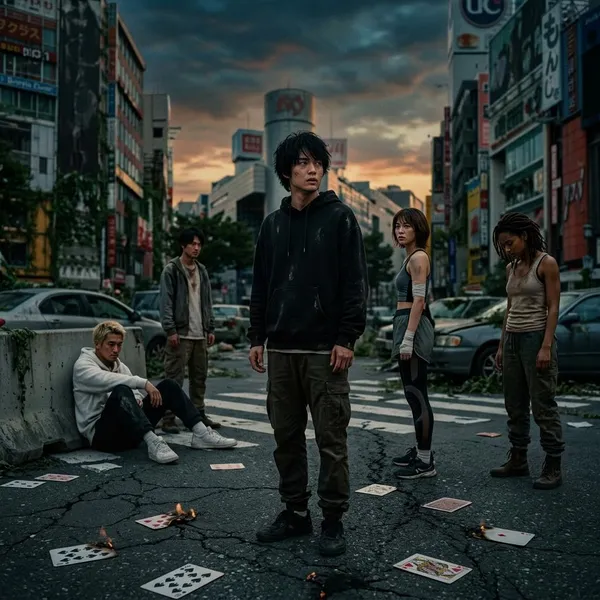
How does the Possible Futures game work?
The Possible Futures game is the finale's main trap: it looks like a maze, but it is really built to make players spend points while chasing the life they most want back. To understand the ending, it helps to separate three things first: the grid controls movement, the dice break up teamwork, and the point system turns every hesitation into a cost.
- Best way to read the game: it is not only testing intelligence, but emotional restraint.
- Biggest danger: the "future" shown behind a door may be exactly what a player is too desperate to question.
- Why people die: they run out of margin before they fully understand the room they have chosen.
Players cross a 5x5 grid
The game takes place on a 5x5 grid of rooms, with players searching for a route to the exit while seeing possible futures linked to different doors. That small layout matters because it feels solvable at first. Then the show turns it into a psychological trap: the rooms do not just hide directions, they show people versions of life they badly want to believe in.
Dice limit who can move
Dice rolls decide who can pass through certain colored doors, which means the group cannot simply stay together and solve the maze as a team. This is where the game becomes crueler than a normal puzzle. A good plan can fail because the rules force someone to separate at the worst possible moment.
That forced separation explains why some characters make choices they might not make in a calmer setting. Alone, tired, and afraid of wasting points, a player is far more likely to trust a comforting vision. If you are confused by the mid-game deaths, look first at who has been isolated, not just which door they chose.
Every move costs points
Each player starts with a limited number of points, and movement drains that supply. Staying still is not a safe loophole either, because delay also costs them. The practical rule is harsh: a choice can be technically survivable now and still make the next room impossible.
- Moving too much burns points before the exit is found.
- Waiting too long still drains the same survival margin.
- Chasing an ideal future becomes dangerous when the player cannot afford the hidden cost.
Usagi's pregnancy becomes crucial here because Borderland counts her unborn child as another life, giving her extra points. The reveal matters mechanically, but it also changes the emotional weight of the finale: she is not only protecting herself, she is carrying a future the game keeps trying to erase.
What happens at the end of Season 3?
The ending moves through three stages: the maze appears to end, Arisu stays behind, and then the survivors are thrown into the flood and the Watchman's final choice. If you watched mainly for the plot, the key takeaway is that Arisu and Usagi return to the real world. If you watched for the meaning, the important part is that both of them reject death even after Borderland makes it look peaceful.
Usagi uses her extra points
Usagi's extra points come from her pregnancy. Borderland treats the unborn child as another life, so she has more survival capacity than the other players in the Possible Futures game.
The reveal could have felt like a simple twist, but it works because it fits the season's larger idea. The game keeps asking whether life is worth the cost; Usagi's extra points make that question literal. Her child is not just a symbol of hope, but the reason the group has a little more room to keep moving.
Arisu stays behind for the others
When the final exit cannot take everyone, Arisu chooses to stay behind so the others can leave. It is the clearest version of his sacrifice in Season 3, but the show immediately complicates it: his self-sacrifice makes him the winner rather than simply killing him.
That twist is important because Borderland is not only testing selfishness. It can also exploit goodness. Arisu does the right thing, but the game uses that right thing to keep him inside, which makes the finale feel less like a clean victory and more like one last trap.
A flood traps the surviving players
The flood begins after the maze, just when escape seems close. It removes the comfort of rules: there are no doors to calculate, no clean puzzle to solve, only the immediate need to stay alive while water pulls the characters toward death.
Arisu's two-minute limit raises the pressure. Ann has temporarily stopped his heart in the real world so he can return to Borderland and bring Usagi back, which means his final struggle is tied to a real physical deadline. The flood is not just spectacle; it turns the emotional pull of surrender into something the characters have to fight with their bodies.
Arisu and Usagi choose to live
The true ending is their choice to return. After the Watchman presents death as a kind of release, Arisu refuses it. He chooses the real world even though it means grief, fear, responsibility, and future loss will still exist.
Usagi's choice comes through her vision of her father. His blessing allows her to stop treating death as the only place where she can remain close to him. That makes her return feel earned: she is not forgetting him, she is choosing to live without being trapped by the way he died.
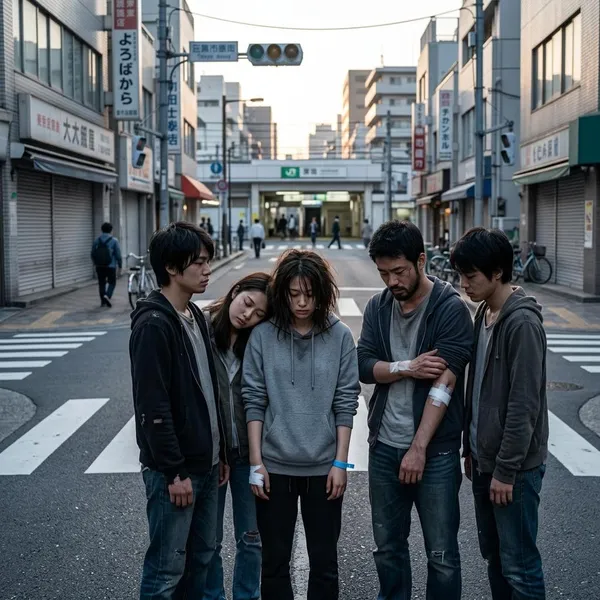
What happens to the survivors?
The survivors' epilogues are deliberately ordinary compared with the games. That is the point. Season 3 does not reward them with perfect happiness; it gives them a chance to rebuild, which fits the ending's message better than a neat victory parade would.
The main losses are also clearer when the epilogue begins. Tetsu and Itsuki die during the final game, and Ryuji does not return with the others. The people who make it back are not "fixed," but their next steps show what choosing life looks like after the adrenaline is gone.
Arisu and Usagi prepare for their daughter
Arisu and Usagi return to the real world and prepare for their daughter, turning the abstract idea of a future into something practical and immediate. After so many false futures appear inside the game, their real future is quiet: parenthood, recovery, and the work of staying present.
Arisu's role as a therapist also matters. He is no longer only the person haunted by survival; he becomes someone who can sit with pain and help other people face it. That does not erase what happened, but it shows that his suffering has changed into responsibility rather than paralysis.
Nobu begins studying architecture
Nobu's architecture path is a small but fitting ending. Architecture is about planning, structure, and building something that lasts, which contrasts with the chaos of Borderland. His future does not need to be dramatic to feel meaningful; for him, direction itself is the win.
Sachiko rebuilds her family life
Sachiko's ending is one of the most grounded because returning to the real world is not enough on its own. She has to change the life she returns to, especially by leaving an abusive husband and rebuilding around safety.
That detail keeps the finale from becoming too sentimental. The real world is not automatically kind, and the show does not pretend it is. For someone in Sachiko's situation, choosing life means making a difficult practical break, not simply waking up and feeling grateful.
Rei returns to anime production
Rei goes back to anime production and reconnects with her mother. Her ending balances work and emotional repair, which suits her better than a soft, unrealistic transformation. She remains sharp and capable, but those traits now have somewhere constructive to go.
Yuna moves forward without Itsuki
Yuna survives without Itsuki, which makes her ending intentionally bittersweet. She does not get the future she wanted, and the show does not try to replace that loss with an easy consolation.
Her epilogue is useful for reading the whole finale: choosing life does not mean getting back everyone you lost. Sometimes it means carrying the loss honestly and still allowing the next day to happen.
What does the Season 3 ending mean?
The meaning of the ending is that life remains worth choosing even when it cannot promise safety, fairness, or permanent happiness. The finale pushes this through two viewer questions at once: what literally happens to Arisu and Usagi, and what the Joker-stage test is trying to prove.
The Watchman is central to that second question. He is not simply a final boss to defeat. He presents death as relief, which is more dangerous than another violent game because the offer sounds merciful after everything the characters have endured.
Arisu accepts that life includes pain
Arisu's final choice is not naïve optimism. He knows the real world will still hurt, and he has already seen how easily people can lose each other. What changes is his understanding of pain: it no longer proves that life is meaningless.
That is why his return feels stronger than a normal survival win. He is not choosing life because it is easy. He is choosing it because love, memory, work, and responsibility only exist if he keeps living.
Usagi lets go of her father
Usagi's mountain vision gives her the permission she needs to move forward. Her father's death has always pulled at her, and Borderland uses that kind of grief as a doorway. When she accepts his blessing, she stops confusing loyalty to the dead with a refusal to live.
Their child represents a new future
The child makes the ending bigger than Arisu and Usagi surviving one more game. Their future is no longer only personal; it includes someone who will be born after Borderland, after the trauma, and after the choice to return.
This also reframes the extra points. On the surface, they help Usagi survive the maze. Symbolically, they show that the next generation is already part of the decision, even before the characters can fully see what that future will look like.
Choosing life becomes the final test
The last test is not a puzzle solution. It is whether Arisu and Usagi can reject the appeal of giving up when death is presented as peace. That makes the Joker stage feel less like another card game and more like a final judgment on everything the series has been asking from the start.
The California diner scene then opens a separate door. The waitress named Alice suggests that Borderland may extend beyond Tokyo, possibly with new players or a wider version of the same system. Arisu and Usagi's emotional story reaches closure, but the final image warns that Borderland itself may still be moving.
Conclusion
Alice in Borderland Season 3 ends by making survival a choice rather than a prize: Arisu and Usagi do not escape because life is painless, but because they accept that pain is part of the life they still want. The survivor epilogues keep that idea grounded, while the final Alice scene leaves the mythology open without undoing their closure.