
The castle rock season 1 ending explained answer is not that Henry finally proves The Kid is evil. It is that Henry cannot prove enough either way, so he makes the safest-looking and cruelest choice: he locks The Kid back under Shawshank and lives with the doubt.
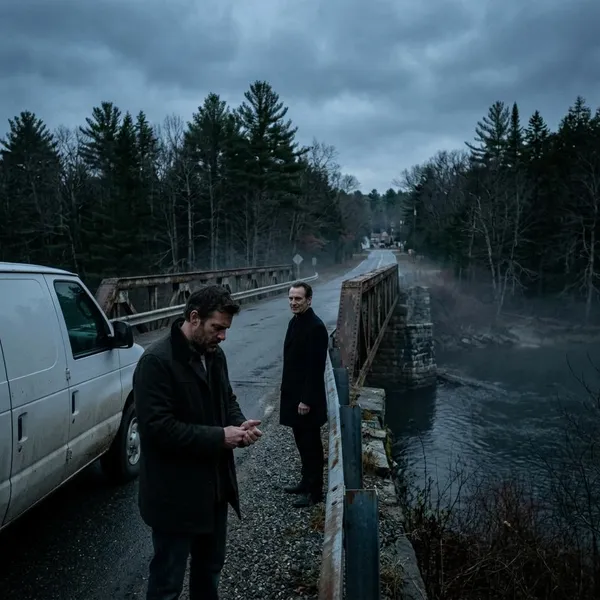
How Castle Rock Season 1 ends
The finale brings Henry and The Kid back to the woods, the place where Henry's childhood trauma and the show's alternate-reality mystery meet. The Kid wants Henry to hear the schisma and accept that he came from another version of Castle Rock. Henry hears enough to be shaken, but not enough to feel safe letting him go.
The Kid takes Henry back to the woods
The Kid brings Henry to the woods because that is where the barrier between realities seems weakest. From his point of view, this is not a trap but a last attempt to show Henry that his story is true: he is not a demon, he is a displaced version of Henry Deaver from another Castle Rock.
The important detail is that Henry does not get a neat, testable explanation. He hears the schisma and senses something impossible, but he does not step through a clear doorway with labels on it. For a viewer who wants the supernatural answer, this scene makes The Kid's story much more believable. For Henry, it still arrives wrapped in panic.
Henry sees The Kid's face change
The face change is the finale's sharpest ambiguity. Henry briefly sees The Kid as something old, damaged, and monstrous, and that image pushes him from doubt into fear.
The show never confirms whether the vision is literal. It could be The Kid's true nature, an effect of the schisma, or Henry's terror taking visual form. That difference matters: if you read the scene as real, Henry may be containing a threat; if you read it as trauma, Henry may be punishing a victim because he cannot handle what he sees.
Henry locks The Kid in Shawshank
Henry does not shoot The Kid or let him walk away. He takes him back to the hidden cage beneath Shawshank and continues the same secret imprisonment Dale Lacy began.
That choice is the moral center of the ending. Henry is a lawyer, someone whose life should be shaped by proof, doubt, and the danger of unjust punishment. Yet when he faces a mystery he cannot resolve, he chooses the cage. The finale is not asking you to cheer for that decision; it is asking whether fear can make cruelty feel responsible.
Henry remains in Castle Rock one year later
A year later, the town looks calmer, but that calm is not real closure. Henry is still in Castle Rock, still connected to Shawshank, and still visiting The Kid underground.
This detail changes the ending from a desperate moment into a long-term choice. If Henry had locked The Kid away for one night, the act might read as panic. A year later, it has become a private system. He has not escaped Castle Rock's pattern; he has accepted a role inside it.
Why Henry puts The Kid back in the cage
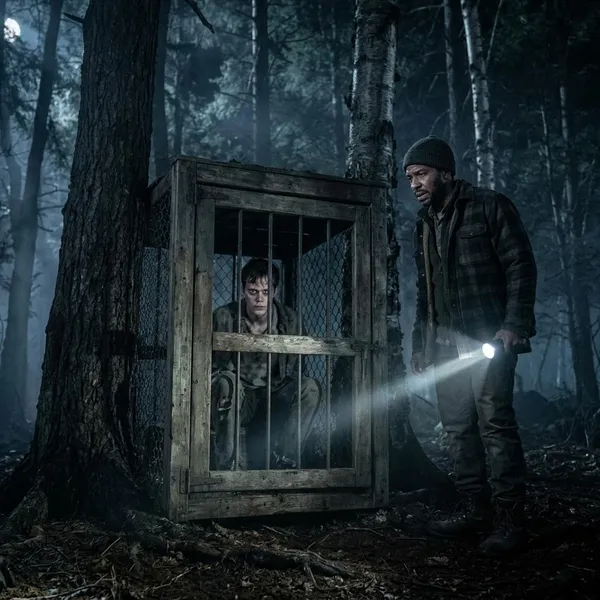
Henry puts The Kid back in the cage because he sees two unbearable risks and cannot prove which one is real. Releasing The Kid might free an innocent man from another universe. It might also unleash something connected to the violence and decay around Castle Rock.
He cannot prove The Kid's story
The Kid's explanation has support: the schisma, the mirrored lives, Henry's missing childhood, and the alternate Castle Rock all point in his direction. But support is not the same as proof strong enough for Henry to trust him completely.
That gap is where the tragedy sits. If Henry believes The Kid and is wrong, people may die. If he disbelieves him and is wrong, he has buried an innocent man alive. The finale gives viewers enough evidence to argue both sides, which is why the ending still feels unresolved rather than simply confusing.
He fears The Kid may be dangerous
Violence follows The Kid throughout the season, even when the show avoids proving exactly how responsible he is. Henry sees the pattern and treats it as a warning.
- Low-risk reading: The Kid is a damaged, displaced person, and the horror around him comes from Castle Rock itself.
- High-risk reading: The Kid may be a carrier of evil, whether or not he fully understands it.
Henry chooses as if the high-risk reading is true. That is psychologically believable, especially after what he sees in the woods, but it does not make the decision morally clean.
He chooses imprisonment over killing
Henry keeps The Kid alive because he is not certain enough to kill him. The cage becomes his compromise: contain the possible threat without crossing the line into execution.
The problem is that the compromise is still horrific. Secret, indefinite captivity is not mercy just because it is not murder. This is one of the finale's nastiest turns: Henry can tell himself he chose restraint, while the audience can see that he has taken away The Kid's life in almost every practical sense.
He repeats the cycle of earlier jailers
The finale mirrors the men who came before Henry. Matthew Deaver used religious certainty to justify cruelty. Dale Lacy used fear of evil to justify locking The Kid away. Henry uses uncertainty to justify continuing the cage.
That cycle is the season's real horror. Castle Rock keeps producing people who believe they are the only ones strong enough to make a terrible choice. The details change, but the pattern does not: when someone cannot be understood, someone else decides imprisonment is safer than trust.
How the schisma connects the two Henrys
The schisma is the weak point between realities, heard as the eerie sound in the woods. It is not explained like a science-fiction machine, and the show does not need it to be. Its job is to connect the two Henrys and turn the season's mystery into a story about displacement.
Young Henry crosses into another Castle Rock
After the confrontation with Matthew, young Henry disappears into another version of Castle Rock. That explains why his missing time never fit a normal crime story. He was not only lost in the woods; he was pulled into a different reality.
This gives the season a clearer answer without making every detail tidy. Henry's memory gaps, his strange connection to the town, and the unease around his childhood all trace back to that crossing.
The other Henry follows him back
In the alternate reality, another Henry Deaver exists. That Henry grows into the person we know as The Kid, and he follows young Henry through the schisma, apparently trying to fix what happened or return him.
Instead, he ends up in the wrong Castle Rock and is treated as something evil. If his story is true, the most tragic reading is that he tried to help and was rewarded with years in a cage.
Both are trapped in the wrong reality
Both Henrys are displaced, just in different ways. The Henry we follow grows up separated from the life he might have had, while The Kid is stranded in a world that sees him as a threat.
This is why a simple "hero versus villain" reading feels too thin. The season is built around mirrored damage. One viewer might focus on the danger The Kid brings; another might focus on the injustice done to him. The finale keeps both readings alive.
Their imprisonments mirror each other
The two Henrys are also linked by captivity. Young Henry is controlled by Matthew's fear and religious obsession; The Kid is physically locked away by Lacy and then Henry. In both cases, an adult decides what a frightened person means before truly understanding him.
That mirror does not prove The Kid is harmless. It does make Henry's final choice harder to excuse. He knows what it means to be defined by other people's fear, yet he still passes that fear on.
What the finale reveals about Henry's past
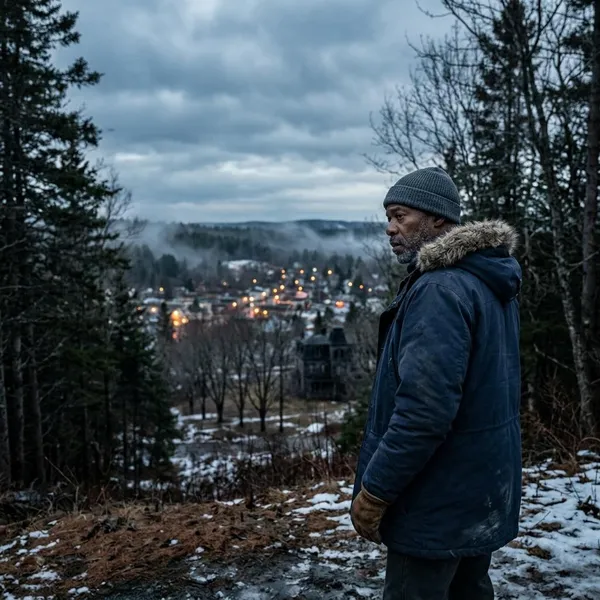
The finale answers the childhood mystery by showing what happened between Henry, Matthew, and Ruth. These scenes matter because Henry's final decision is not made by a calm outsider. It is made by someone whose first major crisis involved family violence, guilt, and a reality-breaking event in the woods.
Matthew threatens to kill Ruth
Matthew Deaver is revealed as more than a harsh religious father. He becomes convinced that Ruth deserves to die, and his belief turns into a direct threat.
That changes how Henry's childhood should be understood. He was not simply a strange boy in a town full of rumors. He was a child trapped near an adult whose certainty had become dangerous. The same theme later returns with The Kid: once someone believes cruelty is necessary, doubt stops protecting the victim.
Henry pushes Matthew from the cliff
Henry does push Matthew, but the context is crucial. He does it while trying to stop Matthew from killing Ruth, which makes the act traumatic rather than cold-blooded.
This reveal corrects the town's version of the story without making Henry's past painless. He did cause the fall, but not for the reason people assumed. That kind of half-truth is very Castle Rock: the rumor points toward something real, then misses the human reason behind it.
The schisma opens after the fall
After Matthew falls, the schisma opens. The timing links Henry's family trauma to the supernatural rupture in the woods.
The show does not give a precise rule for why the schisma opens at that moment, so it is safer to read the scene emotionally as well as literally. Violence breaks the family, and reality breaks with it. That is why returning to the woods as an adult is not just a plot step for Henry; it is a return to the moment his life split apart.
Henry disappears into the other world
Henry's disappearance happens because he crosses into the other Castle Rock. He comes back changed, with missing time and memories that do not settle into a normal explanation.
This makes The Kid especially difficult for him to face. Accepting The Kid's story would mean accepting that Henry's own life has been shaped by a supernatural displacement he never chose. Rejecting The Kid lets Henry contain the mystery, but only by putting another man behind bars.
Conclusion
The ending is unsettling because Henry may be protecting Castle Rock, or he may be repeating its oldest sin. The strongest reading is not that the finale hides one simple answer, but that it traps Henry between two terrible possibilities and shows him choosing control. Whether The Kid is victim, threat, or both, Henry's final role as keeper of the cage is the point that lingers.