
The ozark ending explained answer is deliberately grim: the Byrdes survive, Ruth dies, Camila takes power, and Jonah's final shot shows the family has stopped pretending it can stay clean. The finale is not built around justice; it is built around who has enough leverage to avoid it.
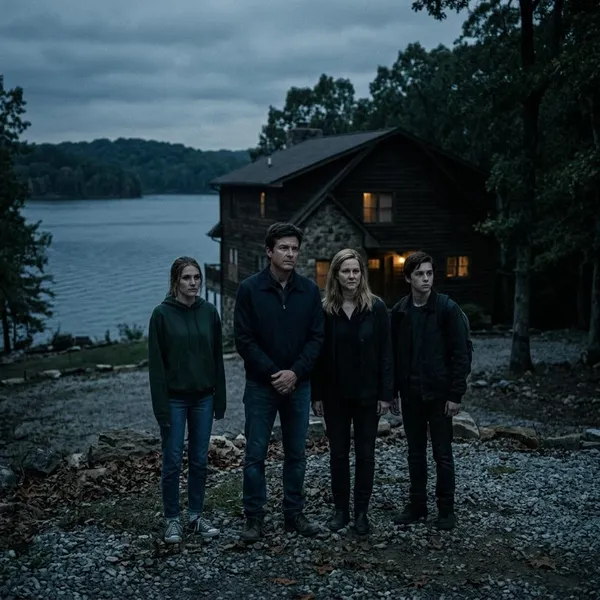
How Ozark ends
The final episode moves quickly, but the important order is simple: Clare gives Ruth up, Camila takes revenge, Marty and Wendy protect their deal instead of Ruth, and Jonah removes the last person trying to expose the family.
Clare reveals that Ruth killed Javi
Clare's confession is the turn that makes Ruth's death almost unavoidable. Camila corners her at the gala, and Clare chooses the safest answer for herself: Ruth killed Javi.
That choice fits Clare. She has money and corporate status, but she does not have the Byrdes' criminal nerve or Ruth's toughness. Under cartel pressure, she protects herself by handing over the person with less protection.
Camila kills Ruth
Ruth's death is the emotional blow of the finale because she came closest to escaping the Langmore pattern. Her record was cleared, she owned the casino, and for a moment her future looked less trapped by the past.
Camila killing her is also the delayed cost of Ruth killing Javi. The show lets Ruth's revenge feel understandable, especially after Wyatt's murder, but it never treats it as consequence-free. Her final calm makes the scene sadder, not softer: she understands exactly what has caught up with her.
Marty and Wendy refuse to intervene
Marty and Wendy do not pull the trigger, but they allow the result. They know Camila will kill Ruth, and they also know that warning Ruth or standing against Camila could collapse the cartel deal, the FBI arrangement, and their children's safety.
This is one of the coldest parts of the ending because Ruth is not lost through ignorance. She is sacrificed through calculation. Marty's silence matters as much as Wendy's ambition here; both choose the family's future over Ruth's life.
Mel returns with Ben's ashes
Mel arrives at the Byrde house with Ben's ashes in the goat cookie jar, believing he has finally found the thing that can bring the family down. He is not just carrying evidence. He is carrying the moral truth Wendy and Marty have tried to bury.
Jonah shoots Mel
The finale strongly implies Jonah shoots Mel. The show cuts to black before showing the impact, but Jonah raises the shotgun, no one stops him, and the gunshot follows.
The off-screen choice is not mainly about mystery. It keeps attention on Jonah's decision rather than Mel's body. A teenager who spent much of the season furious about Ben's death ends by protecting the people responsible for covering it up.
What Jonah shooting Mel means
Jonah's final shot is the ending's clearest signal that the Byrdes are no longer a family trying to escape crime. They are a family held together by it.
Jonah chooses his family
Jonah chooses the Byrdes over Mel, over the truth about Ben, and over the chance to stand apart from Wendy. He does not make a speech about forgiveness. He simply acts when the family is threatened.
For viewers who saw Jonah as the possible moral escape route, this is the bleakest possible turn. His choice says the family bond has become stronger than his anger.
He accepts violence as protection
Earlier, Jonah's relationship with violence was mixed with fear, curiosity, and teenage defiance. In the final scene, violence becomes practical. It is the tool he reaches for when evidence, law, and persuasion threaten the Byrdes.
- For Marty and Wendy, violence has often been outsourced or managed.
- For Jonah, the final act makes it personal and direct.
- For the family, it proves the next generation has learned the same survival rule.
He completes his return to the Byrdes
Jonah had already started drifting back after the car crash and Wendy's breakdown, but the finale makes that return permanent. He does not come back through healing or honesty. He comes back through complicity.
That is why giving the final act to Jonah matters. If Marty or Wendy had shot Mel, the ending would confirm what viewers already knew. Jonah doing it shows the Byrde system has been inherited.
The family closes ranks for good
The last scene leaves the Byrdes aligned: Marty, Wendy, Charlotte, and Jonah all face the same threat, and no one steps outside the circle. Charlotte's silence is part of that image, even though Jonah is the one holding the gun.
By then, Ruth is gone and Mel is likely gone. The two strongest outside challenges to the Byrdes' story have been removed. What remains is a family that looks united, but only because everyone has accepted the cost of staying together.

Why the Byrdes get away with everything
The Byrdes get away with everything because they make themselves useful to powerful people. The finale is not saying they are innocent, lucky, or secretly redeemed. It is saying they have become too valuable, too connected, and too protected to punish easily.
The cartel arrangement protects them
Marty and Wendy survive because they remain useful to cartel leadership. They know how to launder money, manage pressure, and connect criminal power to legitimate channels.
Once Camila learns Ruth killed Javi, the Byrdes understand the hierarchy immediately. Saving Ruth would mean challenging the new cartel boss over her son's murder. In their calculation, that is not loyalty; it is suicide.
The FBI accepts a compromised deal
The FBI does not function as a clean moral rescue in Ozark. It accepts a dirty arrangement because control can look more useful than justice.
That is why there is no satisfying courtroom reckoning. The legal system does not miss the Byrdes by accident; it tolerates them because the deal serves institutional goals. The finale is sharper if you read that as compromise, not a plot hole.
Their foundation gives them political power
Wendy's foundation gives the Byrdes a public shield. Donors, political relationships, and charitable language help turn them from obvious criminals into people with influence.
This is the kind of respectability Mel cannot stand. He sees the family laundering not just money, but reputation. The foundation does not erase what they have done, but it makes them harder to touch.
Other people absorb the consequences
The Byrdes' consequences do not vanish; they land on other people. Ben dies. Ruth dies. Mel likely dies. Clare survives by giving Ruth up. The pattern is not random.
A useful way to read the finale is to ask who has protection when danger arrives. The Byrdes have systems around them. Ruth has courage, anger, and a fragile new start. In Ozark, that is not enough.
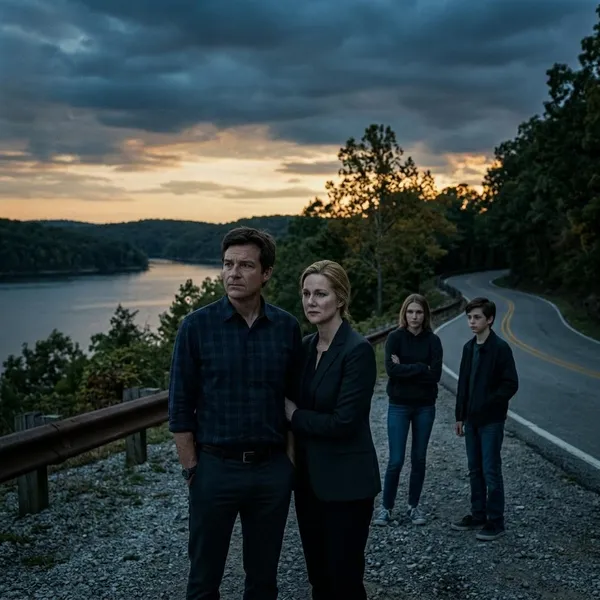
Where the main characters end up
By the end, the surviving characters do not get happy endings so much as final positions in the show's power map. Some win, some survive, and some are morally trapped by what survival required.
| Character | Final position | What it means |
|---|---|---|
| Marty | Still with Wendy | He chooses family survival over a moral break. |
| Wendy | Politically positioned and reunited with her family | Her version of protection wins, but it is deeply corrupted. |
| Charlotte | Still inside the family | She accepts the Byrdes' reality rather than escaping it. |
| Jonah | The family's defender | He turns loyalty into direct violence. |
| Camila | Cartel leader | Power continues under harsher control. |
| Clare | Alive after betraying Ruth | She survives by redirecting danger. |
Why the Ozark finale feels frustrating
The finale feels frustrating because it denies the ending many viewers wanted: Ruth free, the Byrdes punished, and the truth finally powerful enough to matter. Instead, it gives the most protection to the people who have caused the most damage.
That frustration is not a side effect. It is the point. The ending asks whether a story about corruption should comfort viewers with justice or leave them with the uglier pattern the show has been building all along.
Ruth dies while the Byrdes survive
Ruth dying while the Byrdes survive is the finale's hardest pill to swallow. She is the character many viewers rooted for because her pain felt raw and her attempts to rebuild felt earned.
The unfairness is intentional. Ruth has grit, but the Byrdes have protection. In this world, protection wins.
Jonah's final act happens off-screen
The off-screen gunshot can feel evasive if you wanted absolute visual confirmation. Still, the scene gives enough information to read Jonah's action clearly.
The cut to black makes the moment less about seeing Mel die and more about sitting with what Jonah has become. That choice is frustrating, but it is not meaningless ambiguity.
The family avoids legal punishment
The Byrdes avoid legal punishment because the systems around them have learned to use them. That is maddening if you expected law enforcement to restore order.
But Ozark has rarely treated institutions as clean. The finale follows that logic through: people with leverage negotiate consequences, while people without it become consequences.
The ending favors theme over justice
The ending chooses theme over justice by letting the Byrdes live with power instead of forcing them into a neat downfall. A more traditionally satisfying finale might have punished them, but it would also soften the show's bleakest idea.
Whether that makes the finale brave or unsatisfying depends on what you wanted from the last episode. As a moral reckoning, it is punishingly cold. As a final statement about power, it is consistent.

Conclusion
The ending of Ozark works best when read as a final judgment on power, not a promise of fairness: Ruth is the cost, Mel is the last threat, Jonah is the proof that the children have been pulled in, and the Byrdes survive because they are useful to people who matter. It is an angry, uncomfortable ending, but that discomfort is exactly where the show leaves its meaning.