
The finale's main answer is that Bayta is the real Mule, not the man Gaal kills on New Terminus. That twist leaves Gaal alive but exposed, the Second Foundation broken into pieces, the Cleonic Dynasty effectively ruined, and Kalle waiting near a hidden Earth with what looks like a surviving robot network.
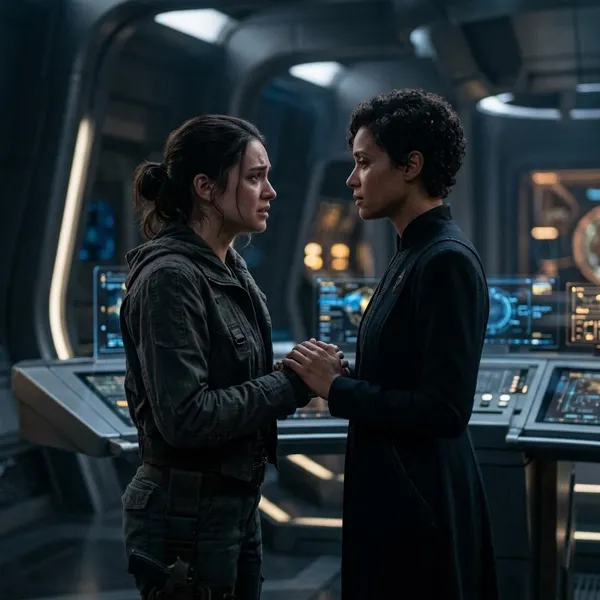
What happens between Bayta and Gaal
The New Terminus storyline is built around a cruel misread. Gaal thinks she has reached the center of the threat, only to learn that the obvious enemy was a mask. If you only wanted the biggest twist explained, this is the key point: the finale turns Bayta from someone who needed saving into the person who had been shaping the danger around everyone else.
That makes Gaal's situation much worse than a normal defeat. She does not simply lose a fight; she realizes she has been making choices inside someone else's trap. The episode also gives Bayta one important weakness through Magnifico's music, which keeps the ending from making her feel unbeatable.
Gaal kills the false Mule
Gaal does kill the man presented as the Mule, but that victory only removes the decoy. He had the look and force of the season's main villain, so the scene briefly feels like the ending Gaal was chasing. Then the reveal undercuts it: she has killed the wrong center of power.
The practical takeaway is that Gaal's visions and mental strength are not the same as certainty. She can sense danger and still misidentify where it is coming from. That mistake matters because Bayta's whole advantage depends on hiding behind the person everyone is already afraid of.
Bayta reveals herself through Pritcher
The Bayta reveal lands through Pritcher, which makes it more personal than a simple villain unmasking. His behavior becomes proof that Bayta has been able to reach into people close to the action and use them as extensions of her will.
Magnifico's altered music weakens Bayta
Magnifico's altered music appears to interfere with Bayta's power. The finale does not turn it into a clean solution, but it does give Gaal and the others something important: Bayta can be disrupted.
Gaal escapes before Bayta can convert her
Gaal gets away before Bayta can fully convert her, and that is the difference between a bad ending and a total disaster. If Bayta had taken Gaal, she would have gained a powerful mentalic with a rare connection to the future.
The escape still does not feel triumphant. Gaal leaves wounded, shaken, and without control over the wider situation. For a casual viewer, the scene may read as survival; for anyone tracking Gaal's leadership role, it is also a warning that she may have to rebuild trust before she can lead again.
What happens to Gaal and the Second Foundation
Gaal survives the finale, but the Second Foundation does not come out looking strong. Its secrecy has been damaged, its people are scattered, and its best-known figure is forced into retreat. That is why the ending feels less like a battlefield loss and more like an institutional collapse.
The priority for season 4 is clear: Gaal has to understand Bayta, while the Second Foundation has to become useful again. Those are related goals, but they are not the same job. One is personal and urgent; the other is slow, political, and probably messy.
Gaal leaves New Terminus alone
Gaal leaving New Terminus alone is supposed to feel uneasy. She has good reasons to run: she is injured, Bayta is too dangerous, and staying could hand the real Mule an even bigger prize. Still, the image of her escaping alone leaves a moral bruise.
The Second Foundation remains scattered
The Second Foundation is still alive, but it is not functioning as a single confident force. That is dangerous because Bayta's power works best when people are isolated, confused, or unsure whom to trust.
There is one small advantage: scattered survivors are harder to eliminate in one strike. A hidden cell with a few disciplined mentalics may be safer than one grand headquarters Bayta can target. The problem is coordination. Without shared leadership and clean communication, survival does not automatically become resistance.
Preem Palver becomes its new leader
Preem Palver is positioned as the stabilizer, not the flashy savior. That distinction matters. The Second Foundation does not only need someone powerful; it needs someone who can preserve memory, organize survivors, and decide when not to act.
A likely season 4 shape is a split responsibility: Gaal follows the immediate threat of Bayta, while Preem tries to rebuild the institution behind her. That would also fit one of the show's better tensions, between individuals who change history in dramatic moments and systems that survive long enough to matter.
Digital Seldon is left inside the Vault
Digital Seldon being left inside the Vault is not just a sad loose end. It separates Gaal from a version of the original plan at the exact moment she most needs perspective.
- As an ally: he could preserve knowledge Gaal will need later.
- As a critic: he may decide she has drifted too far from Seldon's design.
- As a wild card: isolation inside the Vault could change how he judges everyone outside it.
The finale does not say he will turn against Gaal, so that should not be treated as confirmed. It does, however, leave a fault line between prophecy, planning, and human improvisation.
What the Earth moon scene means
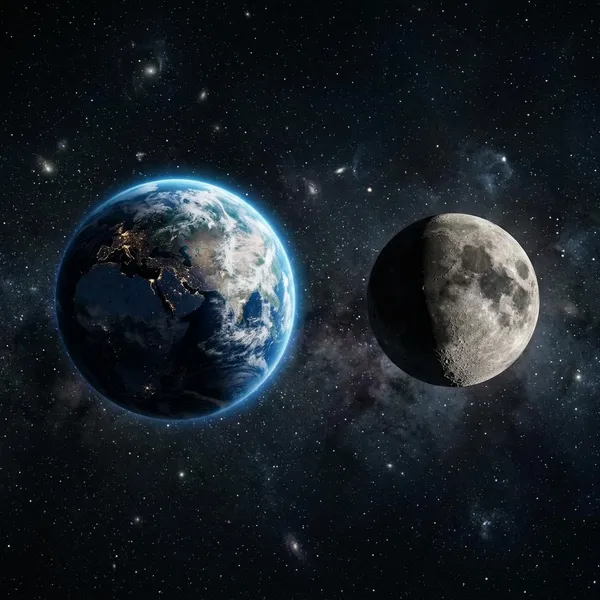
The moon scene widens the ending from a fight over Empire into a much older mystery. Kalle receives a signal near Earth, and the implication is that Earth has not simply been forgotten. It has been hidden, guarded, or kept outside normal galactic knowledge.
This is the reveal to focus on if you care more about lore than the Mule twist. The show is suggesting that human history, robot survival, and psychohistory may all be connected through a layer of planning the main characters barely understand.
The Brazen Head sends a signal from Trantor
The Brazen Head's signal turns Trantor's collapse into a message. It means Demerzel's final actions are not sealed inside the dying imperial system; they reach someone, or something, that has been waiting beyond it.
That signal also changes the scale of the finale. Trantor has been the center of political power for most of the story, but the transmission suggests it is no longer the only place where the future is being decided.
Kalle receives the signal on the moon
Kalle receiving the signal makes her feel less like a mysterious intellectual figure and more like an active player. Her calm presence suggests preparation, not surprise.
The finale does not clearly define what Kalle is. She may be human, altered, connected to robots, or something more complicated. The safer reading is that she operates outside the normal political map of the show, and that she knows far more about the buried history of Earth than Gaal or Empire does.
Earth has been hidden from the galaxy
The ending strongly indicates that Earth has been concealed from wider galactic awareness. That matters because Earth is not just another location in this story; it is the origin point, the place where memory and myth meet.
If Earth has been hidden on purpose, then the galaxy has been living with an edited version of its own past. That fits the show's larger obsession with controlled knowledge. Empire controls history through power, Seldon tries to control it through prediction, and the moon reveal hints at another group controlling it through disappearance.
Other robots have survived in secret
The moon scene strongly suggests Demerzel may not have been the only surviving robot, even if her role inside Empire was unique. That does not undo her tragedy. It actually makes it sharper: she may have been alone in the palace, but not necessarily alone in existence.
If other robots have survived, season 4 can ask a bigger question than whether they are "good" or "bad." The better question is what they have been protecting, and what they are willing to sacrifice to protect it. A hidden robot network that has waited for centuries would not necessarily share Gaal's priorities, Bayta's ambition, or Seldon's timetable.
How the ending sets up Foundation Season 4
The finale leaves season 4 with four active fronts: Bayta as the real Mule, Gaal in recovery, the Second Foundation in pieces, and Trantor trapped in the wreckage of the Cleonic Dynasty. The Earth reveal adds a fifth front that may end up being bigger than all of them.
The best way to read the setup is by priority. The immediate danger is Bayta. The medium-term problem is rebuilding a force capable of resisting her. The long-term mystery is Earth, Kalle, and the hidden robots. Empire, meanwhile, becomes the unstable ground everyone may try to exploit.
Gaal must find a way to stop Bayta
Gaal's next task is not simply to attack Bayta again. That would be the obvious mistake. Bayta has already shown that she can use proximity, trust, and misdirection better than brute spectacle.
Gaal needs better information first: how Bayta hid herself, what Magnifico's music actually disrupts, and which allies can be trusted near a mentalic threat. A rushed rematch would favor Bayta. A careful plan that combines mental discipline, distance, and some form of counter-signal gives Gaal a more believable path.
The Second Foundation must rebuild
The Second Foundation cannot just gather survivors and call that a recovery. It has to decide what it is now: a guardian of Seldon's plan, a defense against mental domination, or a secret political force willing to shape events from behind the curtain.
That makes the rebuilding story more than housekeeping. It is where the show can test whether the Second Foundation deserves influence, not just whether it can regain it.
Darkness rules what remains of Empire
Brother Darkness ruling over what remains of Empire is bleak because it is not a clean transfer of power. It is a throne surrounded by ruin. The Cleonic system depended on continuity, and Darkness has helped turn that continuity into a corpse.
That does not mean every imperial symbol vanishes overnight. Palaces, soldiers, technology, loyalists, and fear may still remain. But the myth of endless Cleonic renewal is broken. Season 4 can now treat Trantor as a power vacuum rather than a stable center, which makes it vulnerable to revolt, opportunists, or outside manipulation.
Kalle and the hidden robots enter the conflict
Kalle and the hidden robots are the finale's largest wildcard. They may help Gaal, oppose Bayta, or pursue a plan that makes both sides look short-sighted.
Demerzel's fate also matters here. If she is truly gone, her death may be what draws the hidden robot world closer to open action. If some part of her legacy survives, the robot storyline becomes even more complicated. Either way, the conflict is no longer just about the fall of Empire or the rise of the Mule; it is about who gets to guide civilization after the old systems fail.

Conclusion
The ending works because it does not treat one twist as the whole answer. Bayta being the Mule explains the season's misdirection, but the larger damage is just as important: Gaal is isolated, the Second Foundation has to rebuild, Empire has lost its old logic, and Earth is suddenly back on the board. The smartest read going into the next chapter is to stop trusting the most visible source of power, because the finale makes clear that the real movers have been hiding just out of sight.