
The it welcome to derry ending explained answer is not that Pennywise is beaten for good. Season 1 ends with him forced back into containment, while the finale's bigger twist suggests he already understands parts of the future and is trying to protect himself from it.
How IT Welcome to Derry Season 1 ends
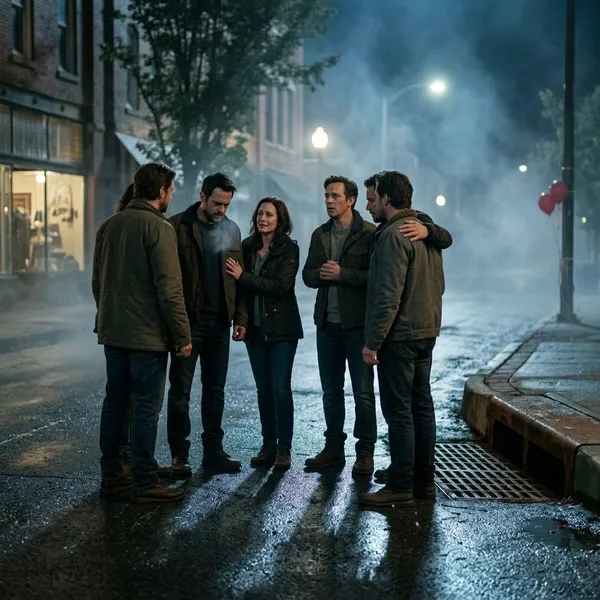
Season 1 ends with a dangerous mistake by General Shaw, a near-disaster involving Derry's children, and a temporary victory led by the surviving kids. The easiest way to read the finale is to separate what is solved from what is not: the immediate escape is stopped, but the thing under Derry is still alive.
General Shaw frees Pennywise from the cage
General Shaw sets the disaster in motion by breaking part of the protective system around Pennywise. He thinks he is removing a threat or taking control of it, but he is really weakening the thing that has kept Pennywise contained.
That matters because Shaw is not written as someone knowingly serving evil. His mistake is more ordinary and more believable: he treats a cosmic horror like a military problem. The finale uses him as a warning about adults in Derry who keep reaching for power, secrecy, or force when the situation actually requires listening to the people who have seen the monster clearly.
Pennywise leads Derry's children to the frozen river
Once the barrier weakens, Pennywise turns the danger into a public nightmare by drawing Derry's children toward the frozen river. The scene is not just about individual victims; it shows how easily he can turn fear into a town-wide wound.
The frozen river also gives the moment a sharp visual meaning. The children are caught between safety and death, while the adults are forced to watch the consequences of what they failed to understand. For a casual viewer, it is the finale's big horror set piece. For a lore-focused viewer, it is another example of Derry creating trauma that the next generation will inherit.
Hallorann holds Pennywise back with the Shine
Hallorann's Shine gives the group a chance, not an automatic win. He can resist Pennywise and slow him down, but the scene makes it clear that psychic power has limits when it is up against something this old and this predatory.
That restraint is useful for the story. If Hallorann could simply destroy Pennywise, the children's choice would not matter. Instead, his role is to hold the door open long enough for other people to act, which fits the finale's larger idea that survival in Derry depends on connection rather than one heroic savior.
The children restore the cage with the dagger
The children are the ones who actually restore the cage. With Hallorann buying time, Lilly, Marge, Ronnie, and Will use the dagger connected to the meteor origin of the evil in Derry, turning the source of the mythology back against Pennywise.
- The dagger supplies the ritual logic: it is not a random weapon, but an object tied to Pennywise's arrival.
- The children supply the emotional logic: they act together even though they are frightened and grieving.
- The result is containment: the barrier returns, but Pennywise is not erased.
Pennywise returns to the sewers
Pennywise returns to the sewers because the cage is restored, not because he has been killed. That is the key distinction in the finale: Derry wins time, not freedom.
The sewer return also keeps the story aligned with the later IT timeline. Pennywise must still be there for the future cycle, so the ending gives Season 1 a victory that feels real without pretending the nightmare is over.
What Pennywise's nonlinear time reveal means
The nonlinear time reveal changes the way Pennywise's actions should be read. He is not only reacting to the present; he appears to understand events across different points in time, including future threats that have not yet happened from Marge's point of view.
That is why his interest in Marge feels so targeted. If Pennywise can see that Richie Tozier will later matter to his defeat, then attacking Marge is not random cruelty. It is an attempt to damage the future before it can arrive.
He sees past and future at once
Pennywise's comments to Marge suggest that human time does not apply to him in a normal way. He can perceive the past and future together, or at least enough of them to use future knowledge as a weapon.
This makes him more frightening than a monster who simply hunts whatever is nearby. A normal predator chooses a victim based on the moment. Pennywise can choose someone because of what their life, family, or future child may one day become.
He already knows how Richie will defeat him
The finale strongly implies that Pennywise already knows Richie Tozier will be part of his eventual downfall. That gives his attack on Marge a defensive edge: he is trying to protect himself from a future he has already glimpsed.
This is a useful way to read the prequel without feeling that the ending is only setting up fan recognition. The audience knows Richie matters later, and now Pennywise may know it too. That turns the past timeline into a struggle over whether the future can still happen as it is supposed to.
He targets Marge to prevent Richie's birth
Marge is strongly positioned as Richie Tozier's future mother, which explains why Pennywise singles her out. If she dies before Richie can be born, one of the people connected to Pennywise's later defeat may never exist.
That detail gives Marge's survival more weight than a normal escape scene. On the surface, she is a teenager trying to live through the night. In the larger timeline, she is also a fragile link between this earlier Derry cycle and the Losers' future fight.
He may try to change history in earlier cycles
The finale leaves room for Pennywise to have tried this before. If he sees across time, earlier Derry tragedies may not all be random feeding cycles; some could be attempts to break families, friendships, or future resistance before they can form.
- For viewers focused on canon: this explains why a prequel can still have stakes when the broad future is already known.
- For viewers focused on theme: it makes Derry's repeated violence feel inherited, not isolated.
- For future seasons: it opens the door to older cycles where Pennywise may be testing ways to rewrite the outcome.
What the Season 1 ending really means
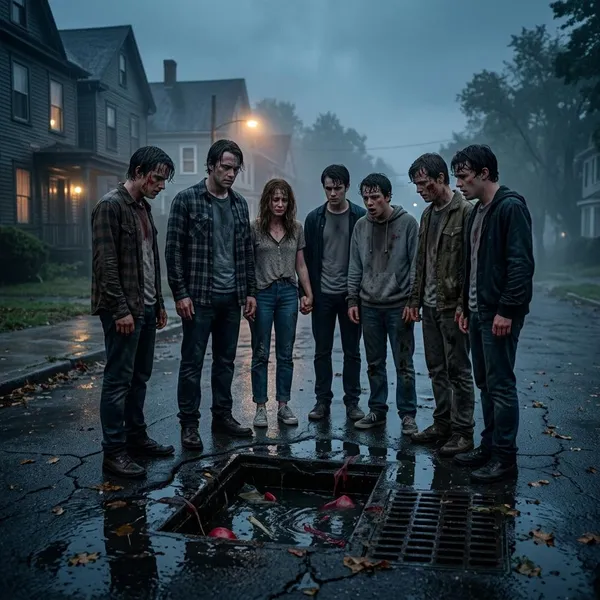
The Season 1 ending is about a limited victory inside a much larger curse. Pennywise is pushed back, the children survive the immediate crisis, and Derry avoids something worse, but the town has not broken the pattern that lets the horror return.
Pennywise is contained rather than destroyed
Containment is the finale's most important rule. Pennywise is trapped again and forced below Derry, but he is still part of the town's future.
A destroyed Pennywise would give the story closure. A contained Pennywise gives it dread. The characters save lives in the present, yet the audience knows Derry is only entering another interval before the evil resurfaces.
Friendship succeeds where fear isolates
Pennywise works best when people are alone, ashamed, or too scared to trust what they have seen. The children survive because they refuse to stay isolated, even when the adults around them fail.
That theme is not just sentimental decoration. It affects the mechanics of the ending: Hallorann cannot do everything, the dagger cannot matter without the children using it together, and no single person has enough power to hold back Derry's evil alone.
Derry's violence repeats across generations
Derry's horror repeats because Pennywise returns, but also because the town keeps responding badly. Adults deny, control, hide, or misread the threat, and children are left to carry the truth.
- Shaw shows institutional failure: authority makes the danger worse by assuming it understands the unknown.
- The children show lived reality: they know the monster is real because they have faced it directly.
- The town shows inherited damage: even when a cycle ends, fear and silence remain for the next generation.
The past can threaten the future
The Marge twist makes the finale's time logic personal. Pennywise is not only haunting Derry's past; he is using the past as a place where the future can be wounded.
The post-credits connection to young Beverly Marsh pushes that idea even further. Her appearance is not just a familiar name being dropped into the story. It shows that the pain and violence of earlier Derry cycles are still shaping the world that the later IT story will enter.

Conclusion
The ending works best when read as a temporary win with long shadows: Pennywise is back in the sewers, but he is not gone, and his knowledge of the future makes him more dangerous than a simple repeating monster. Marge's survival, Richie's future role, Hallorann's intervention, and Beverly's post-credits appearance all point to the same idea: Derry's past is not finished with the people who come after it.