
If you want the bridgerton season 4 ending explained answer without wading through every subplot: Benedict and Sophie end the season married, Araminta's control over Sophie collapses, Queen Charlotte gives the match social cover, and the final Whistledown twist keeps Mayfair from feeling settled for long.

How Bridgerton Season 4 ends
The finale closes Benedict and Sophie's romance with a real public resolution, not just a private promise. The important order is simple: Benedict learns who Sophie really is, Araminta's scheme falls apart, the will proves Sophie was cheated, and Queen Charlotte's approval turns a risky match into one the ton can accept.
If you are only checking whether the romance survives, the answer is yes. If you are watching for Season 5 setup, the more important detail is that the finale solves Benedict's love story while reopening the Whistledown mystery.
Benedict learns Sophie is the Lady in Silver
Benedict realizes Sophie is the Lady in Silver when the clues finally line up, especially the necklace connected to his memory of the masquerade. The reveal matters because it ends the split between the fantasy he has been chasing and the real woman he has already come to love.
That is the point where Benedict's story changes tone. He is no longer admiring an impossible image from a ball; he has to decide whether he can love Sophie with all the complications attached to her name, class, and past.
Sophie escapes Araminta's false charge
Araminta's false theft charge is not just a dramatic obstacle. It shows how easily someone with status can turn society's rules against someone with fewer protections.
For Sophie, the danger is practical rather than romantic: if the accusation sticks, she loses freedom, reputation, and any chance of being heard fairly. Benedict's role becomes more useful here because love finally turns into action, not just longing.
Lord Penwood's will exposes the stolen dowry
Lord Penwood's will is the proof Sophie needs. It shows she was not simply abandoned without support; she was meant to receive an inheritance, and Araminta hid that truth for her own advantage.
This is the finale's cleanest piece of leverage. Feelings alone would not persuade Mayfair, but a will changes the conversation from "unsuitable match" to "documented injustice."
Queen Charlotte approves the match
Queen Charlotte's approval removes the final public barrier. In the world of Bridgerton, a couple can love each other deeply and still be trapped if the right people refuse to recognize the match.
Her approval does not make the ton fair. It simply makes opposition less useful. Once the queen allows the story to be accepted, other families have a reason to fall in line instead of turning Benedict and Sophie into permanent scandal.
Benedict and Sophie marry at My Cottage
Benedict and Sophie do get married, and the My Cottage setting makes the ending feel personal rather than purely ceremonial. It is the place where their relationship can breathe away from the performance of Mayfair.
The wedding works because it gives viewers two kinds of closure at once: Sophie is no longer hidden or powerless, and Benedict is no longer drifting between desire and indecision.
Why Benedict and Sophie can marry
Benedict and Sophie can marry because the finale solves four separate problems, not one. They need emotional certainty, proof of Sophie's rightful position, a way to neutralize Araminta, and social permission strong enough to quiet the ton.
The will proves Sophie had an inheritance
The will proves Sophie had a legitimate financial claim all along. That changes how everyone can talk about her, because she is no longer only the mistreated young woman in Araminta's house; she is someone whose father intended to provide for her.
For a viewer focused on the romance, the dowry may seem like a technical detail. In the ton, it is much bigger than that. It gives Sophie standing, makes Araminta's story collapse, and gives the Bridgertons something concrete to use in her defense.
Araminta's theft is exposed
Araminta's downfall comes from overplaying her hand. The false accusation puts attention on Sophie at exactly the moment Araminta needs her hidden, and the will turns years of cruelty into something provable.
- Before the will: Araminta controls the household narrative.
- After the will: Sophie has evidence, not just a painful memory.
- For Araminta: reputation becomes a weakness instead of a shield.
A Penwood cover story restores Sophie's status
The Penwood cover story is the compromise that lets society accept Sophie without admitting how ugly the full truth is. It is not perfect justice, but it is believable within Bridgerton, where a polished explanation can matter almost as much as the facts.
If you wanted a completely modern moral victory, this part may feel frustrating. For Sophie, though, the practical result is huge: she gains protection, a public identity, and a way to marry Benedict without being treated as a secret.
Queen Charlotte removes the social barrier
Queen Charlotte does what only she can do in this setting: she makes the match socially survivable. Her approval gives everyone else permission to stop objecting, or at least to stop objecting loudly.
The key is not that the queen magically fixes class prejudice. The key is that she changes the risk calculation. Once she accepts Benedict and Sophie, opposing them becomes less fashionable and less safe.
What happens to Lady Whistledown
The Whistledown ending is the finale's sharpest setup for what comes next. Penelope steps away from the role, Queen Charlotte appears to accept that choice, and then a new pamphlet proves the voice of Mayfair gossip has not disappeared.
For viewers who mostly care about Benedict and Sophie, this is the cliffhanger to remember. Their marriage gives the season warmth; the new Whistledown makes sure the next season still has suspicion, secrets, and public damage waiting in the wings.
Penelope retires from writing the papers
Penelope retires because the old version of Lady Whistledown cannot work the same way once her identity is public. The danger, thrill, and secrecy that made the papers powerful have changed.
Her decision also lets her grow beyond the one secret that defined so much of her story. She is not losing her intelligence or voice; she is choosing not to keep living through that particular mask.
Queen Charlotte accepts her decision
Queen Charlotte's acceptance feels less like forgiveness and more like practicality. Penelope is no longer a hidden opponent, so continuing the old chase would only repeat a conflict the show has already resolved.
A new Whistledown pamphlet appears
The new pamphlet is the warning shot. Someone else has picked up the power Penelope put down, which means Mayfair's secrets are not safe just because the original writer has stopped.
This is a clever move for the series because it restores uncertainty. A known Penelope could comment on society, but an unknown Whistledown can threaten it.
The new writer's identity remains hidden
The new writer's identity stays hidden, and that is the whole hook. The mystery puts viewers back in the position they were in during the early seasons: watching conversations, rivalries, and quiet resentments for clues.
If Season 5 leans into that mystery, the new Whistledown could be an ally, a sharper enemy, or someone using gossip for a very personal agenda. The finale wisely does not narrow that down too soon.
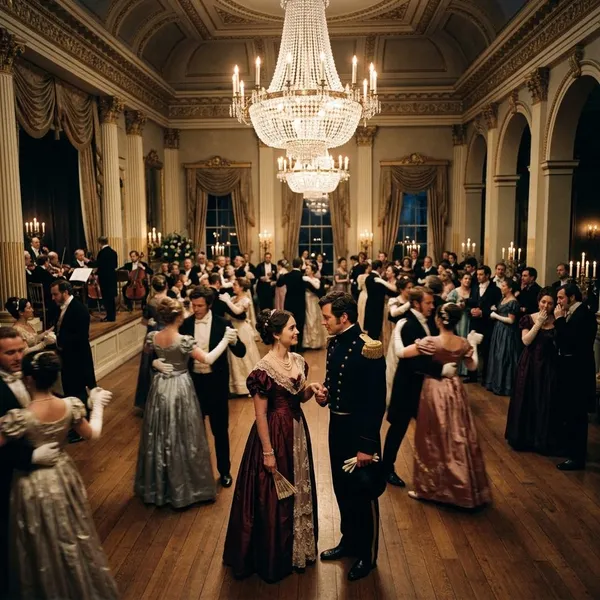
What the Season 4 ending really means
The ending means Benedict and Sophie's love only becomes possible when both of them stop living inside other people's stories. Benedict gives up the comfort of fantasy, while Sophie refuses to accept a future where she is loved privately but diminished publicly.
It also leaves Mayfair in a more unstable place than the wedding scene suggests. One couple reaches safety, but the rules that nearly kept them apart are still there, and the new Whistledown can turn those rules into weapons again.
Benedict trades fantasy for commitment
Benedict's real ending is not "he finds the Lady in Silver." It is "he chooses Sophie when the fantasy becomes complicated." That choice is what makes the romance feel earned.
Earlier, he can afford to be enchanted by mystery. By the finale, enchantment is not enough. He has to risk reputation, family comfort, and the easy version of himself that avoids hard decisions.
Sophie gains love without losing herself
Sophie's happy ending works because she does not have to shrink herself to receive it. She gets love, but she also gets recognition, security, and the truth about what was taken from her.
That matters especially for viewers who were worried the season would solve her pain by simply handing her a Bridgerton husband. The stronger point is that Sophie's worth is established before the wedding, not created by it.
Their marriage challenges the rules of the ton
The marriage challenges Mayfair's rules, but it does not destroy them. Sophie is accepted through inheritance proof, a managed story, and royal approval, which shows how much the system still depends on status and presentation.
That tension is what keeps the ending from feeling too neat. Benedict and Sophie win, but their win depends on rare protection. Someone without a Bridgerton connection or the queen's approval would not have the same path.
The happy ending creates new conflicts for Mayfair
The wedding closes Benedict and Sophie's central conflict, but it leaves the wider world restless. A new Whistledown means fresh exposure, Francesca's story has emotional weight still unresolved, and Eloise seems closer to a shift in how she sees love and independence.
So the ending has two moods at once: satisfying if you came for Benedict and Sophie, unsettled if you are looking at the future of the ton. That balance is why the finale feels like a conclusion and a reset.
Conclusion
Benedict and Sophie's ending is happy, but it is not simple: they can marry because truth finally becomes useful, Araminta loses control of the story, and Queen Charlotte gives society permission to accept what love alone could not protect. The smartest final twist is that Mayfair does not stay peaceful after the wedding, because a new Whistledown means the next scandal is already being written.