
The clean answer to the zero day ending explained question is that the attack was not a foreign strike: it was planned by powerful American insiders, and George Mullen exposes them even after learning his daughter Alexandra was involved. The finale is less about solving the mystery than watching George decide whether truth matters more than family, legacy, and political calm.
How Zero Day ends
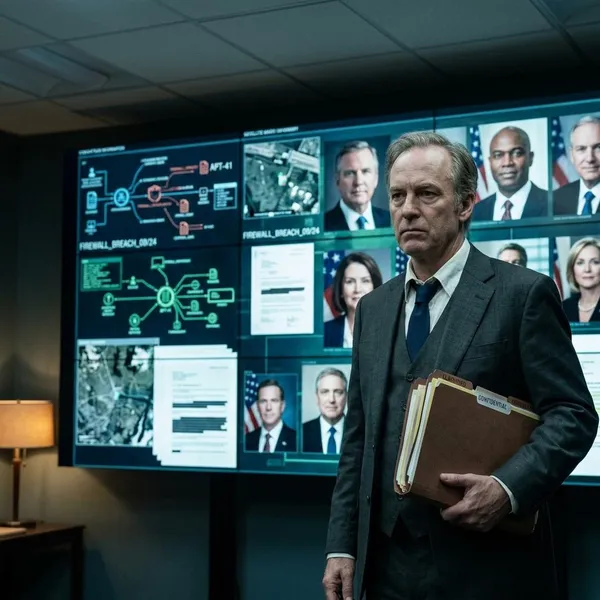
Zero Day ends with George Mullen standing in front of Congress and refusing to repeat the safe, official version of events. By that point, he knows the attack came from inside the country's own political and tech elite, not from the foreign enemy the public had been led to fear.
The finale works because George is not choosing between comfort and danger in the abstract. He is choosing between protecting Alexandra, preserving a fragile national story, and telling citizens that the people claiming to save democracy had secretly attacked it.
Alex confesses her role in the attack
Alex's confession turns the conspiracy from a national scandal into George's personal crisis. She admits she was part of the plan, which means George is no longer exposing only political enemies; he is exposing his own daughter.
Her reasoning is important, but it does not excuse her. Alex believes the country is too broken for normal politics to fix, and that belief lets her accept mass harm as a tool for national renewal. That is the moral trap the finale wants viewers to catch: she sounds idealistic, but her idealism has become permission to kill.
Dreyer urges George to hide the truth
Dreyer's argument is that the country cannot survive the full truth. If Americans learn that insiders engineered the attack, he believes public trust may collapse completely.
That makes his pressure on George more dangerous than a simple threat. Dreyer frames concealment as responsibility, as if citizens are too unstable to handle reality. George's rejection of that idea is the point: democracy cannot be protected by secretly deciding what the public is allowed to know.
George begins with the approved story
George starts by following the prepared version, which makes the scene more tense than if he had entered the room already resolved. For a moment, it looks as if grief, pressure, and fear of national chaos may win.
That hesitation matters. The show lets him feel the cost before he acts, so the reversal does not play like a neat speechwriter moment. It feels like a man deciding, almost too late, that a controlled lie would make him part of the attack's final cover-up.
George exposes Alex and the other conspirators
George abandons the script and publicly names the conspiracy, including Alexandra and Speaker Dreyer. He reads Alex's confession and turns a managed hearing into a public reckoning.
George burns his memoir and walks away alone
After the speech, George burns his memoir because the legacy he tried to write has been replaced by the choice he just made. The book would have let him shape his life into a controlled narrative; the speech gives him something harsher and more honest.
His final solitude keeps the ending from becoming comforting. George keeps his integrity, but he does not keep the life he had before. The show treats that as a victory, but not as a happy ending.
Why the conspirators launched the attack
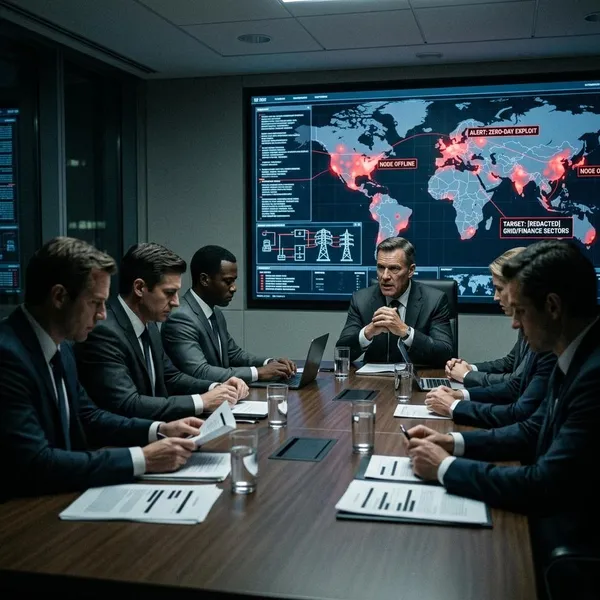
The conspirators launched the attack because they believed American politics had become permanently stuck. They saw deadlock, public distrust, and institutional weakness, then convinced themselves that a terrifying national crisis could force unity.
They wanted to end political deadlock
Ending deadlock is their stated political excuse. They believe the normal democratic process has become too slow, divided, and ineffective to solve the country's problems.
The mistake is not only that they are impatient. It is that they treat frustration with democracy as proof that democracy should be bypassed. In the show's moral logic, that is the first step from reformist language into authoritarian action.
They hoped fear would unite the country
Fear is not an accidental side effect of the attack; it is the tool. The conspirators expect a shocked public to rally around authority, accept emergency decisions, and stop fighting long enough for leaders to regain control.
- Short-term goal: create panic big enough to override partisan division.
- Political goal: make institutions look necessary again.
- Moral failure: use civilian suffering as a mood-management strategy.
They believed a crisis could restore trust
The conspirators think trust can be engineered: create disaster, manage the response, then let the public feel rescued by the same system that secretly caused the damage. It is a cynical version of national healing.
George's final speech destroys that logic. Trust built on deception is not really trust; it is obedience produced by hidden manipulation.
They treated civilian deaths as a necessary cost
This is where their argument collapses completely. Once thousands of civilian deaths become an acceptable price for a political reset, their language about unity and renewal becomes meaningless.
The show is not saying the conspirators enjoy violence. It is saying something colder: powerful people can become terrifying when they believe history has given them permission to sacrifice strangers.
What Proteus is and how it worked
Proteus is the fictional weapon system behind the attack. It begins as a classified NSA neurological weapon, then gets adapted into a wider cyber operation that can move through ordinary consumer technology.
The key point is not that every technical detail is realistic. The point is that Proteus joins two fears: hidden government weapons and everyday connected devices. Phones, apps, updates, and nearby devices become part of a national attack surface.
| Element | What it means in the finale |
|---|---|
| NSA origin | The danger comes from inside the security state, not only from outside enemies. |
| Neurological effect | George's hallucinations may be tied to interference, though the show leaves some ambiguity. |
| Panoply app | A trusted platform gives the weapon reach. |
| Connected devices | Normal digital habits help the attack spread. |
Where the finale leaves the main characters
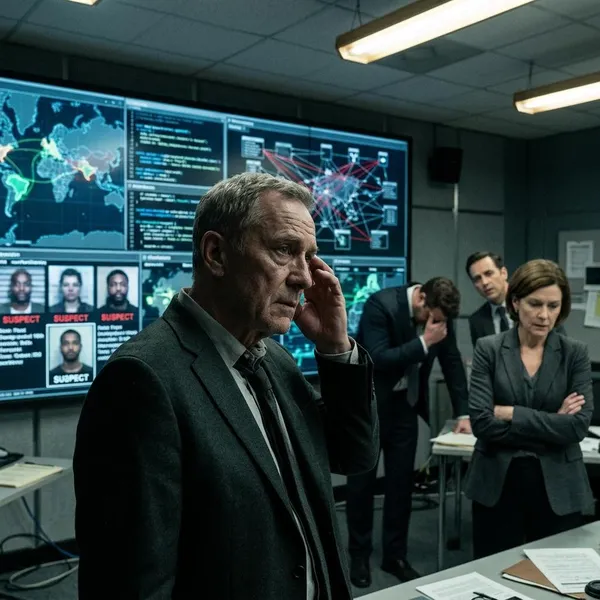
The ending solves the conspiracy but does not clean up the damage. George's speech breaks the official story open, and every major character is left dealing with consequences rather than closure.
That is a smart choice for this kind of political thriller. A tidier ending with arrests, reconciliations, and restored public confidence would weaken the point. The finale stops where the truth has been spoken, not where the country has been repaired.
Alex is publicly exposed
Alex is exposed by her father in the most public way possible. Once George reads from her confession, there is no private route left for the family to manage the scandal.
Her exposure is personal, legal, and symbolic. She becomes proof that the conspiracy was not just a hidden operation by faceless officials; it reached into George's home and into the next generation of political power.
Dreyer loses control of the official story
Dreyer's real defeat is losing control over the narrative. He wanted the truth narrowed into something survivable, with enough disclosure to calm the public and enough concealment to protect the system.
George takes that tool away from him. Once the names and motives are spoken openly, Dreyer can no longer pretend the cover-up is a responsible form of leadership.
Sheila's marriage to George becomes uncertain
Sheila's marriage to George is left damaged, not formally resolved. The finale does not show a clean separation, but it makes clear that George's choice has blown apart what remained of their family's private life.
Her pain is not treated as selfish. From George's side, exposing Alex is morally necessary. From Sheila's side, it may feel like losing a daughter in public after the family has already carried unbearable grief. The ending lets both truths sit together.
George keeps his integrity but loses his family
George ends with the one thing he can still control: his refusal to lie. He cannot undo the deaths, save Alex from exposure, or guarantee that the country will heal.
- What he keeps: moral clarity.
- What he loses: family stability and personal comfort.
- What remains uncertain: whether the public truth will lead to real institutional repair.
What the memoir and final scene mean
The memoir and final image explain the emotional meaning of the ending. George had been trying to write a version of his life that could be shaped, edited, and left behind on his own terms.
The speech replaces the legacy George tried to write
The speech becomes George's real legacy because it shows who he is under maximum pressure. A memoir could explain his choices, soften his regrets, or arrange his life into a coherent shape. The speech does something more final: it reveals the line he will not cross.
Burning the memoir shows acceptance
Burning the memoir shows George accepting that he cannot control how history will remember him. He has chosen truth over reputation, and the manuscript no longer has the power it once did.
There is grief in the act, too. He is not triumphantly destroying vanity; he is letting go of the version of himself that still hoped for order, explanation, and a manageable ending.
His isolation reveals the cost of telling the truth
George's isolation is the price of refusing the cover-up. The finale does not pretend that truth instantly fixes broken systems or broken families.
If someone watches the ending expecting a reward for honesty, this is the scene that pushes back. George is right, but being right does not protect him from loneliness.
The final image offers moral victory without reward
The last image gives George a moral victory, not a happy one. He has not saved his family from pain or restored the country to innocence. He has simply refused to become another person helping the lie survive.
That is why the ending lingers. George walks away with integrity, and the show treats that as meaningful even when it looks painfully insufficient.

Conclusion
Zero Day ends with George choosing the truth when every easier option asks him to protect a lie. The attack was planned by insiders who believed fear could repair the country, but George's final act rejects that bargain completely: he loses the comfort of family and legacy, yet keeps the only thing the conspirators gave up long before the finale began.