
The silo season 2 ending explained in the simplest way: Juliette stops Silo 18 from walking into a mass death, Mechanical beats Bernard's forces, and the finale reveals that Bernard was never the top of the system. The airlock fire leaves Juliette and Bernard's fates unresolved, while the vault, the Safeguard, and the final flashback point to a much bigger power structure beyond one silo.
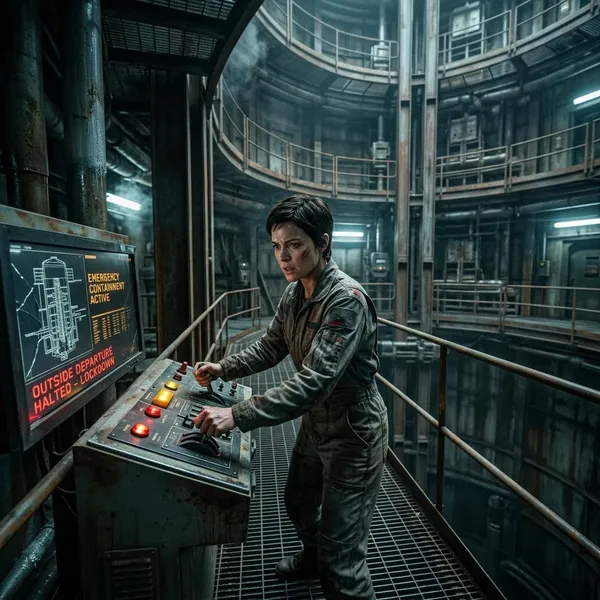
How Juliette stops Silo 18 from going outside
Juliette's return matters because she brings the one thing nobody inside Silo 18 has anymore: proof. The residents are right to doubt Bernard and IT, but they are about to make the wrong leap from"we were lied to" to"the outside must be safe." Juliette cuts through that panic by showing them the surface is still deadly.
- She survives the trip back. That proves other silos exist and that she knows more than anyone still inside.
- She uses the camera. Cleaning becomes a warning, not obedience.
- She stops the crowd's worst choice. The rebellion may be justified, but rushing outside would still kill people.
She returns from Silo 17
Juliette coming back from Silo 17 changes her from a runaway threat into the only credible witness Silo 18 has. She has seen another silo, crossed the surface, and survived long enough to understand the danger more clearly than the rebels or Bernard.
That is why her return is not just a heroic entrance. She is acting from hard experience, not hope. Silo 17 showed her what collapse looks like, so she knows Silo 18 is close to turning a political uprising into a disaster.
She cleans the outside camera
The cleaning is a reversal of one of the show's oldest rituals. Earlier cleaners were used to reinforce the silo's control system; Juliette uses the same act to break through it. She does not clean because she believes the old lie. She cleans because the people inside need a clear view of the truth.
She displays a warning message
Her warning works because it is simple and visible. In a normal debate, Bernard might spin the truth and the crowd might argue over rumors. But a message from Juliette, standing outside in real danger, is much harder to dismiss.
She proves the outside is still deadly
The finale's key correction is that both truths can exist at once: Silo 18's leaders lied, and the world outside can still kill. That distinction is easy to miss if you are watching mainly for the rebellion, but it is the reason Juliette's return is so important.
For viewers focused on the survival question, the warning is not "trust the old system." It is "do not confuse exposed lies with a safe surface."That mistake is exactly what Juliette prevents.
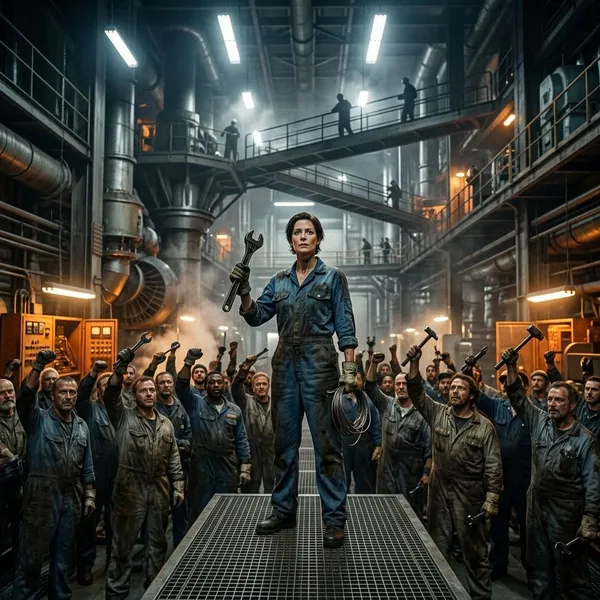
How Mechanical wins the rebellion
Mechanical wins because it understands the silo as a physical system, not just a political one. Bernard still has authority, weapons, and surveillance, but Mechanical knows movement, bottlenecks, signals, and timing. That difference decides the rebellion.
The victory is not a clean takeover. It is a chain of small advantages: false information, a trapped raid, destroyed access, and people inside the old order finally refusing to keep obeying.
Walker sends false signals
Walker's trick works because Bernard expects surveillance to give him control. Mechanical turns that habit against him by feeding him information he is likely to believe. It is a quiet, practical kind of sabotage: let the watcher think he is seeing the truth, then make him react to the wrong threat.
Bernard's raiders enter a trap
Bernard's raiders walking into a trap shows how far his authority has slipped. He still thinks fear will make the rebels predictable, but Mechanical uses his confidence against him.
Dr. Nichols destroys the stairs
Dr. Nichols destroying the stairs is one of the finale's harshest turning points. The stairs are not just scenery; they are how control moves through the silo. Break them, and Bernard's ability to respond quickly breaks with them.
The episode strongly frames his act as a sacrifice. Unless a later season changes that reading, the most natural interpretation is that Juliette's father dies helping Mechanical slow Bernard's forces.
Billings turns against Bernard
Billings turning against Bernard matters because he is not a natural rebel. He believes in order, law, and procedure, which makes his break with Bernard more damaging to IT than another angry speech from Mechanical would be.
His choice tells the audience that Bernard has lost more than a tactical fight. He has lost moral cover. When someone like Billings can no longer defend the system, the old version of authority is finished.
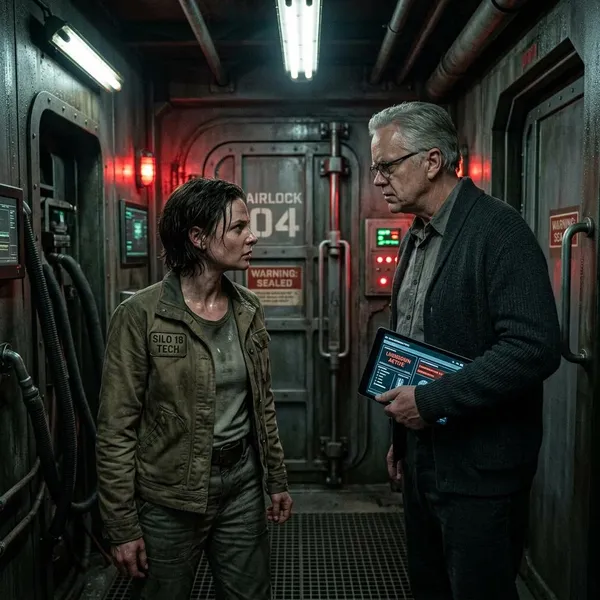
What happens to Juliette and Bernard in the airlock?
Juliette and Bernard end the season trapped in the airlock as purge flames fill the chamber. The finale does not confirm either death, which is why the scene works as a cliffhanger rather than a final answer.
Bernard prepares to leave the silo
Bernard moves toward the exit after realizing his authority was always limited. The Safeguard and the vault's deeper intelligence expose him as a manager inside a larger machine, not the person truly in control.
That makes his attempt to leave feel less like a brave escape and more like collapse. He has spent years justifying terrible choices as necessary leadership, only to learn that the system can still overrule him.
Juliette pulls him back inside
Juliette pulling Bernard back is not mercy, and it is not simple revenge either. Bernard still knows things she needs to understand. Letting him walk out would remove a dangerous man, but it could also destroy one of the few living links to the Safeguard and the deeper rules behind Silo 18.
The airlock door closes behind them
Once the door closes, the scene shifts from argument to mechanism. That is a very Silo kind of horror: people can still fight, plead, or reason, but the machinery keeps following a sequence they did not choose.
The sealed airlock also traps the two main worldviews of the season together. Bernard represents controlled truth and obedience; Juliette represents exposed truth and resistance. Neither gets an easy exit.
The purge flames surround them
The flames are most likely part of a purge or decontamination process. Juliette's suit gives her the better chance, while Bernard appears far more vulnerable, but the episode stops short of showing a confirmed death.
What happens to Sims, Camille, and Lukas?
Sims, Camille, and Lukas end the season in three very different kinds of danger. Sims gets closer to power just as that power is exposed as weaker than he thought. Lukas learns enough to want out. Camille, unexpectedly, becomes the person the vault seems willing to keep close.
This subplot is important because it shows that the next fight will not be only Mechanical versus IT. Power inside Silo 18 may split between official titles, public trust, technical knowledge, and whatever the Algorithm wants.
Sims becomes Bernard's shadow
Sims is elevated into Bernard's orbit, but it does not feel like a victory. He has chased proximity to power for a long time, and now he reaches it just as Bernard's position is falling apart.
That is the trap in his storyline. If you are watching Sims as an ambitious political player, his promotion looks good for about a second. If you are watching the larger system, it looks more like he has stepped closer to the blast radius.
Camille is allowed into the vault
Camille being allowed into the vault is one of the finale's clearest signals that public rank is not the only thing that matters. Sims and his son are pushed out, while Camille is permitted to stay.
The choice suggests the vault intelligence sees something useful in her: patience, restraint, social awareness, or a kind of influence Sims does not have. She has not chased authority as loudly as he has, which may be exactly why she is more interesting to the system.
Lukas walks away from his role
Lukas appears unable to keep serving after learning what the Safeguard means. This is not just another secret file or hidden room. It is proof that an entire silo can be erased by a power above local leadership.
His reaction separates him from Bernard. Bernard learned to live inside terrible knowledge; Lukas seems shaken by it. That makes him less useful as a loyal functionary, but potentially more important as someone who may refuse to bury what he knows.
The Algorithm chooses Camille over Sims
The Algorithm appears to favor Camille because it may value control through influence rather than force. Sims is direct, ambitious, and status-driven. Camille is quieter, more observant, and better at reading people.
That does not mean Camille is safe. Being chosen by the Algorithm may be less like receiving a promotion and more like being pulled into the system's private agenda.
What does the ending set up next?
The ending sets up Season 3 around three pressure points: Juliette versus the Safeguard, Silo 18's unstable leadership, and Camille's connection to the Algorithm. The final flashback also widens the story by pointing back to the pre-silo world, where political decisions and fear of catastrophe may have shaped the entire system.
Juliette may challenge the Safeguard
Juliette is the obvious character to challenge the Safeguard because she combines technical skill with direct experience outside Silo 18. She has seen enough to know the problem is bigger than Bernard, but she is still practical enough to look for mechanisms, weak points, and ways to interfere.
That matters because a local rebellion is not enough if a hidden system can still wipe out a silo. The next stage of the story has to move from exposing lies to fighting the machinery behind them.
Silo 18 faces a power struggle
Silo 18 is left with no clean authority. Mechanical has momentum, Billings has moral credibility, Sims has a claim through Bernard, Camille may have hidden backing, and ordinary residents now know they were manipulated.
Camille gains the Algorithm's attention
Camille's new position may become one of the most important threads going forward. If the Algorithm is selecting human intermediaries, she could become a bridge between public life in the silo and the hidden intelligence managing it.
There are several ways that could play out: she might cooperate, manipulate the opening for herself, or eventually realize she is being used. The important point is that she is no longer just Sims' wife standing near power. The system has noticed her directly.
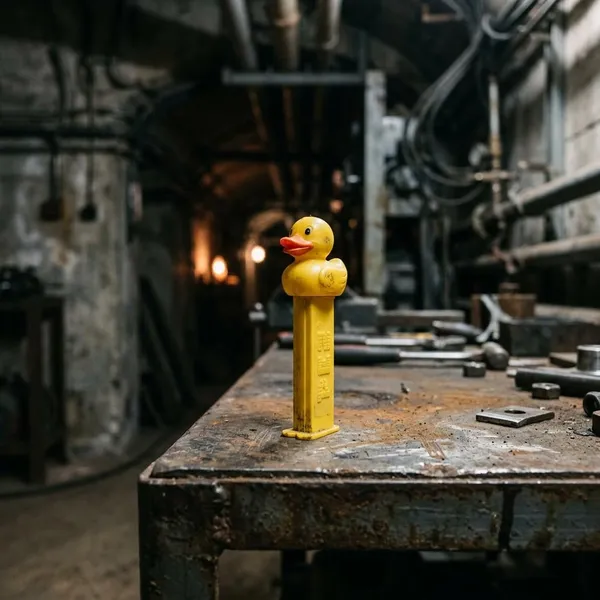
The flashback adds a separate layer to that setup. By jumping back hundreds of years to a recognizable political world, the finale suggests the silos were not born from simple survival alone. They likely came from emergency planning, secrecy, and decisions made before the residents ever went underground.
Conclusion
Season 2 ends by making one practical point very clear: surviving Bernard is not the same as escaping the system. Juliette saves Silo 18 from one immediate mistake, but the Safeguard, the Algorithm, and the flashback all suggest the real threat sits above any single leader. The next fight is no longer just about who controls the silo; it is about whether anyone inside can understand the rules well enough to break them.