
The squid game season 2 ending explained answer is brutal but simple: Gi-hun survives, the rebellion fails, and Jung-bae is killed in front of him so Front Man can break him instead of just defeating him. The finale is not meant to feel like a clean victory or a normal cliffhanger; it leaves Gi-hun alive in the worst possible emotional state, while the games keep running.
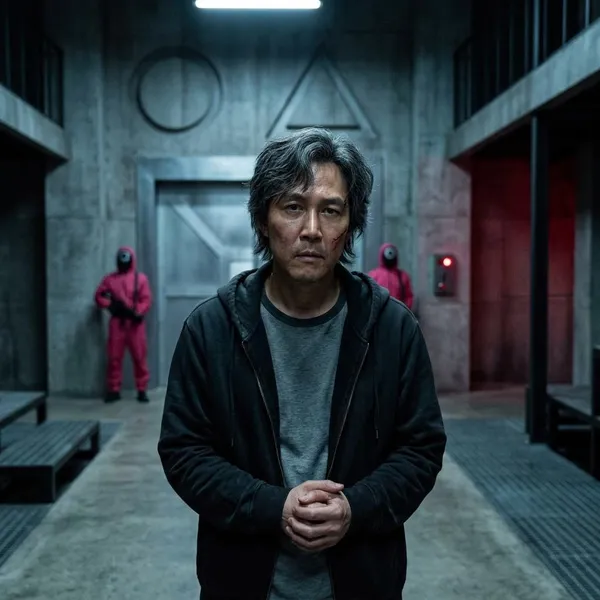
What happens in the Season 2 finale?
The finale turns the player dorm chaos into a real armed uprising. For a short stretch, Gi-hun's side gains weapons, moves through the facility, and looks closer to the people running the game than anyone has been before.
That is the part that can make the ending feel confusing on a first watch: the rebellion is not pointless, but it is never stable. If you are trying to separate the action from the meaning, the key order is simple: the players gain guns, Gi-hun pushes toward the control room, ammunition runs out, Front Man sabotages the revolt, and Gi-hun is forced to watch Jung-bae die.
The players seize the guards' weapons
The rebellion starts with one of the players' few clean tactical wins. During the night violence, Gi-hun and the others use the guards' routine against them, ambush them at close range, and take their weapons.
That moment matters because it briefly changes the players from victims into an active threat. Still, it is only a temporary advantage. They get guns, but not the training, radios, map control, spare ammunition, or discipline that the guards already have.
Gi-hun leads the rebels toward the control room
Gi-hun does not treat the weapons as a way to hide longer. He wants to reach the control room because, in his mind, that is where the game can actually be stopped rather than merely survived.
For viewers who expected an escape attempt, this is the important distinction: Gi-hun is not trying to save only himself. He is trying to damage the system from inside. The problem is that he understands the moral target better than the physical battlefield, and the facility is built to turn every hallway into a trap.
Dae-ho fails to return with ammunition
Dae-ho's failure becomes the point where the uprising starts to lose its shape. He is sent back to collect ammunition from fallen guards, but the violence, bodies, and pressure overwhelm him before he can return.
Front Man turns against the rebels
Front Man's betrayal is the decisive move. While still hiding behind his Player 001 identity, he breaks away with rebel players, kills them, and helps restore the guards' advantage at exactly the moment Gi-hun's group needs support.
- Tactically, he removes backup and repairs the guards' control.
- Emotionally, he proves that Gi-hun trusted the wrong person.
- Thematically, he turns solidarity into a weapon against Gi-hun.
That is why the twist lands harder than a normal double-cross. Front Man is not only stopping a rebellion; he is trying to teach Gi-hun that trust itself is a weakness.
Gi-hun and Jung-bae are forced to surrender
Once the rebels are low on bullets, cut off from backup, and surrounded, Gi-hun and Jung-bae have no real route left. The uprising ends with surrender, not because the players never had a chance, but because every support holding their chance together has been removed.
Front Man then kills Jung-bae in front of Gi-hun. Gi-hun survives, but that survival is part of the punishment: he has to live with the failure, the guilt, and the knowledge that his closest friend was used to break him.
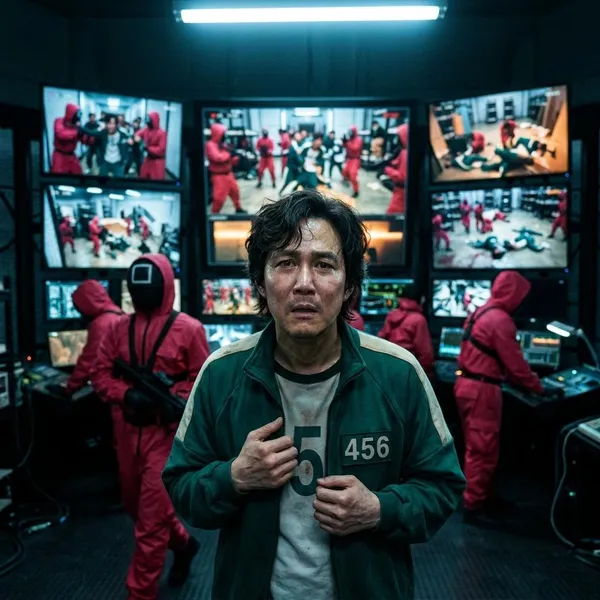
Why does the rebellion fail?
The rebellion fails because Gi-hun's side wins the first surprise but cannot sustain control. Their plan depends on momentum, trust, and ammunition. All three collapse almost at the same time.
The rebels quickly run low on ammunition
Capturing guns does not give the players a supply chain. Every burst of fire costs them something they cannot easily replace, while the guards can wait, reposition, and force longer exchanges.
This is the first practical reason the rebellion feels doomed. The players can borrow the guards'power for a few minutes, but they never take over the system that supports that power.
Dae-ho freezes while collecting supplies
Dae-ho fails because the task is simple only on paper. Collecting ammunition means walking back through fresh violence, searching bodies, and returning while people are dying because of every delay.
That detail matters if you are judging whether he is a coward or a traitor. The show frames him more as someone who breaks under pressure. His failure is still disastrous, but it comes from fear rather than intent.
Front Man kills the backup team
Front Man removes the rebellion's backup from inside the group. By killing the players with him and faking the situation over the radio, he leaves Gi-hun's side weaker while the guards regain coordination.
The sharper point is that he does not need to overpower everyone directly. He only needs to break the links between them. Once Gi-hun can no longer trust what is happening around him, the rebellion loses more than manpower; it loses its sense of direction.
The guards regain control of the facility
The guards retake the facility because the environment favors them from the start. They know the layout, have communication channels, and can close space methodically once the players stop advancing.
- The players have urgency, but the guards have procedure.
- The players have captured weapons, but the guards have the building.
- The players need a fast breakthrough, while the guards only need to contain them.
This is also why the ending does not say Gi-hun was foolish to resist. It says the game is designed to survive both panic and revolt.
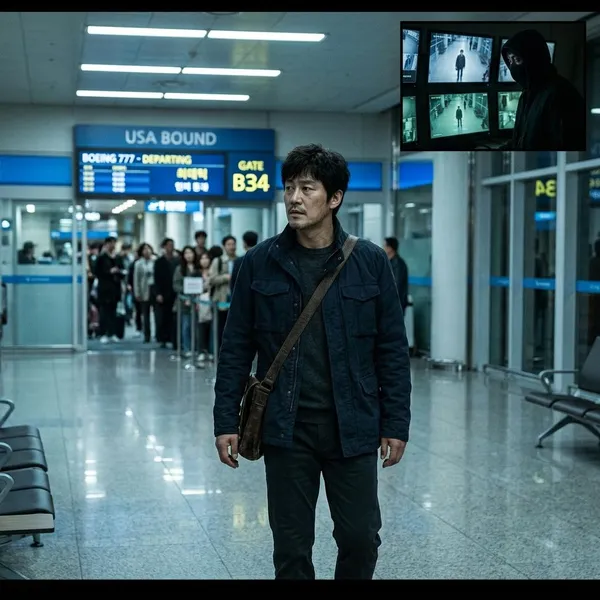
What does the mid-credits scene mean?
The mid-credits scene shows that the game system is still alive after the rebellion. Young-hee appears with a second doll, and the red-and-green traffic-light imagery points toward another version of a familiar deadly game.
Young-hee appears beside a second doll
Young-hee's return immediately connects the scene to Red Light, Green Light, but the second doll suggests the next version may not be a simple repeat. The image signals escalation: the game is recognizable, but the rules may have evolved.
That matters for anyone thinking ahead to Season 3. Players who understand the old challenge may not be safe if the organizers have added a second watcher, changed the rhythm, or created a new way to catch movement.
The traffic lights hint at a new game
The red and green lights are the clearest visual clue that movement rules will matter again. The scene does not give the full rulebook, so it is better not to overstate the exact mechanics.
What it does suggest is more important: the game adapts. If players learn from past rounds, the people running the games can change the setup to make old survival instincts less reliable.
The game system remains fully active
The bleakest meaning of the mid-credits scene is that the rebellion did not shut down the machinery. The facility can still stage games, use its symbols, and prepare another round.
For a viewer watching only for plot answers, this confirms the stakes going into Season 3. For a viewer watching for the show's larger point, it is even darker: the system can absorb a violent uprising and continue almost as if it were another scheduled disruption.
The scene leads directly into Season 3
The scene is not a random bonus tease. It connects Gi-hun's emotional defeat to the next stage of the games, with Front Man temporarily ahead and the organization still functioning.
That creates two immediate questions for Season 3: whether Gi-hun can recover after Jung-bae's death, and whether he can find a smarter way to attack the system than voting or armed revolt. The ending leaves both unanswered on purpose.
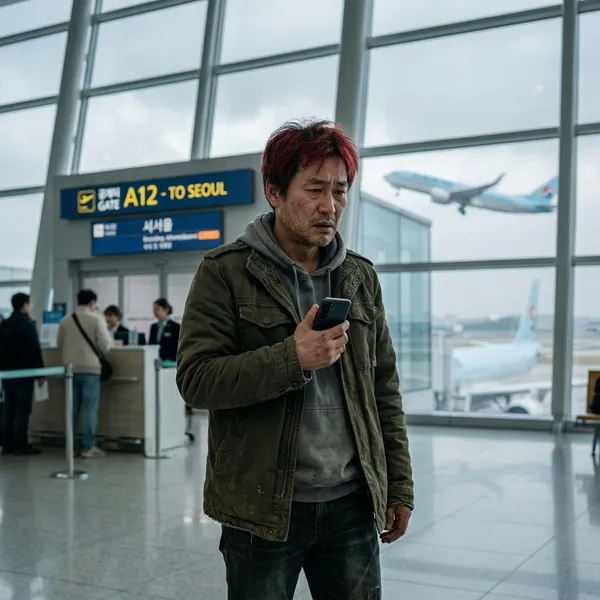
What does the Season 2 ending really mean?
The real meaning of the ending is that Gi-hun loses the moral battle for now. He still believes people can choose decency under pressure, but Season 2 keeps showing him how easily desperation, fear, and manipulation can bend those choices.
That is why the ending feels heavier than a simple "the hero failed" twist. If you are watching for character meaning rather than plot mechanics, the finale is about Front Man trying to make Gi-hun accept his worldview: that hope is naive, trust is exploitable, and resistance only creates more pain.
Gi-hun's faith in people reaches its lowest point
Gi-hun enters the season believing he can return with purpose and save others from the game. By the end, voting has failed, his outside rescue hopes have not stopped the operation, the rebellion has collapsed, and Jung-bae has been executed in front of him.
That sequence attacks every layer of his belief. It is not just one bad outcome; it is a pileup of failures that makes him question whether his faith in people can survive the world the games reveal.
Front Man wins their moral battle for now
Front Man's victory is not only tactical. Killing Jung-bae while sparing Gi-hun is a psychological choice, meant to leave Gi-hun alive with the lesson Front Man wants him to learn.
The cruel part is how personal it is. Front Man has watched Gi-hun up close as Player 001, learned how he builds trust, and then used that trust against him. He is trying to defeat Gi-hun's conscience, not just his plan.
The system survives both voting and violence
Season 2 shows Gi-hun trying two opposite routes and losing both. First, he hopes the players will vote to leave. Later, he tries to fight the operation with weapons. Neither breaks the system.
- Voting fails because enough players still believe the outside world gives them no better option.
- Violence fails because courage cannot replace control of the facility.
- Trust fails because Front Man is inside the group shaping the outcome.
That does not mean resistance is meaningless. It means the game is stronger than one method of resistance, especially when it controls both the physical space and the emotional pressure on the players.
Jung-bae's death leaves Gi-hun emotionally broken
Jung-bae's death is the finale's emotional center because it turns public defeat into private devastation. Front Man kills the person whose loss will hurt Gi-hun most in that moment.
For a casual viewer, the scene is the season's shock ending. For someone tracking Gi-hun's arc, it is the point where survival stops looking like mercy. He is left alive, but with the exact kind of grief Front Man believes will make him give up.
Conclusion
Squid Game Season 2 ends with Gi-hun alive but stripped of victory, confidence, and one of the few people who still grounded him emotionally. The rebellion matters because it proves the players can fight back, but its collapse proves they cannot beat the game with surprise and courage alone; Season 3 now has to answer whether Gi-hun can turn that grief into a smarter form of resistance, or whether Front Man's lesson has worked.