
Stranger Things ending explained: Hawkins finally gets the win it has been chasing for seasons. Vecna is defeated, the Mind Flayer's control is broken, and the Upside Down begins to collapse. The main point most viewers want clarified is Eleven's ending: the finale frames her as the key to victory, but it also leaves her fate slightly open, which is why some people read the last scenes as a sacrifice while others see them as a temporary separation rather than a permanent goodbye.
How does Stranger Things end?
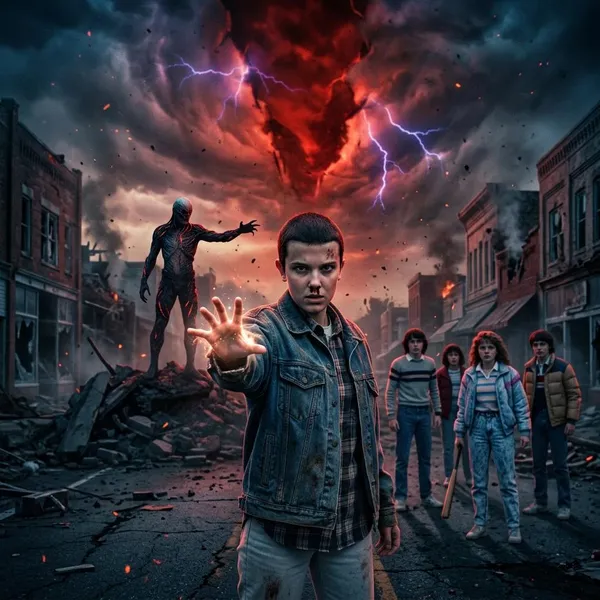
Stranger Things ends with a coordinated final fight rather than one character simply overpowering the villain. Eleven, Kali, and Max attack Henry from inside his mind, the Hawkins group rescues the trapped children, the Mind Flayer is exposed and destroyed, and Vecna is finally killed after being weakened from several sides.
- Eleven, Kali, and Max enter Henry's mind to break his control.
- The Hawkins crew rescues the kidnapped children from the Abyss.
- The group realizes the Pain Tree is tied to the Mind Flayer and destroys it.
- Will, Eleven, and Joyce each play a role in Vecna's death.
- The Upside Down collapses, with Eleven seemingly still inside.
If you only want the literal ending, Hawkins survives and the monsters are gone. If you are trying to understand why the finale feels debated, focus on Eleven: the show frames her final act like a sacrifice, but the closing scenes leave room for a possible escape or illusion.
Eleven, Kali and Max enter Henry's mind
The final attack starts inside Henry's mind because his greatest weapon has always been psychological control. He does not just hurt people physically; he uses guilt, fear, memory, and isolation to trap them.
That is why Max and Kali matter here. Max understands what it feels like to be targeted by Vecna, while Kali brings illusion-based power and her own history with the lab system. Eleven is still the strongest force in the fight, but she is not treated as the only person who can reach the battlefield that matters.
The Hawkins crew rescues the kidnapped children
The rescue mission keeps the finale from becoming only a psychic duel. The trapped children are not just background victims; freeing them weakens the system Henry and the Mind Flayer are using.
This is also where the ending feels most like the old Hawkins group again. Some characters are better at fighting, some at planning, some at improvising under pressure, but the point is the same: the party wins because different people do different jobs at the right time.
The group destroys the Mind Flayer
The Mind Flayer is destroyed after the group realizes the Pain Tree is not just a prison or a symbol. It is the enemy in a physical form, which means the rescue mission and the monster fight are the same problem.
That reveal gives the battle a clearer shape. Instead of fighting a vague cosmic evil in the background, the characters can attack something real. Nancy, Steve, Dustin, Lucas, Mike, Robin, Jonathan, and the others all become part of the solution rather than waiting for Eleven to finish the story alone.
Vecna is killed in the final battle
Vecna dies, but the finale does not treat his death as a one-person achievement. Will weakens Henry mentally, Eleven leaves him physically vulnerable, and Joyce delivers the final blow.
That layered death is important because Henry damaged different people in different ways. A single heroic blast would have been simpler, but it would not have fit the show as well. Vecna is beaten by connection, timing, and shared courage—the exact things he never truly understands.
The Upside Down collapses with Eleven inside
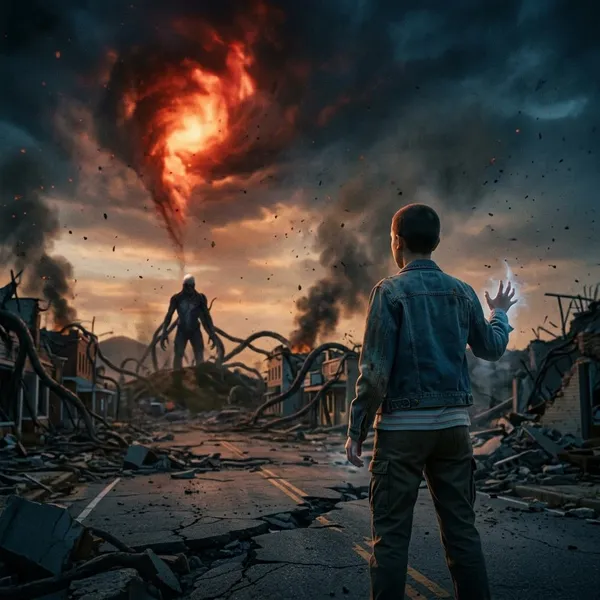
After Vecna and the Mind Flayer fall, the plan to destroy the Upside Down is carried out. The dimension collapses, and Eleven appears to remain inside while the others escape.
The most direct reading is that she chooses sacrifice so her powers, her blood, and the doorway connected to her can never be used again. A softer reading is that the finale is hiding her survival, possibly through misdirection or psychic illusion. The scene is built to support both emotional reactions: grief for what she gives up, and hope that she may still be out there.
Who kills Vecna in Stranger Things?
Joyce kills Vecna in the strictest sense because she delivers the fatal blow. But if you are asking who defeats him, the answer is Will, Eleven, and Joyce together.
- Will breaks Henry's control: he reaches him through their psychic connection.
- Eleven overpowers him: she drives him into the spire and leaves him helpless.
- Joyce finishes him: she beheads Henry and ends the threat physically.
Will overpowers Henry
Will's role is easy to underestimate because it is not the loudest moment in the fight. His connection to Henry becomes a weapon, allowing him to disrupt the villain from inside the same kind of psychic space that once made Will a victim.
The scene works because Will and Henry are dark mirrors. Both were touched by the Upside Down, but Will resisted being defined by it. Henry chose power and domination. That contrast gives Will's moment more weight than a simple mind-power contest.
Eleven impales Vecna
Eleven is the one who turns the fight physically. Once Henry is weakened, she uses her powers to drive him into a spire, putting him on the edge of death.
Joyce delivers the final blow
Joyce is the character who truly ends Vecna's life. After Henry is broken and pinned, she steps in and kills him with an axe.
That choice feels fitting because Joyce has been facing the impossible since the beginning. She was one of the first people to believe something was wrong in Hawkins when everyone else wanted a normal explanation. Giving her the final act makes the ending feel grounded after all the psychic and dimensional chaos.
What the finale reveals about Henry and the Mind Flayer
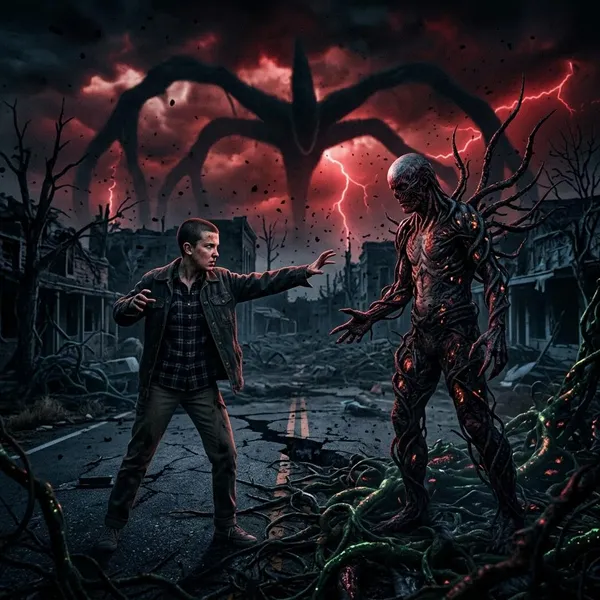
The finale connects Henry and the Mind Flayer more directly than earlier seasons did. Henry is not presented as a separate villain who simply found a monster later; his life was shaped by contact with Mind Flayer particles when he was young.
The important distinction is responsibility. The particles corrupt and possess him, but the finale does not treat Henry as innocent. He eventually chooses loyalty to the force that changed him, which keeps the ending from turning Vecna into only a victim.
The briefcase held Mind Flayer particles
The briefcase reveal explains how the larger evil first reached Henry. Inside was a rock containing Mind Flayer particles, and opening it created the point of contact that shaped his transformation.
This also fits one of the show's oldest warnings: adults and institutions keep believing they can contain dangerous power until someone vulnerable pays the price. The briefcase is not just a lore object; it is another example of human curiosity making the nightmare worse.
The particles possessed Henry as a child
Henry's possession begins when he is still a child, which makes his origin more tragic than a simple "he was always evil" explanation. The particles amplify what is already damaged in him and tie his identity to something much bigger and darker.
Henry chose to remain loyal to the Mind Flayer
Henry's loyalty is the moral line the finale draws. Will was invaded and resisted. Eleven was exploited and still chose connection. Henry was touched by the same kind of darkness and decided it gave him purpose.
That is why the ending can acknowledge his damaged past without excusing him. Pain explains part of Henry, but it does not justify the way he turns other people's pain into a weapon.
The Pain Tree was the Mind Flayer
The Pain Tree turns out to be the Mind Flayer itself, not just a place where children are trapped. That twist makes the rescue mission much more important because destroying the tree means striking the core of the enemy.
It also gives the finale a cleaner endgame. Henry is the human face of the threat, while the Mind Flayer is the consuming force behind him. Once both are destroyed, the show can close the supernatural war instead of leaving a bigger monster waiting offscreen.
What the Stranger Things ending really means
The ending means the story closes on shared victory, painful freedom, and the end of childhood. The plot gives viewers a clear win: Vecna is dead, the Mind Flayer is gone, and the Upside Down collapses. The emotional meaning is less tidy because Eleven's final fate is left open.
If you prefer a firm ending, read Eleven's final choice as sacrifice. If you prefer the more hopeful version, read the ambiguity as a clue that she survived beyond what the others can see. Neither reading changes the main point: Eleven is no longer someone other people can use as a weapon.
The final victory takes the whole party
The finale's clearest message is that Hawkins is saved by the whole party. Eleven is essential, but so are Will's connection, Joyce's courage, the rescue team's risk, and the group's ability to act together under pressure.
That is why the D&D structure still matters. In a campaign, one character may land the biggest hit, but the win usually comes from timing, trust, and different strengths lining up. The finale uses that same logic for the actual battle.
Eleven's choice breaks the cycle
Eleven's apparent sacrifice breaks the cycle that defined her life: being studied, hunted, used, and feared because of her powers. Staying behind is not just a sad ending; it is her way of deciding that nobody gets to control that doorway again.
Even if she survived, the meaning still holds. The old pattern ends because Eleven is no longer available to Brenner-like figures, military forces, or anyone else who sees her as a tool instead of a person.
The last D&D game closes their childhood
The final Dungeons & Dragons game brings the story back to where it started, but it does not pretend the characters are still the same kids. The basement, dice, and campaign are familiar; the people around the table have changed.
The younger players taking over makes the scene feel like a passing of the torch. For the original group, the game becomes less about escaping into fantasy and more about saying goodbye to the version of childhood that began the whole story.
Conclusion
The most practical way to understand the ending is to separate what is confirmed from what is deliberately left open: Vecna and the Mind Flayer are defeated, the Upside Down is destroyed, and Eleven's fate is the lingering question. The finale works best if you treat that ambiguity as part of the farewell rather than a loose plot mistake, because the story ends with Hawkins saved but not untouched.