
The Last of Us Season 2 ends by turning Ellie's revenge into the thing she can no longer control: Owen and Mel die at the aquarium, Jesse is killed at the theater, Abby fires at Ellie, and the screen cuts away before the outcome is shown. Then the story jumps back to Seattle Day One, making it clear that the next part of the story will make viewers live inside Abby's side of the same three days.
What happens in the Season 2 finale?
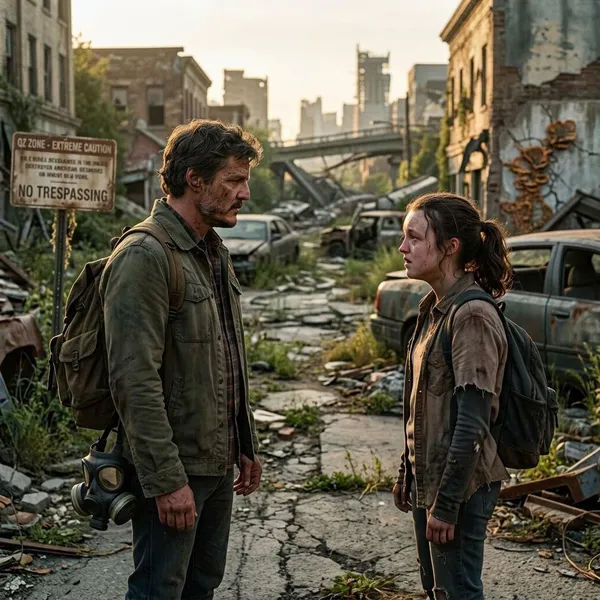
The finale is easiest to understand as a chain reaction, not as one isolated cliffhanger. Ellie pushes deeper into Seattle, reaches the aquarium, kills Owen and Mel in a panicked confrontation, and is taken back to the theater just as Abby arrives with her own fresh grief.
Ellie follows Owen and Mel to the aquarium
Ellie follows Owen and Mel because she still thinks finding Abby will make Joel's death mean something less unbearable. By this point, though, her search has stopped looking controlled. She is tired, injured, frightened, and still choosing to press forward.
The aquarium matters because it is not a clean showdown with Abby. It is a room with people who are scared, cornered, and trying to survive. For viewers who watched the season mainly as Ellie's hunt for justice, this is the point where the show starts asking whether her goal can still justify the way she is reaching for it.
Owen reaches for a gun and Ellie shoots
Owen reaches for a gun, and Ellie shoots before the moment can become anything else. The scene is not staged as a calm execution, but Ellie is not innocent just because the shot is frantic. She created the danger by entering armed, demanding answers, and forcing the confrontation into a corner.
Mel dies before Ellie can save her baby
Mel's death is the moment Ellie's revenge stops being something she can explain away to herself. After the shooting, Ellie realizes Mel is pregnant and tries to respond, but panic takes over and she cannot save the baby.
That detail changes the emotional weight of the finale. Ellie did not set out to kill a pregnant woman, but the path she chose made that outcome possible. It is the difference between a character making one bad split-second choice and a character finally seeing where all her earlier choices have led.
Tommy and Jesse take Ellie back to the theater
Tommy and Jesse take Ellie back after the aquarium because Ellie is visibly broken by what happened. For a moment, leaving Seattle seems possible. Jesse, especially, represents the practical option the group has kept ignoring: survive first, stop chasing a revenge target that keeps pulling more people into danger.
That pause is cruel because it arrives too late. Ellie may be ready to stop, or at least too shaken to continue, but Abby is already on her way.
Abby finds the group and kills Jesse
Abby reaches the theater and kills Jesse almost immediately. There is no speech, no dramatic warning, and no heroic last exchange. He walks into the wrong doorway at the worst possible second, which is exactly why the death lands so hard.
- Jesse dies by proximity. He is pulled into Ellie and Abby's war, not because he is the center of it.
- Abby arrives with new loss. Owen and Mel are dead, so her anger is no longer only about Joel.
- The hunter role flips. Ellie spent the season tracking Abby; now Abby controls the room.
Abby fires at Ellie as the screen cuts to black
Abby fires, and the episode cuts to black before showing who is hit. The finale does not confirm the result of the shot in that moment, so the safest reading is not "Ellie is dead" but "the show is refusing closure."
Why does Abby say I let you live?
Abby says "I let you live" because she believes Ellie was given a chance to walk away after Joel's death and used that chance to kill Abby's friends. Ellie would never experience it that way, which is why the line is so loaded: Abby sees mercy, while Ellie remembers trauma.
That disagreement is the emotional trap of the finale. Both women can point to a real wound, and both use that wound to justify the next act of violence.
Abby spared Ellie after killing Joel
After killing Joel, Abby's group leaves Ellie and Tommy alive. From Abby's point of view, that boundary matters. She came for the man she blamed for her father's death, and she did not turn the lodge into a full massacre.
Ellie's view is completely different. She was pinned down and forced to watch Joel die. Being left alive does not feel like mercy when survival means carrying that scene with her afterward.
Ellie used that mercy to hunt her friends
By the time Abby reaches the theater, she sees a brutal pattern: Ellie lived, came to Seattle, and Owen and Mel are now dead. She is not calmly weighing every detail of the aquarium confrontation. She is looking at the result.
This is where the show makes the perspective shift sting. If you stay only with Ellie, her actions can still feel driven by grief. From Abby's side, Ellie now looks like the person who took a spared life and turned it into another revenge campaign.
Owen and Mel are dead because of her revenge
Owen and Mel die because Ellie's hunt reaches them before it reaches Abby. Owen's reach for the gun complicates the exact moment of violence, but it does not erase the larger cause: Ellie brought the threat into that room.
Mel's pregnancy makes the damage impossible for Abby to separate into neat categories. Whether Ellie meant that outcome or not, Abby arrives at the theater carrying the kind of fresh, personal loss that has been driving Ellie all season.
Abby sees Ellie as part of the same cycle
To Abby, Ellie is no longer just a grieving survivor from Jackson. She is another person in the same cycle: someone wounded by violence, convinced revenge is justified, and now responsible for creating more grief.
- As accusation: Abby is saying Ellie wasted the life she was allowed to keep.
- As self-defense: Abby wants to believe she showed restraint after Joel.
- As despair: Abby now thinks mercy only delayed the next loss.
What does the Seattle Day One ending mean?
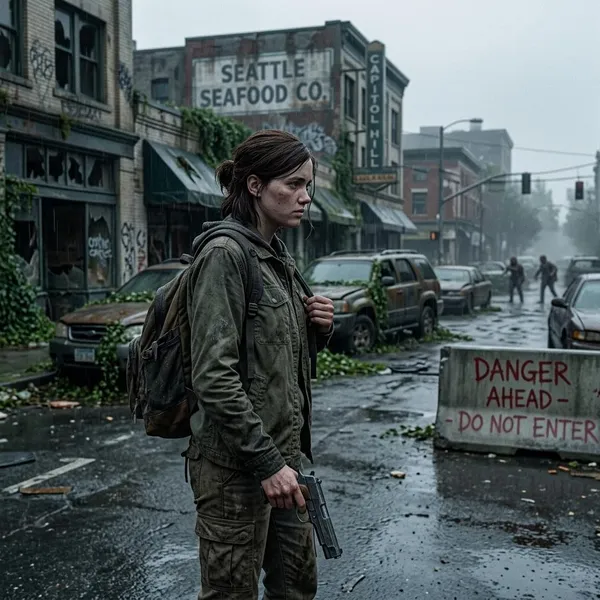
The Seattle Day One ending means the story is rewinding three days and changing the viewpoint to Abby. Instead of resolving the theater gunshot right away, the show is telling viewers that Ellie's version of Seattle was only half the story.
This is the practical thing to check if the ending confused you: the timeline has not moved forward after the gunshot yet. It has stepped backward so Abby's route through the same city can be shown before the confrontation continues.
The story rewinds three days
The "Seattle: Day One" shift sends the story back to the start of Abby's Seattle timeline. It delays the cliffhanger, but it also changes what the cliffhanger means. The question is no longer only "who got shot?" It becomes "what happened to Abby before she reached that theater?"
Abby becomes the new viewpoint
Abby becomes the likely main viewpoint for the next stretch of the story. That choice is uncomfortable on purpose, especially for viewers who are still loyal to Ellie and still angry about Joel.
The shift does not ask the audience to forget what Abby did. It asks them to sit with the person behind that act long enough to understand her world, her relationships, and the losses that bring her back to Ellie.
The WLF stadium reveals her world
The WLF stadium reveal immediately makes Abby feel less like a lone villain and more like someone with a place inside a functioning community. There are routines, people, duties, and a larger conflict around her.
That matters because Ellie has mostly seen the WLF as danger in the streets. Abby's view can show the same city as a home, a military structure, and a pressure cooker. For a show-only viewer, the stadium is the clearest sign that Season 3 will not simply continue Ellie's chase scene from a different camera angle.
Season 3 will show her side of Seattle
Season 3 is being set up to show Abby's side of Seattle, including what she was doing while Ellie was looking for her. That likely means more time with the WLF, Owen, Mel, Manny, and the conflict with the Seraphites.
- If you want the plot answer: the rewind fills in how Abby reaches the theater.
- If you want the emotional answer: it makes Owen and Mel matter before their deaths hit Abby.
- If you want the theme answer: it tests whether the audience can understand someone without excusing her.
The finale is betting that the same three days will feel different once they are no longer filtered through Ellie's grief alone.
What does the Season 2 ending mean?
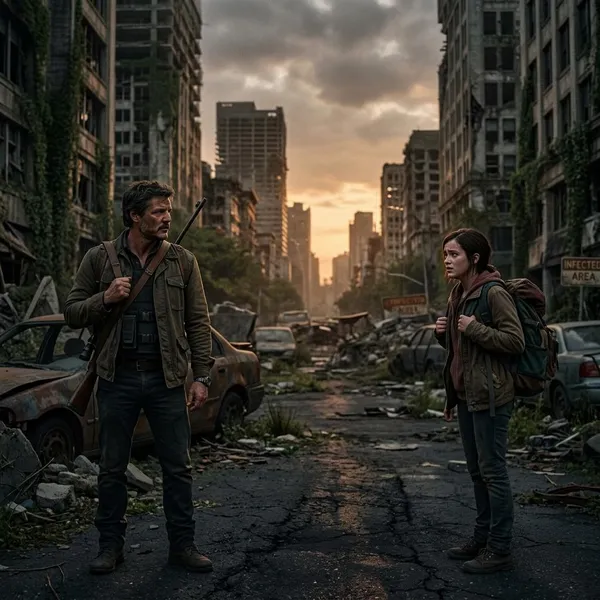
The ending means Ellie and Abby have become mirrors of each other, even though neither would admit it. Each woman believes she is responding to an unforgivable loss. Each response creates a new loss for someone else.
That is why the finale feels bleak rather than satisfying. It does not reward revenge, and it does not give either side the comfort of being fully right.
Ellie becomes consumed by the revenge she once condemned
Ellie begins the season furious over Joel's murder, and that grief is understandable. The tragedy is that her anger does not protect her from becoming destructive. At the aquarium, she crosses from chasing Abby into causing the kind of devastation that will now define someone else's grief.
For anyone reading Ellie as the clear hero, this is the point to pause. The show is not saying her pain is fake. It is saying pain can be real and still lead to choices that cannot be defended.
Abby and Ellie repeat the same pattern of violence
Abby loses her father and kills Joel. Ellie loses Joel and hunts Abby's friends. Abby loses Owen and Mel and comes for Ellie. The pattern keeps renewing itself because every act can be framed as a response to the last one.
That repetition is the central meaning of the ending. Revenge promises a finish line, but the finale shows it behaving more like a relay: one person hands the pain to the next, and everyone insists they are only balancing the scale.
The viewpoint shift challenges the audience's loyalty
The viewpoint shift is designed to make simple loyalty harder. Ellie has been the emotional center, so viewers understand why she breaks. Abby's turn threatens that comfort because it will likely make her losses feel less abstract too.
There are two very different viewing situations here. If you are attached to Ellie because of Joel, Abby's perspective may feel like an intrusion. If you are trying to understand the season's structure, Abby's perspective is the missing piece that explains why the finale cuts away when it does.
The cliffhanger leaves both sides without closure
The cliffhanger denies closure to everyone. Ellie does not get peace from her revenge. Abby does not get Owen and Mel back. The audience does not even get the immediate release of knowing exactly what the final shot did.
- Do not read the blackout as a full answer. It is a pause, not a confirmed death scene.
- Do not treat Abby's rewind as a side quest. It is the structure the ending has been building toward.
- Do not expect revenge to solve the grief. The finale has already shown it spreading the damage instead.
Conclusion
The cleanest way to read the ending is that the theater gunshot is not the real final answer; the real turn is the rewind to Abby's Seattle Day One. Ellie's revenge has reached a point she cannot undo, Abby has become the next grieving person with a weapon, and Season 3 now has to show the missing half before the confrontation can fully mean anything.